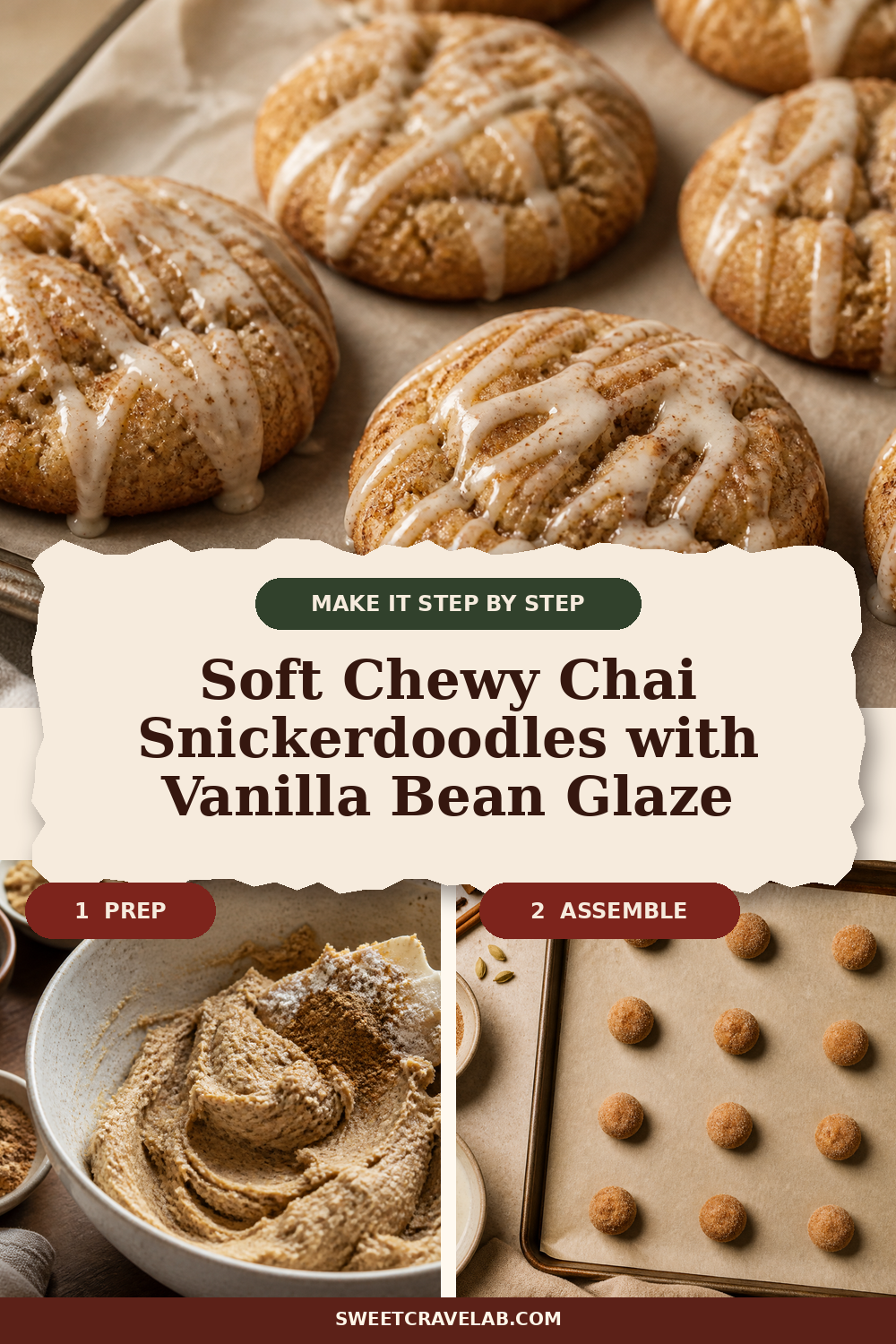
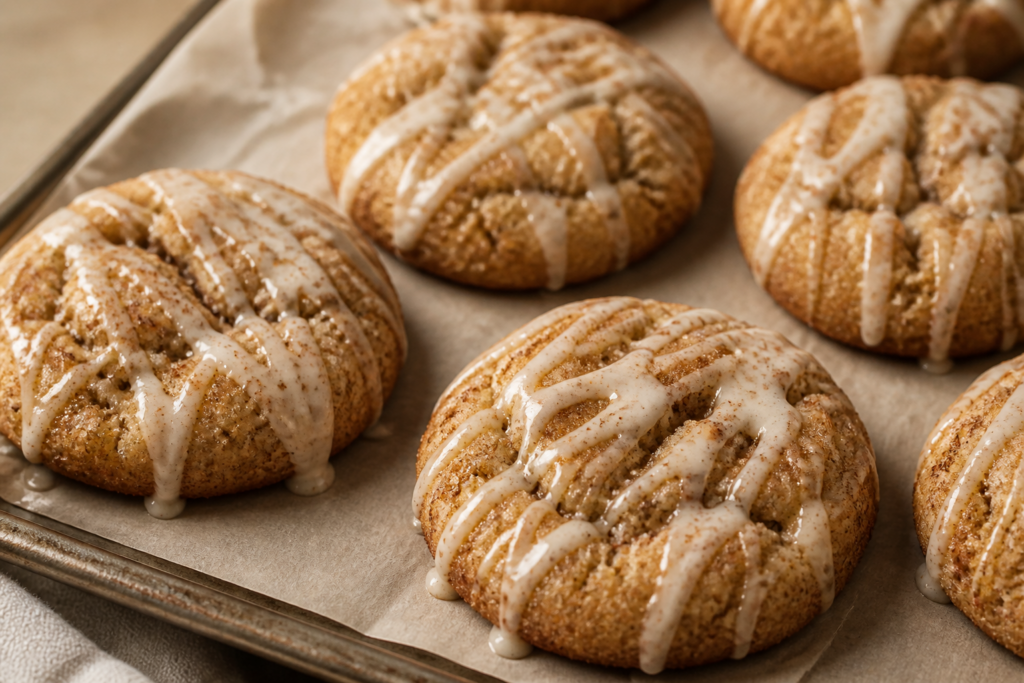
When I want a cookie that feels cozy but still tastes clean and classic, these soft chewy chai snickerdoodles are my go-to. The dough is spiced with warm cinnamon and a chai blend (cardamom, ginger, and clove), then rolled in a spiced sugar coating for that signature snickerdoodle swirl. A thin vanilla bean glaze dries to a shiny, just-set finish—so they look like something you’d spot in a bakery case.
Below you’ll find a reliable method for keeping them soft (not crisp): chill the dough for better rollability, bake just until the tops set and the centers look slightly underdone, then cool fully. If your kitchen runs warm, I’ll also share a quick fix so the cookies stay chewy.
What makes them soft and chewy (and not crisp)
Snickerdoodles can go either way depending on how you bake and cool. For chewy cookies, you’re aiming for:
- Proper dough hydration: this dough has enough moisture from butter, egg, and a touch of milk so the centers stay tender.
- Chill time: chilling firms the butter so the cookies don’t spread too thin. Thin cookies bake faster and end up crisper.
- Right bake window: bake until the edges look set and lightly matte, while the middle still looks puffy and a bit soft.
- Full cooling on the tray: the cookies finish setting as they cool; moving them too early can deflate them and make them seem underbaked (or overbaked after a quick bake restart).
Chai spice blend: how to keep it balanced
Chai spice should taste warm, not soapy or bitter. In this recipe, I use a small amount of clove and let cinnamon carry the “cozy” note. If you’re using freshly ground spices, start with the smaller end of the blend and adjust only if you taste a flat cookie.
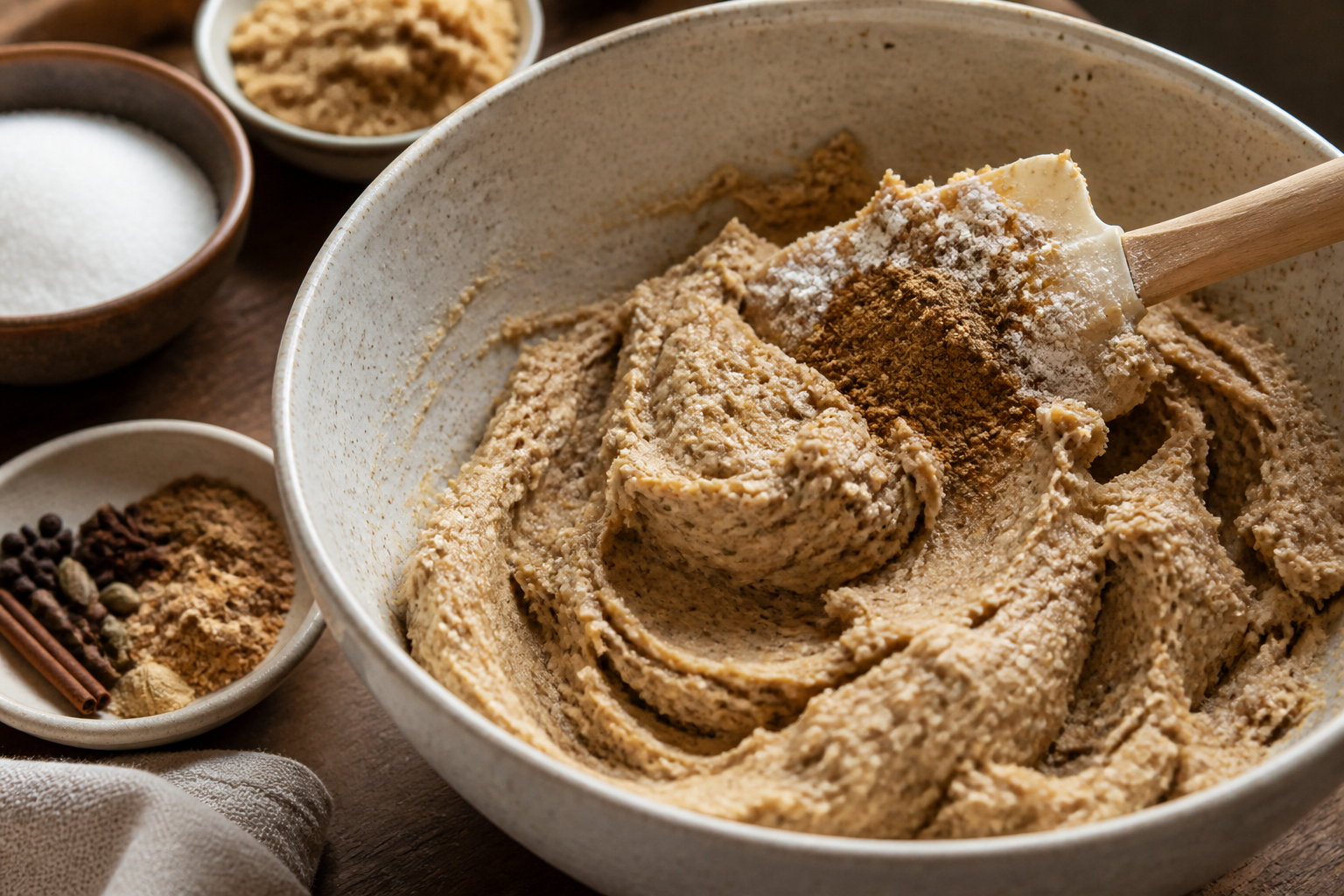
Quick method overview
- Mix chai-spiced cookie dough, then chill.
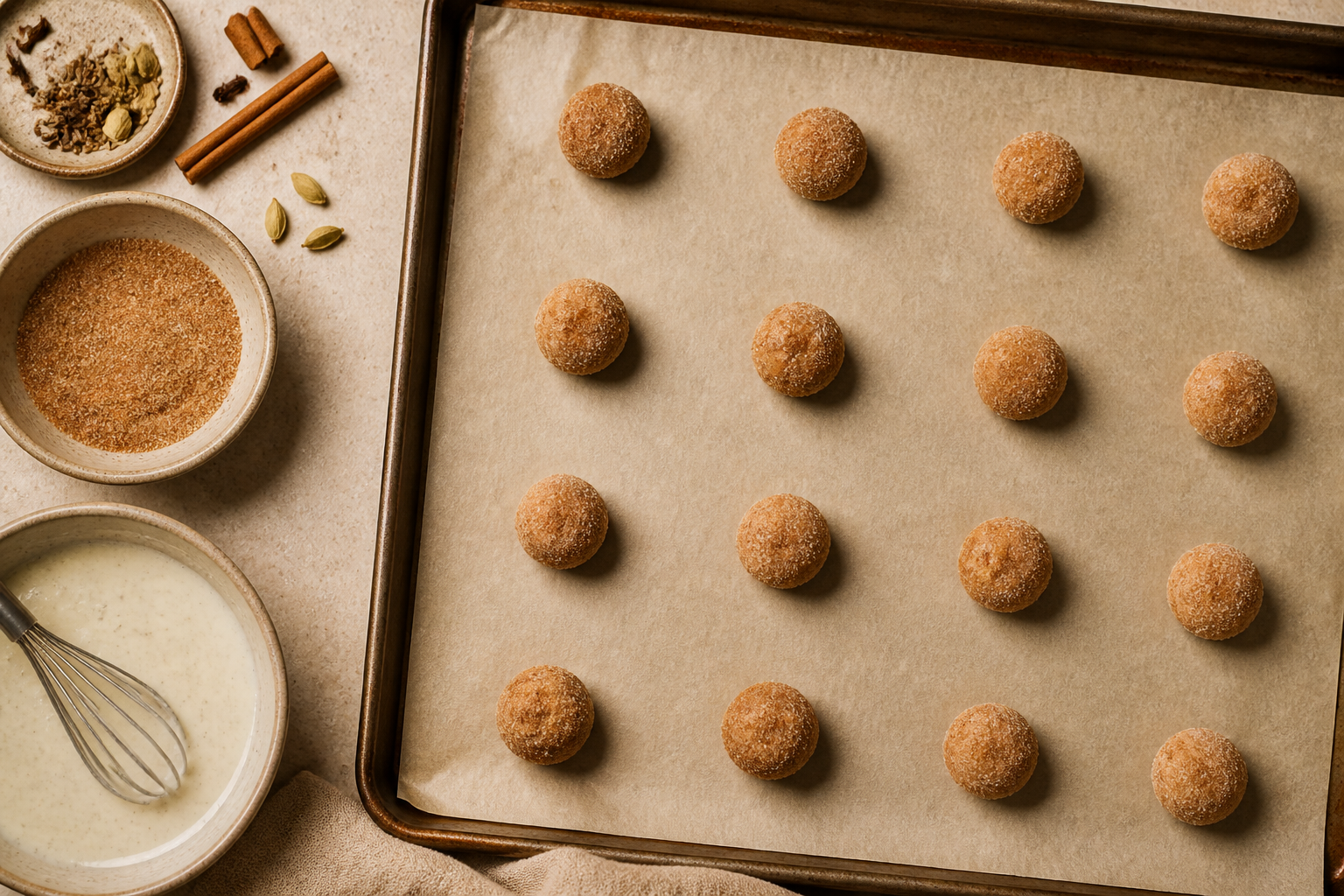
- Roll dough into balls and coat in spiced sugar.
- Bake briefly at a steady temperature until tops set and centers are still soft-looking.
- Cool fully, then drizzle a thin vanilla bean glaze.
Troubleshooting (common snickerdoodle issues)
My cookies spread too much.
Your butter may have warmed up while rolling, or the dough didn’t chill long enough. Chill again 30–45 minutes before baking. Also confirm your baking soda is fresh and your oven is fully preheated.
My cookies are too crisp.
They likely baked too long. Next time, pull them when the edges are set and the centers look slightly underdone. Let them cool completely on the tray before moving.
The glaze looks dull or doesn’t set.
A glossy glaze usually means it’s thin enough to spread a little but not watery. If it’s too thick, add milk by the teaspoon; if too thin, whisk in powdered sugar 1 tablespoon at a time.
Substitutions and variations
- Vanilla bean: swap vanilla bean paste 1:1 for vanilla extract. For a speckled look, use paste.
- Spices: if you only have cinnamon and cardamom, use those and reduce clove/ginger to a smaller amount to avoid overpowering.
- Glaze dairy-free: use unsweetened non-dairy milk (choose one you like in coffee). The glaze should still drizzle and set.
- Sugar coating: plain granulated sugar works best for classic snickerdoodle texture—avoid brown sugar in the coating if you want the swirl to stay crisp-free.
Storage
- Room temperature: store in an airtight container up to 3 days. For best texture, wait until the glaze is fully set.
- Freezing: freeze baked, fully cooled cookies (glaze optional). Wrap well and freeze up to 2 months. Thaw overnight, then glaze if you want maximum shine.
FAQ
Do I have to chill the dough?
Yes—chilling helps the cookies stay thick and chewy and makes rolling cleaner. If you’re in a hurry, chill until firm (typically 45–60 minutes), not just “cool to the touch.”
Why do my snickerdoodles look “puffy” but still seem underbaked?
Puffy centers are normal right when they come out. They finish setting during cooling. The visual cue you want is set edges with soft-looking tops/centers, not browned all over.
Can I bake smaller cookies?
Absolutely. Smaller balls bake faster—start checking at 7 minutes for a tighter bake, then pull when the centers still look soft.
Final bake cues (so you nail chewy every time)
- Top surface: matte-to-satin, not glossy-wet.
- Edges: set and slightly dry; no wet dough halo.
- Center: still puffy and soft-looking when you pull the tray.
- After cooling: they should feel tender, with a soft chew when you bite.
Soft Chewy Chai Spice Snickerdoodles with Vanilla Bean Glaze
- Prep Time: 20 minutes
- Cook Time: 10 minutes
- Total Time: 1 hour 40 minutes
- Yield: About 18 cookies
- Category: Cookies
- Method: Bake
- Cuisine: American
- Diet: Vegetarian
Description
Chai-spiced snickerdoodles with a classic cinnamon-sugar coating, baked to a soft, chewy center and finished with a thin vanilla bean glaze for a shiny bakery look.
Ingredients
- Unsalted butter, softened: 1/2 cup (113 g)
- Granulated sugar: 3/4 cup (150 g)
- Light brown sugar, packed: 1/4 cup (55 g)
- Large egg: 1
- Vanilla extract: 1 teaspoon (5 ml)
- Whole milk or buttermilk: 1 tablespoon (15 ml)
- All-purpose flour: 2 1/4 cups (270 g)
- Baking soda: 1/2 teaspoon
- Fine salt: 1/2 teaspoon
- Chai spice blend (see below): 2 teaspoons
- Chai spice blend (mix together): 1 teaspoon ground cinnamon, 1/2 teaspoon ground cardamom, 1/4 teaspoon ground ginger, 1/4 teaspoon ground cloves
- Coating sugar: 1/2 cup (100 g) granulated sugar
- Coating chai spice blend: 1 1/2 teaspoons chai spice blend (use the same blend above; reduce clove if you like it milder)
- Vanilla bean glaze:
Powdered sugar: 1 cup (120 g) - Vanilla bean paste or vanilla extract: 1 teaspoon (5 ml)
- Milk: 2 to 3 tablespoons (30 to 45 ml)
- Fine salt: a tiny pinch (about 1/16 teaspoon)
Instructions
- Make chai spice blend: In a small bowl, mix cinnamon, cardamom, ginger, and cloves. Set aside.
- Mix dough: In a medium bowl, whisk flour, baking soda, salt, and 2 teaspoons chai spice blend. Set aside.
- In a large bowl, beat softened butter, granulated sugar, and brown sugar until creamy and lighter in color, about 1–2 minutes.
- Beat in the egg, then mix in vanilla and milk.
- Add the dry ingredients and mix just until no flour pockets remain. The dough will be soft and thick.
- Chill: Cover and refrigerate 1 hour (or until firm enough to roll).
- Prep coating: In a shallow bowl, mix 1/2 cup (100 g) sugar with 1 1/2 teaspoons chai spice blend.
- Roll: Scoop about 1 1/2 tablespoons dough each (roughly 30 g), roll into balls, then roll each ball in the spiced sugar coating. Place on parchment-lined baking sheets, spacing about 2 inches apart.
- Chill again (optional but helpful): Refrigerate the coated balls 15 minutes while the oven heats. This helps prevent spreading.
- Bake: Bake at 350°F (175°C) for 8–10 minutes, until the edges look set and matte and the centers are still puffy/soft-looking.
- Cool: Let cookies cool on the tray for 10 minutes, then transfer to a rack to cool completely (about 20–30 minutes) before glazing.
- Make vanilla bean glaze: Whisk powdered sugar, vanilla bean paste, a pinch of salt, and 2 tablespoons (30 ml) milk. Add more milk 1 teaspoon at a time until the glaze is thin enough to drizzle. It should flow in a ribbon but not be runny.
- Glaze: Drizzle glaze over fully cooled cookies. Let set 20–30 minutes before stacking or storing.
Notes
For the chewy texture, don’t wait for deep browning—pull at the first sign the edges are set and the centers are still soft-looking. If your kitchen is warm, a second brief chill after rolling helps the coating adhere and keeps thickness.