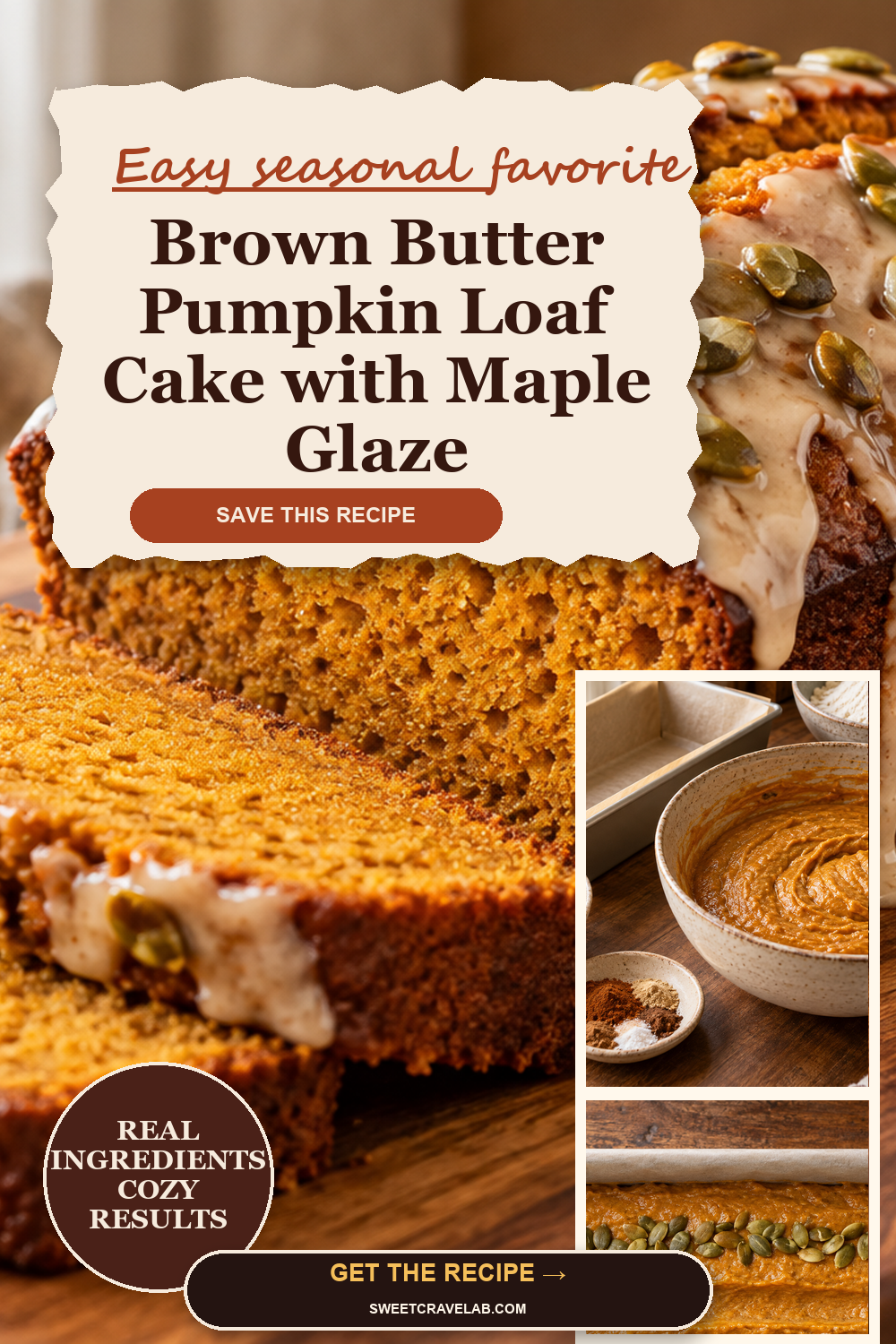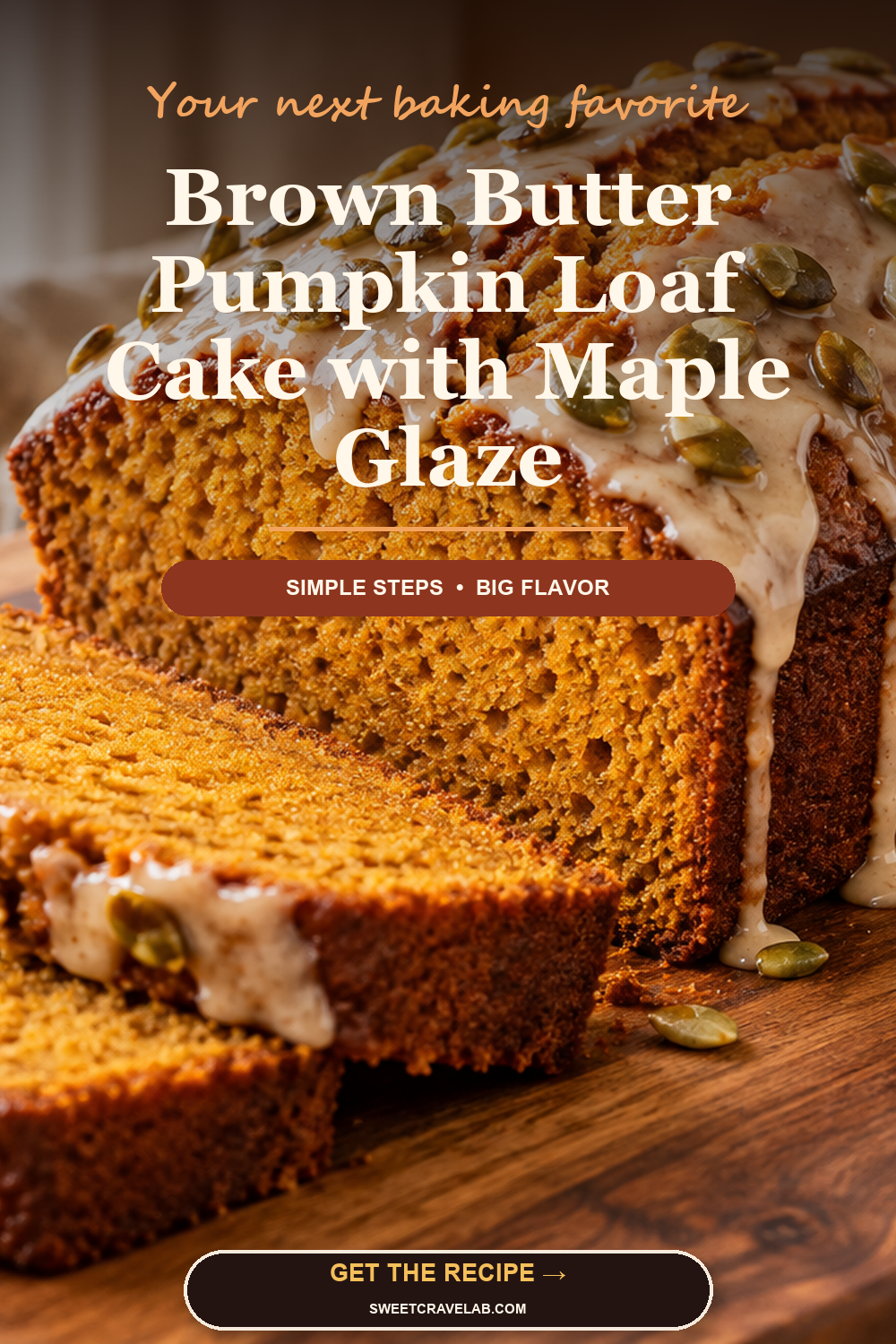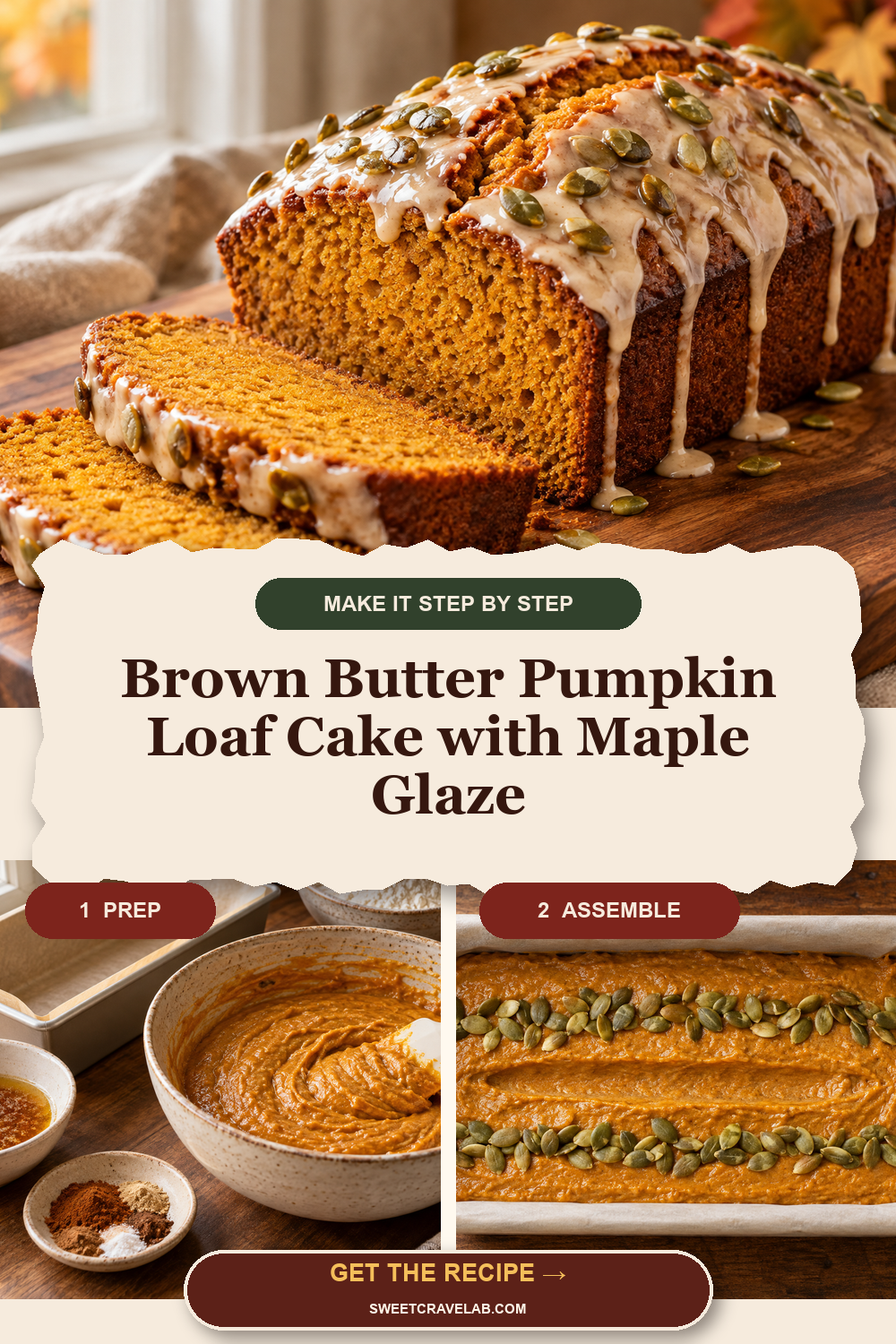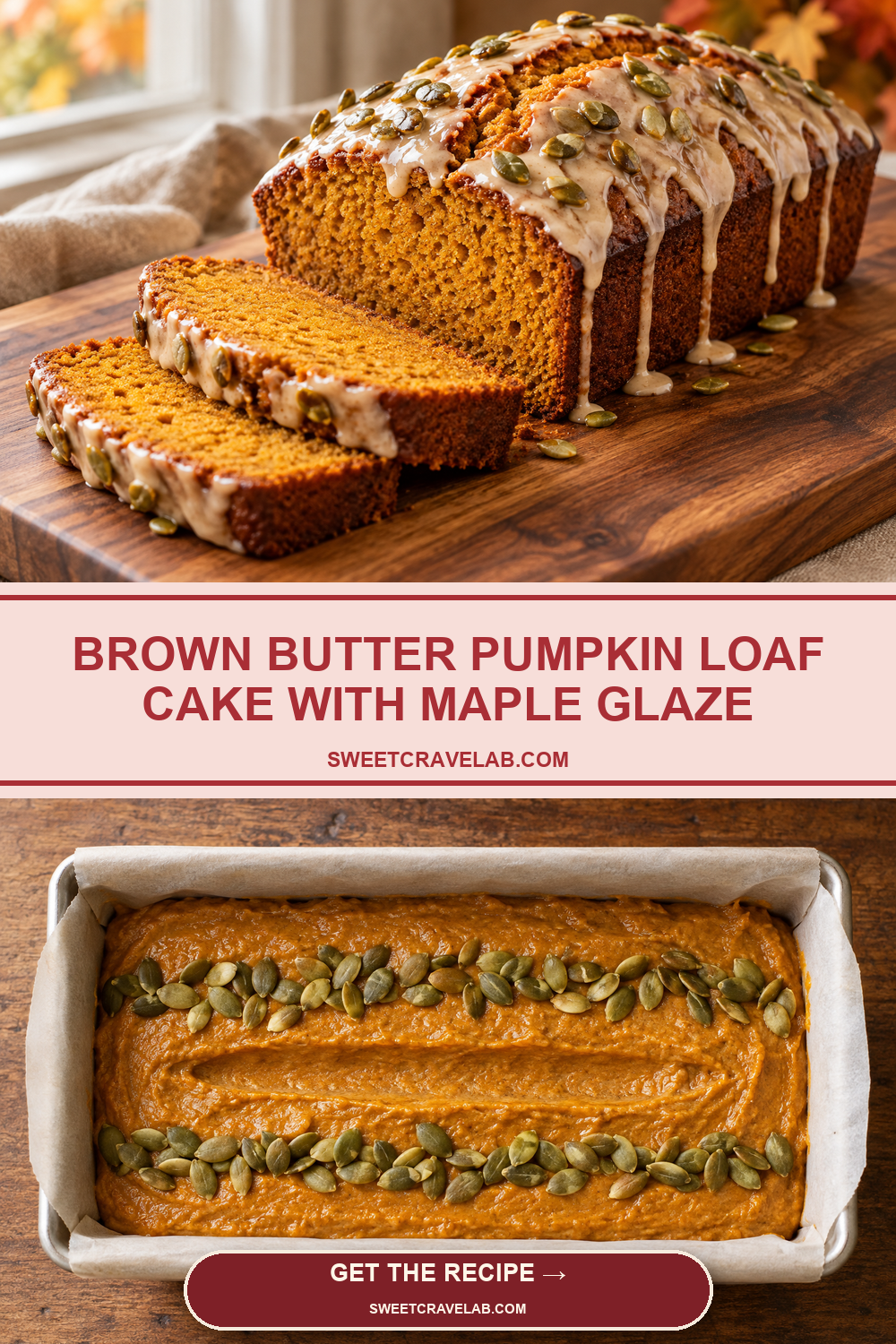
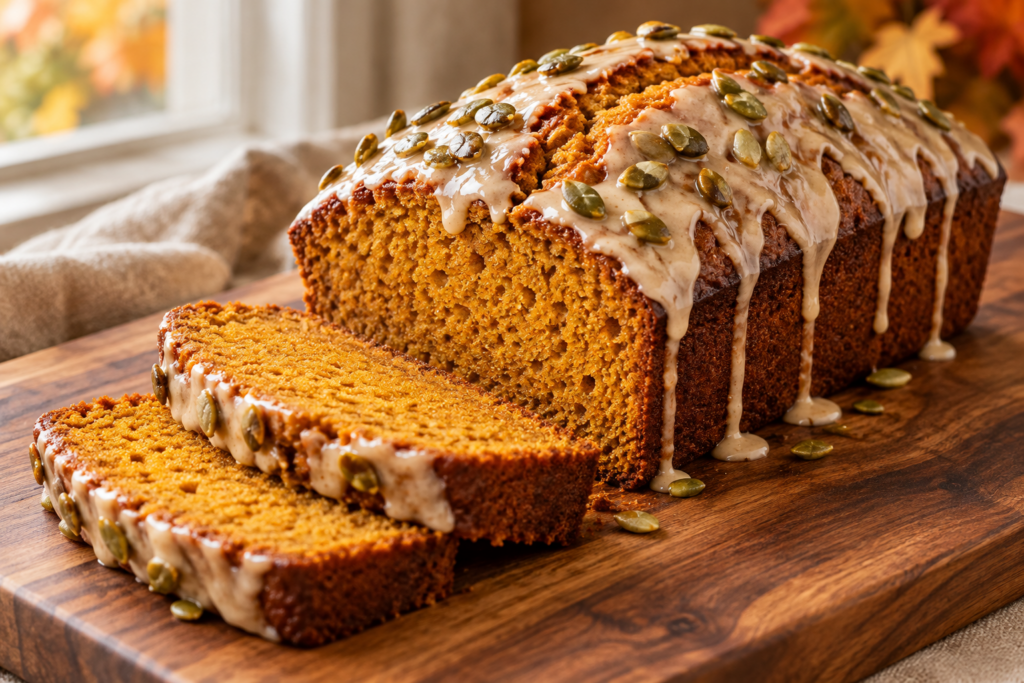
This pumpkin loaf cake uses nutty brown butter and a thin maple glaze to give a familiar fall bake more depth. The crumb is tender rather than gummy, the spice supports the pumpkin instead of hiding it, and toasted pepitas add a crisp finish that photographs beautifully without turning the loaf into a holiday decoration.
Pumpkin loaf searches climb sharply as autumn begins, but a useful version still needs more than seasonal flavor. This recipe focuses on moisture control, a high center, clean slices, and a glaze that sets instead of disappearing into the crust.
In this guide
What makes this pumpkin loaf cake tender
Pumpkin puree contributes water and soluble fiber, both of which keep the crumb soft. Too much, however, weighs down the center. Measuring by weight and briefly blotting very loose puree creates enough concentration for flavor without leaving a damp stripe near the bottom.
In pumpkin loaf cake, brown butter loses some water as it cooks, so a small amount of neutral oil remains in the batter. The butter supplies toasted milk solids and aroma; the oil stays fluid at room temperature and protects the loaf from feeling firm the next day.
A combination of baking powder and baking soda gives balanced lift. The soda reacts with brown sugar and pumpkin’s mild acidity, while baking powder supports the tall center during the longer bake.
Ingredient notes for reliable results
Use plain pumpkin puree
Choose canned pumpkin with pumpkin as the only ingredient, not presweetened pie filling. Different brands vary in moisture. If the puree spreads like a thin sauce, blot it between several paper towels before measuring.
Brown the butter by color and aroma
Heat the butter in a pale saucepan so the milk solids remain visible. Once the foam subsides, stir until the particles turn hazelnut brown and smell toasted. Transfer everything, including the browned bits, to a cool bowl immediately.
Bloom spice in warm butter
Cinnamon, ginger, cardamom, and nutmeg contain flavor compounds that dissolve in fat. Stirring them into warm brown butter for 30 seconds releases their aroma more effectively than adding them only with the flour.
How to mix pumpkin loaf cake
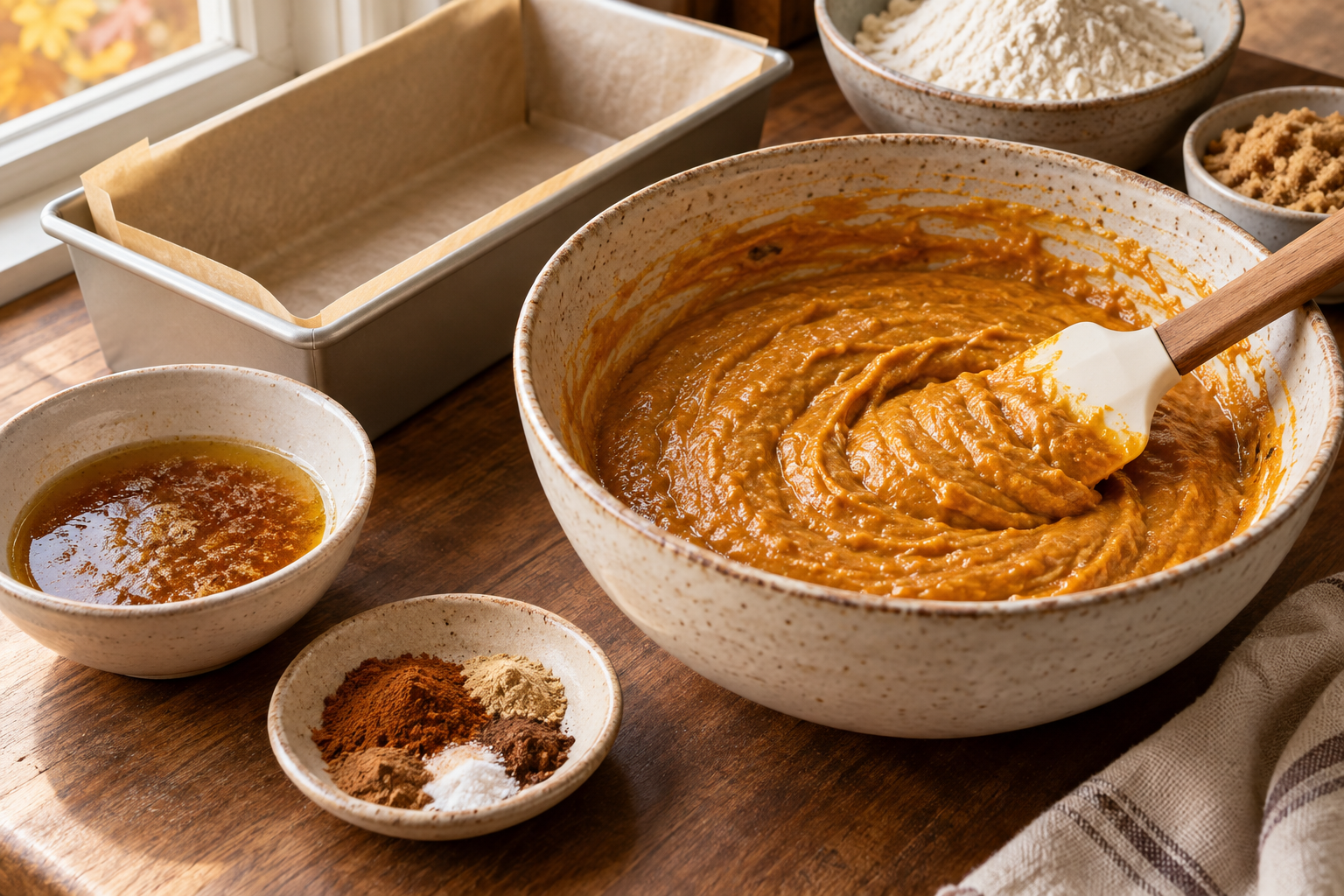
For pumpkin loaf cake, line one 9-by-5-inch light metal loaf pan with a parchment sling and grease the short ends. Whisk the dry ingredients separately so the leaveners and salt disperse before they meet the wet batter.
Combine the cooled brown butter, oil, brown sugar, eggs, pumpkin, and vanilla until glossy. Add the dry mixture and fold with a flexible spatula. Stop as soon as no dry pockets remain; vigorous stirring develops gluten and can create a rubbery tunnel.
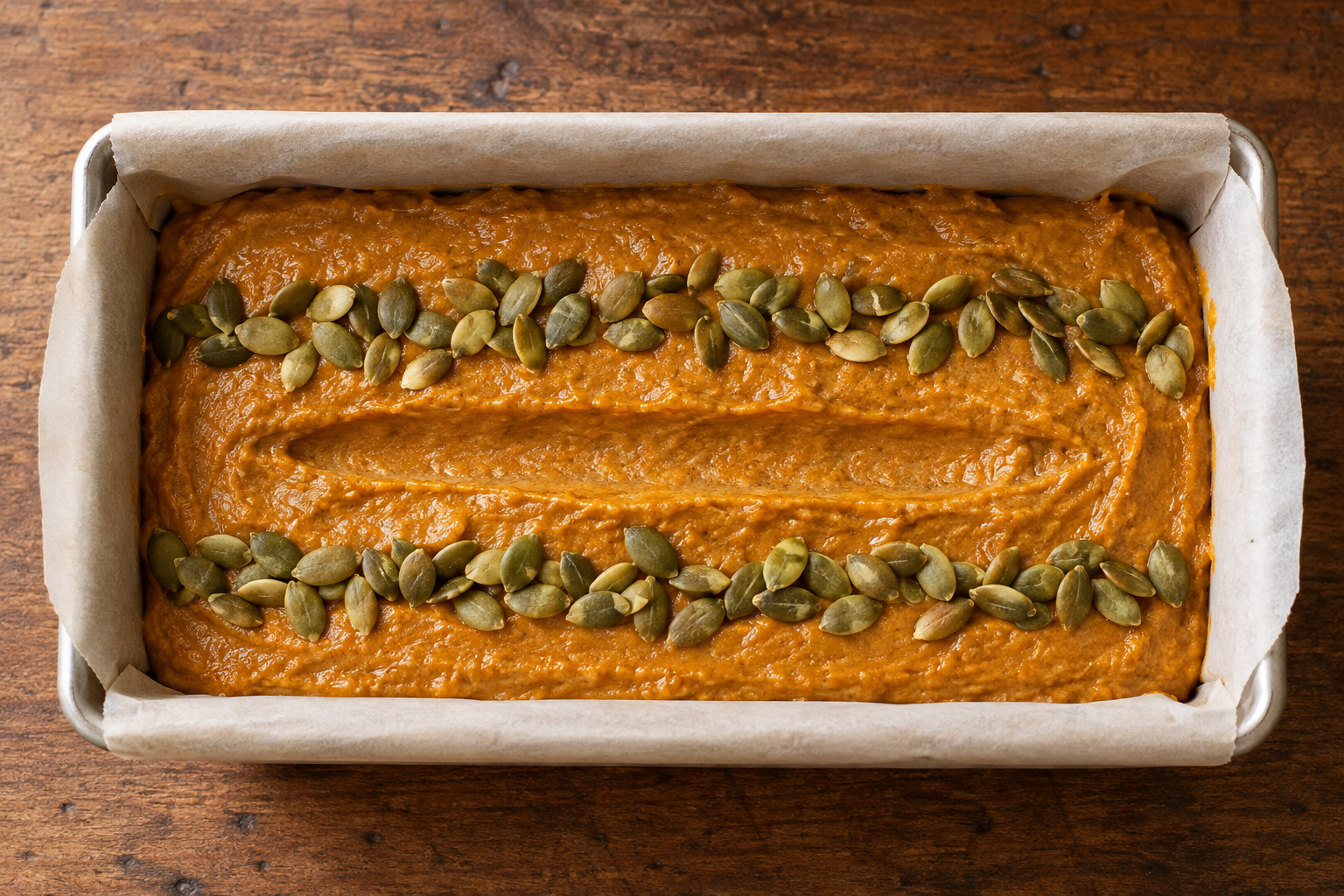
Spread the batter higher along the long sides and slightly lower in the center. That shallow channel directs expansion upward and encourages an attractive central split. Sprinkle pepitas in two narrow lines so the center can open naturally.
Doneness and cooling cues
Pumpkin loaf cake is ready when the center rises above the pan, the crack looks dry, and a tester returns with a few moist crumbs rather than wet batter. An instant-read thermometer should register about 200°F (93°C) in the thickest area.
Cool in the pan for 15 minutes, then use the parchment to lift the loaf onto a rack. Leaving it in the hot pan traps steam and softens the side crust. Wait until completely cool before adding maple glaze.
Troubleshooting the most common problems
Why did the center sink?
The batter may contain too much moisture, the loaf may be underbaked, or the oven door may have opened early. Weigh the puree, test the center rather than an edge, and leave the door closed for the first 45 minutes.
Why is there a gummy line?
Overmixing and loosely measured flour are frequent causes. Fold gently and weigh the flour. Let the loaf cool fully before slicing, because a warm crumb compresses under the knife.
Why did the glaze turn transparent?
The cake was still warm or the glaze contained too much liquid. Add maple syrup gradually to powdered sugar and drizzle only when the loaf has no residual warmth.
Make-ahead and storage
Unglazed pumpkin loaf cake can be baked two days ahead. Once cool, wrap it tightly and keep it at room temperature. Add the glaze several hours before serving so the surface sets while the crumb stays soft.
Freeze individual slices for up to two months, preferably before glazing. Wrap each slice, place the portions in a freezer bag, and thaw at room temperature. A short warm-up in a low oven refreshes the edges.
Serving ideas for an autumn table
Cut the loaf into ten thick slices and serve it with coffee, black tea, or lightly whipped cream. For brunch, leave part of the loaf unglazed and offer salted butter. The maple finish is sweet enough that no frosting is needed.
How to refresh slices
Day-old pumpkin loaf cake slices regain a just-baked aroma after four or five minutes in a 300°F (150°C) oven. Warm them before adding extra glaze, not afterward, so the sugar does not melt into the crumb. For a softer result, microwave one slice for only eight to ten seconds.
Pair it with maple pecan pie thumbprint cookies, or explore the cake archive for more fall baking ideas. The King Arthur quick-bread guide offers additional background on mixing and doneness.
Frequently asked questions
Can I use homemade pumpkin puree?
Yes, but drain it until it matches the thickness of canned puree. Watery homemade puree can make pumpkin loaf cake dense.
Can I replace the pepitas?
Chopped pecans or walnuts work well. Cool toasted nuts before adding them so they do not melt the glaze.
Can I bake mini loaves?
Divide the batter evenly among prepared mini pans and begin checking early. The exact baking time depends on pan capacity.
Does pumpkin loaf cake need refrigeration?
No, not for short storage. Keep it tightly wrapped at room temperature for three days, or refrigerate for up to five days and bring slices back to room temperature.
Print
Brown Butter Pumpkin Loaf Cake with Maple Glaze
- Prep Time: 25 minutes
- Cook Time: 1 hour 5 minutes
- Total Time: 2 hours 30 minutes
- Yield: 10 slices
- Category: Dessert
- Method: Baking
- Cuisine: American
- Diet: Vegetarian
Description
Tender spiced pumpkin loaf made with brown butter and finished with maple glaze and toasted pepitas.
Ingredients
- 3/4 cup (170 g) unsalted butter
- 2 tsp ground cinnamon
- 1 tsp ground ginger
- 1/2 tsp ground cardamom
- 1/4 tsp ground nutmeg
- 2 cups (250 g) all-purpose flour
- 1 tsp baking powder
- 1/2 tsp baking soda
- 3/4 tsp fine salt
- 1 1/4 cups (250 g) packed dark brown sugar
- 2 tbsp (30 ml) neutral oil
- 2 large eggs (100 g without shells)
- 1 cup (240 g) plain pumpkin puree
- 2 tsp vanilla extract
- 1/3 cup (45 g) pepitas
- 1 cup (120 g) powdered sugar
- 3 tbsp (45 ml) pure maple syrup
- 1 tbsp (15 ml) milk, as needed
Instructions
- Heat the oven to 350°F (175°C). Grease and line one 9-by-5-inch (23-by-13-cm) light metal loaf pan with parchment.
- Brown the butter in a pale saucepan until the milk solids are hazelnut brown. Pour into a bowl, stir in the spices, and cool for 10 minutes.
- Whisk flour, baking powder, baking soda, and salt in a separate bowl.
- Whisk brown sugar, oil, eggs, pumpkin, vanilla, and cooled brown butter until glossy.
- Fold the dry mixture into the pumpkin mixture only until no flour remains.
- Spread batter in the pan, make a shallow central channel, and scatter pepitas in two narrow lines.
- Bake for 55-65 minutes, until the center reaches about 200°F (93°C) and a tester shows moist crumbs.
- Cool in the pan for 15 minutes, then lift onto a rack and cool completely.
- Whisk powdered sugar with maple syrup and enough milk for a thick drizzle. Glaze the cool loaf and allow it to set before slicing.
Notes
Use plain pumpkin puree, cool the brown butter before mixing, and glaze only after the loaf is completely cool.