Easy Crochet Coaster Pattern: Sea Grass Style
Make an easy round crochet coaster with cotton yarn, five double-crochet rounds, and a fresh green V-stitch border.
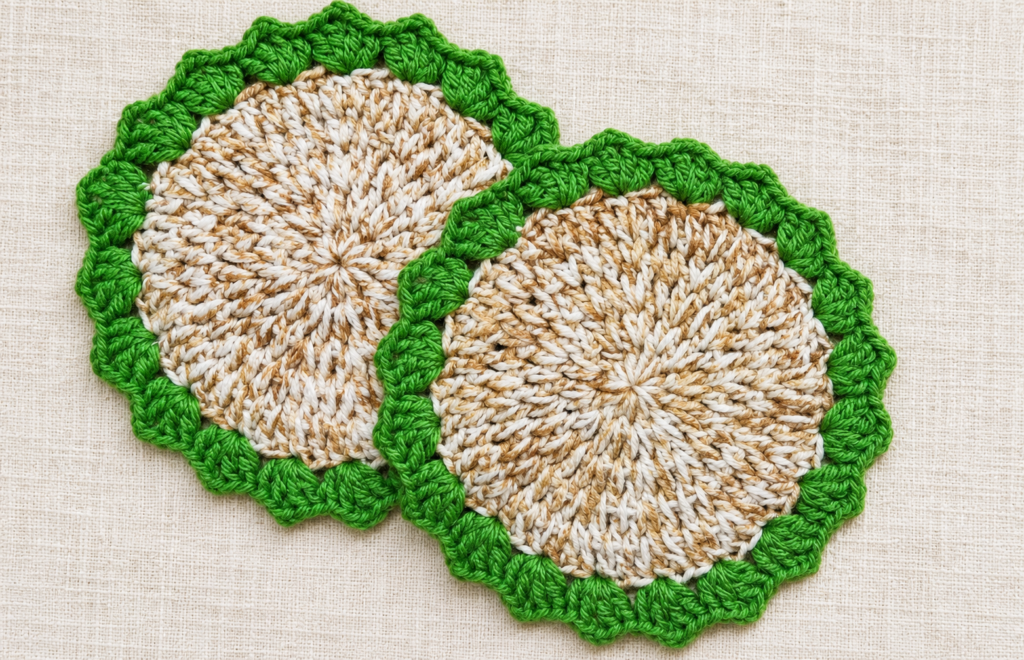
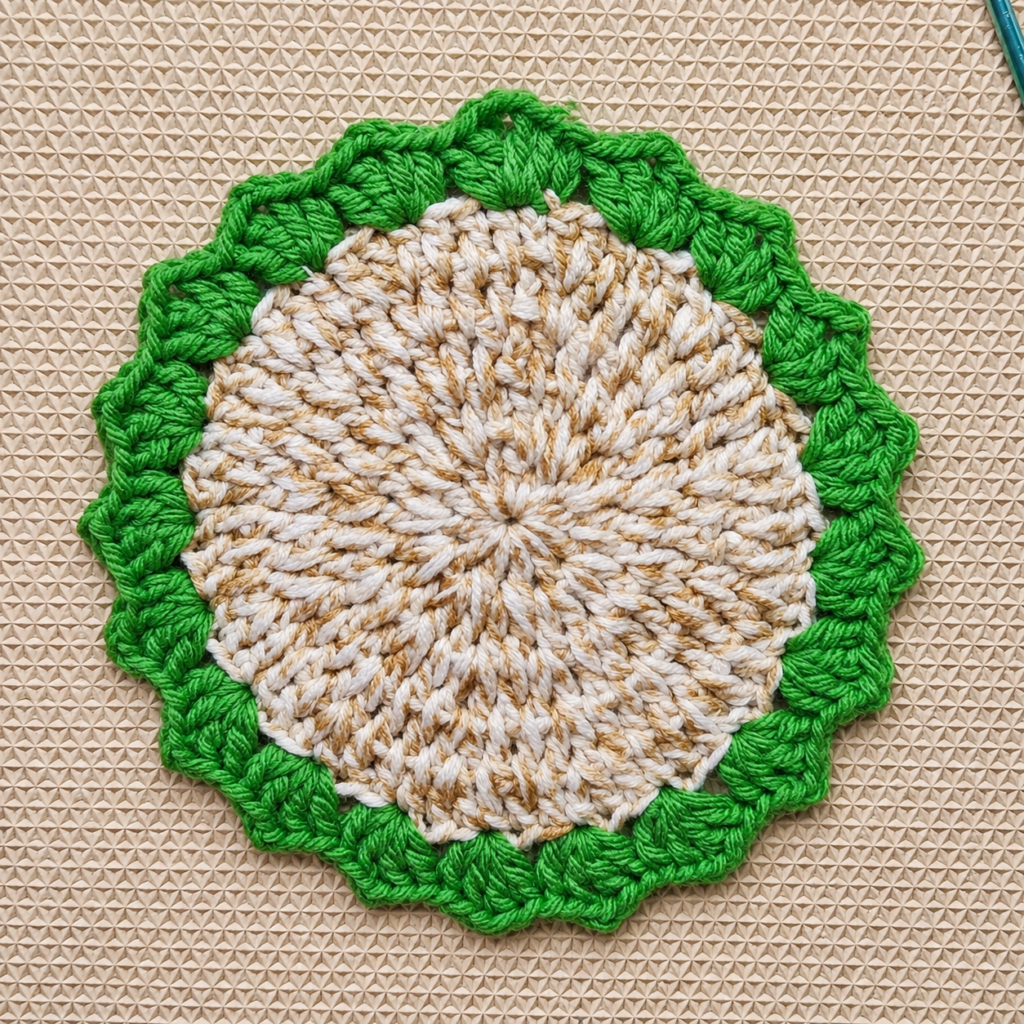
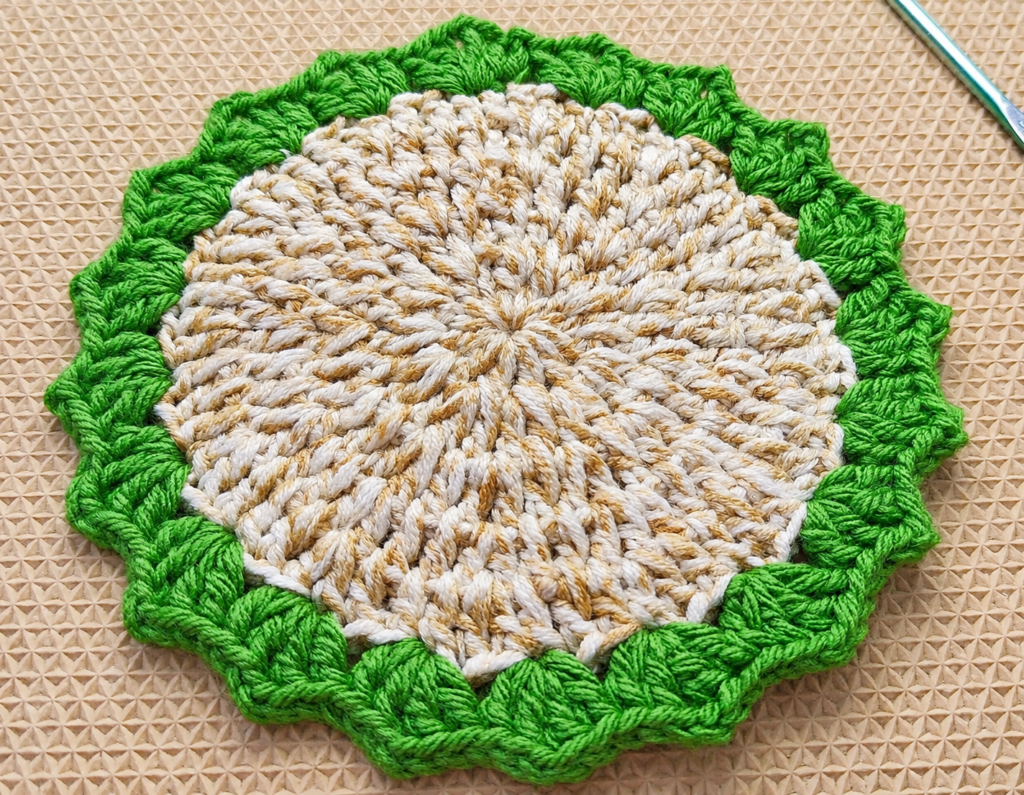
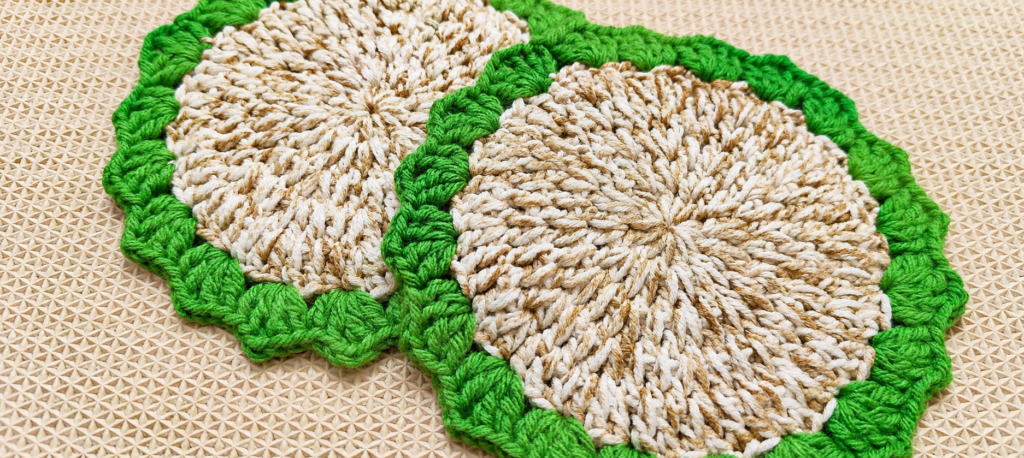
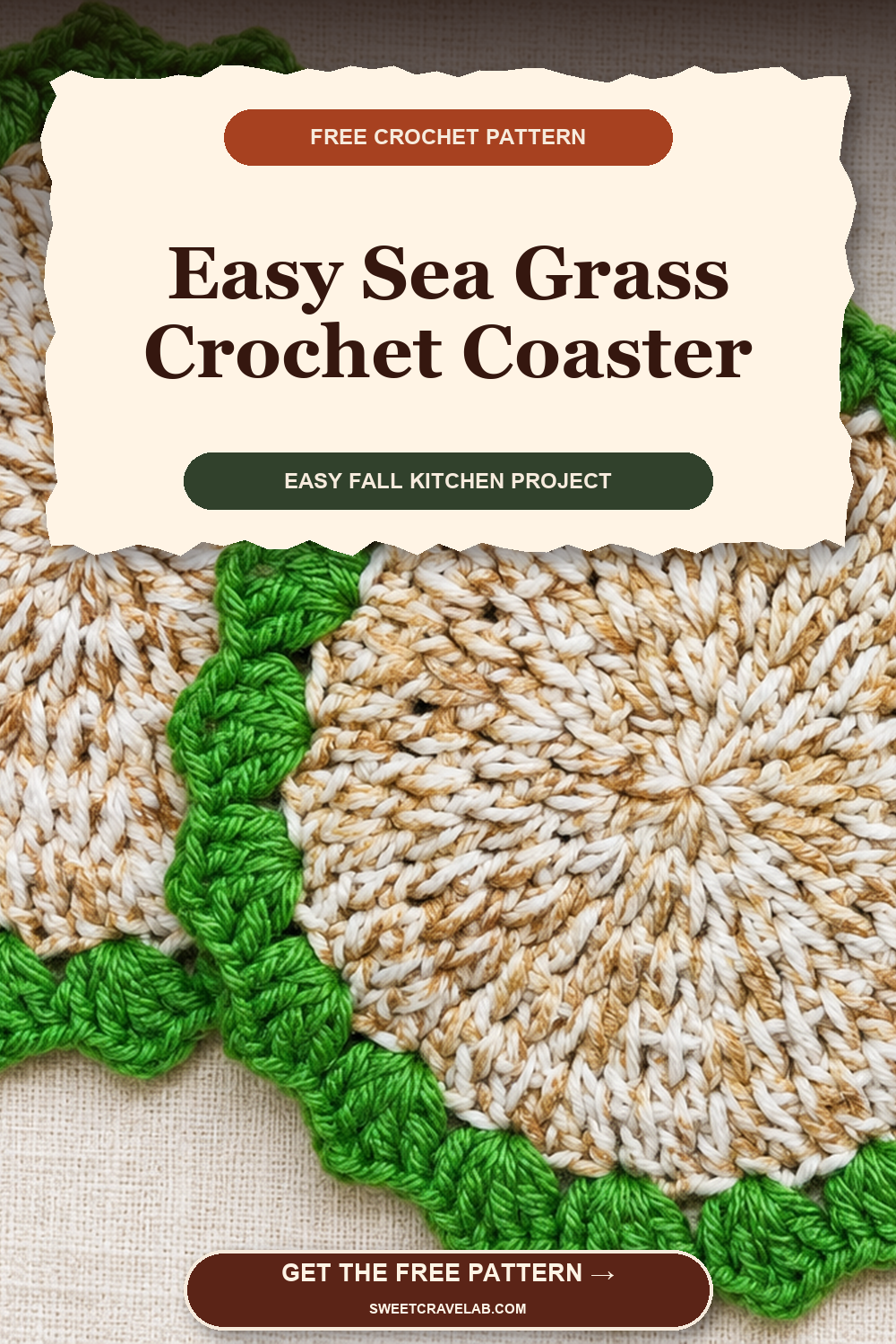
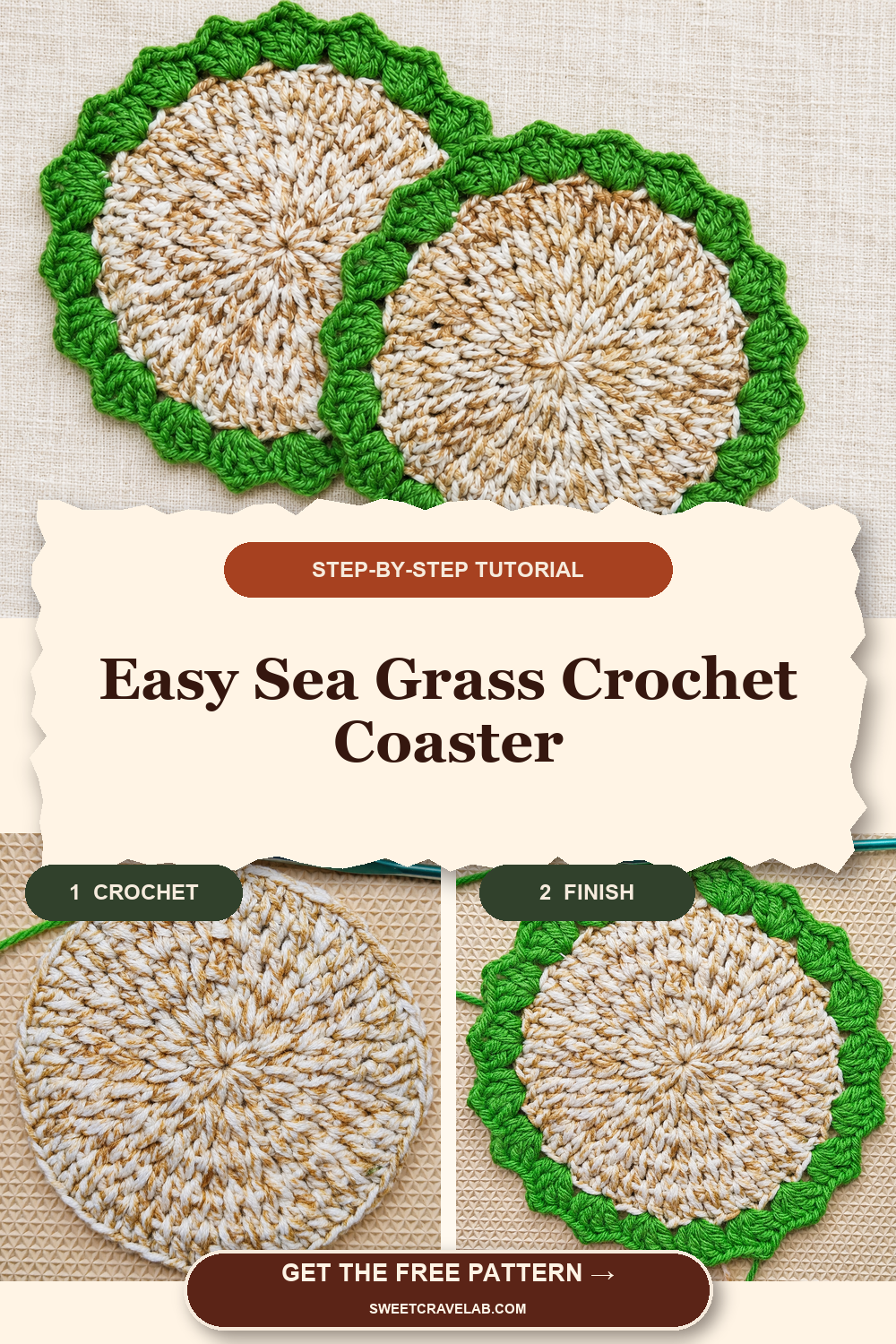
This easy crochet coaster pattern turns two colors of cotton yarn into a practical round mat with a fresh, sea-grass-inspired edge. Five simple double-crochet rounds build the flat center, while one contrasting V-stitch round creates the bold scalloped border. Every stage is photographed so you can check the hook placement, increase rhythm, color change, and finishing.
Easy Crochet Coaster Pattern Guide
- Materials and yarn choice
- US crochet abbreviations
- Six illustrated rounds
- Troubleshooting and blocking
- Frequently asked questions
Why This Round Coaster Is Beginner Friendly
The project uses a small set of repeatable skills: a magic circle, double crochet, increases, slip-stitch joins, one color change, and a V-stitch. The center grows by twelve stitches on every round, making the count easy to predict. If you finish a round with the correct number and the fabric lies flat, you are ready to continue.
Working the center stitches between the posts gives the round a lightly ridged, radiating texture. The green edge is worked through the top loops so each V-stitch stays anchored and clearly defined. This contrast makes the easy crochet coaster pattern look more detailed than its construction really is.
Materials and Yarn Choice
- 8-ply cotton yarn in ivory and tan, or one variegated natural shade
- 8-ply cotton yarn in green for the border
- 4 mm crochet hook
- Locking stitch marker, optional but helpful
- Yarn needle
- Sharp scissors
- Rustproof pins and a blocking mat, optional
Cotton is the best choice because it absorbs condensation, holds its shape, and tolerates regular washing. Avoid fuzzy yarn for your first sample; smooth strands make it much easier to identify the spaces between double-crochet posts. If your label uses a numbered weight, compare it with the Craft Yarn Council yarn-weight system.
US Crochet Abbreviations
| Abbreviation | Meaning |
|---|---|
| ch | chain |
| dc | double crochet |
| inc | work 2 double crochets in the same space |
| sl st | slip stitch |
| st / sts | stitch / stitches |
| sp | space |
| V-st | 2 dc, ch 2, 2 dc in the same stitch |
Construction Notes Before You Begin
- Use US crochet terminology throughout.
- The beginning ch 2 does not count as a stitch.
- Join each round with a slip stitch.
- Round 1 is worked into the magic circle.
- Rounds 2-5 are worked into the spaces between the double-crochet posts, not under the top loops.
- The green border is worked into the top stitches, not between the posts.
- Count after every round: 12, 24, 36, 48, and 60 stitches.
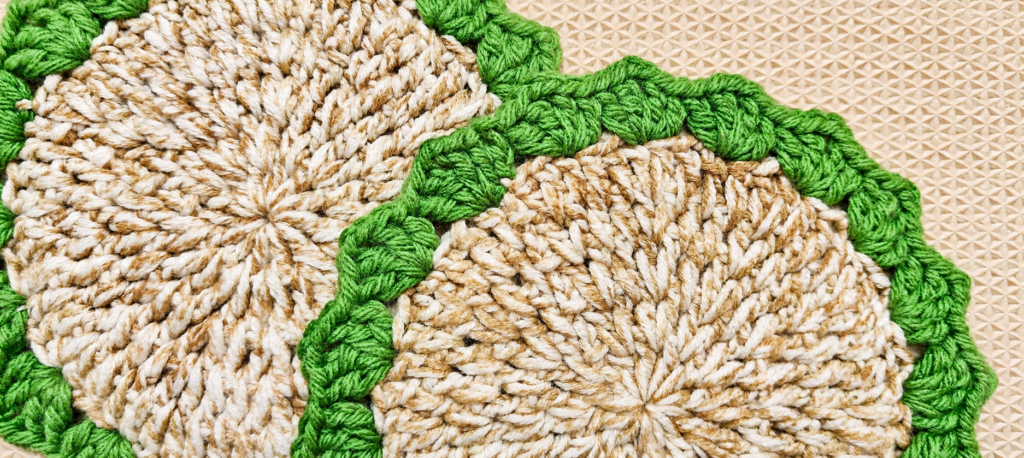
The distinction between a post space and a top stitch is important. For the center, insert the hook into the open gap that separates two tall stitches and work around the complete post structure. For the border, return to normal placement under the top loops. The close-up photographs show both positions.
Easy Crochet Coaster Pattern Instructions
Round 1: Make the Center
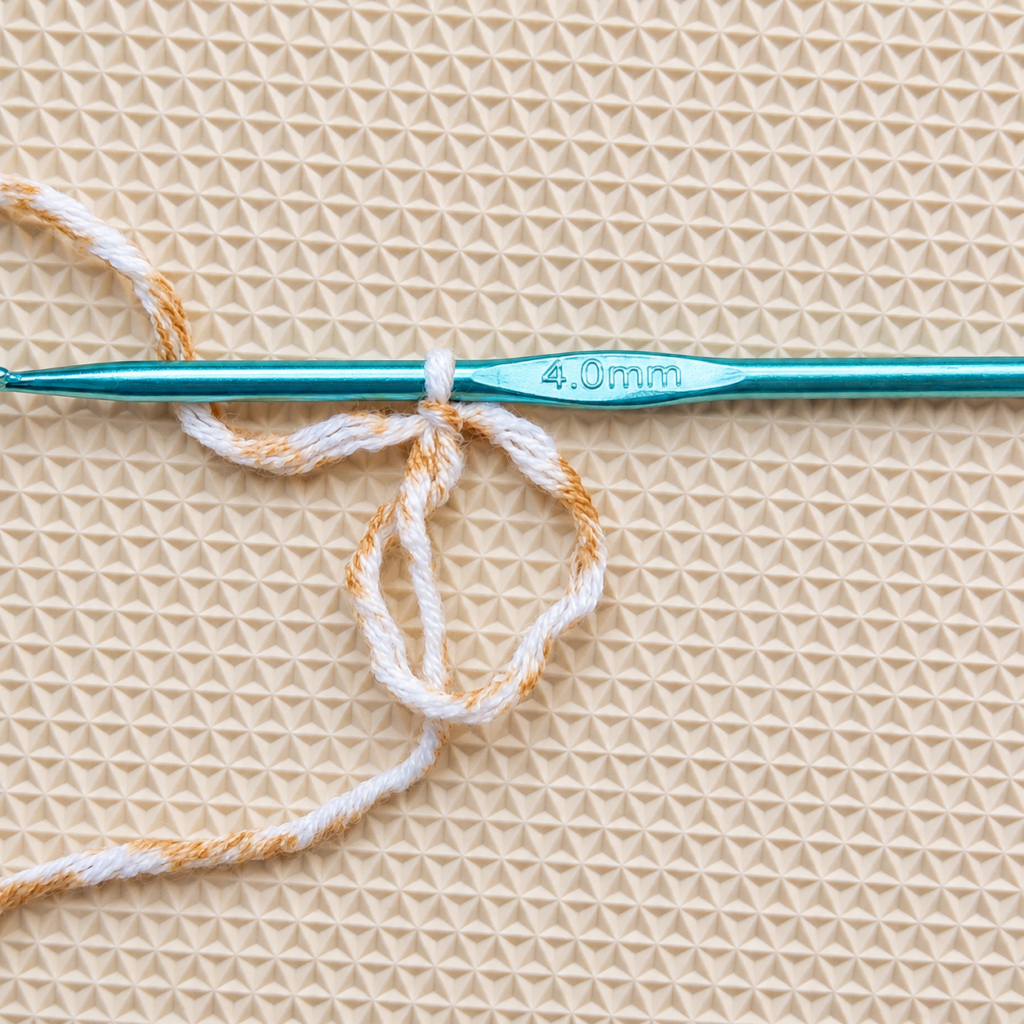
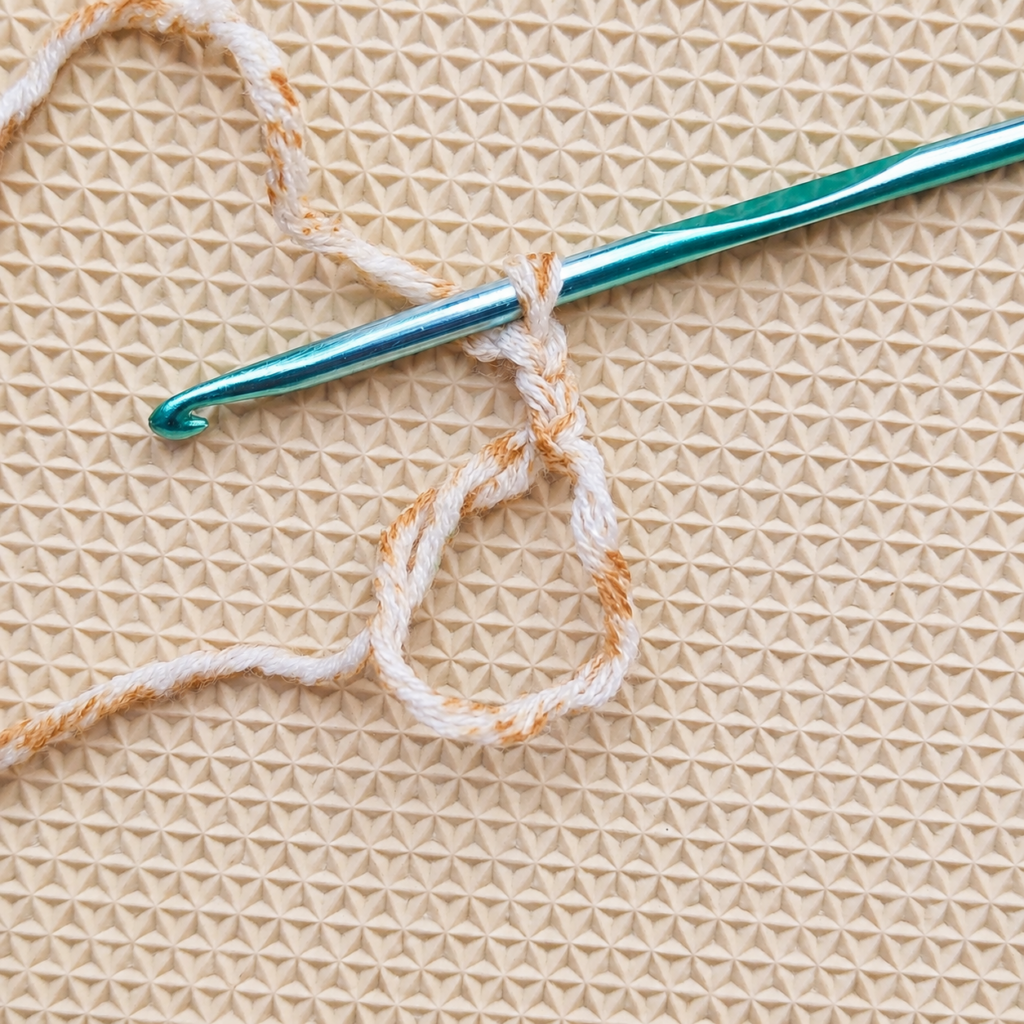
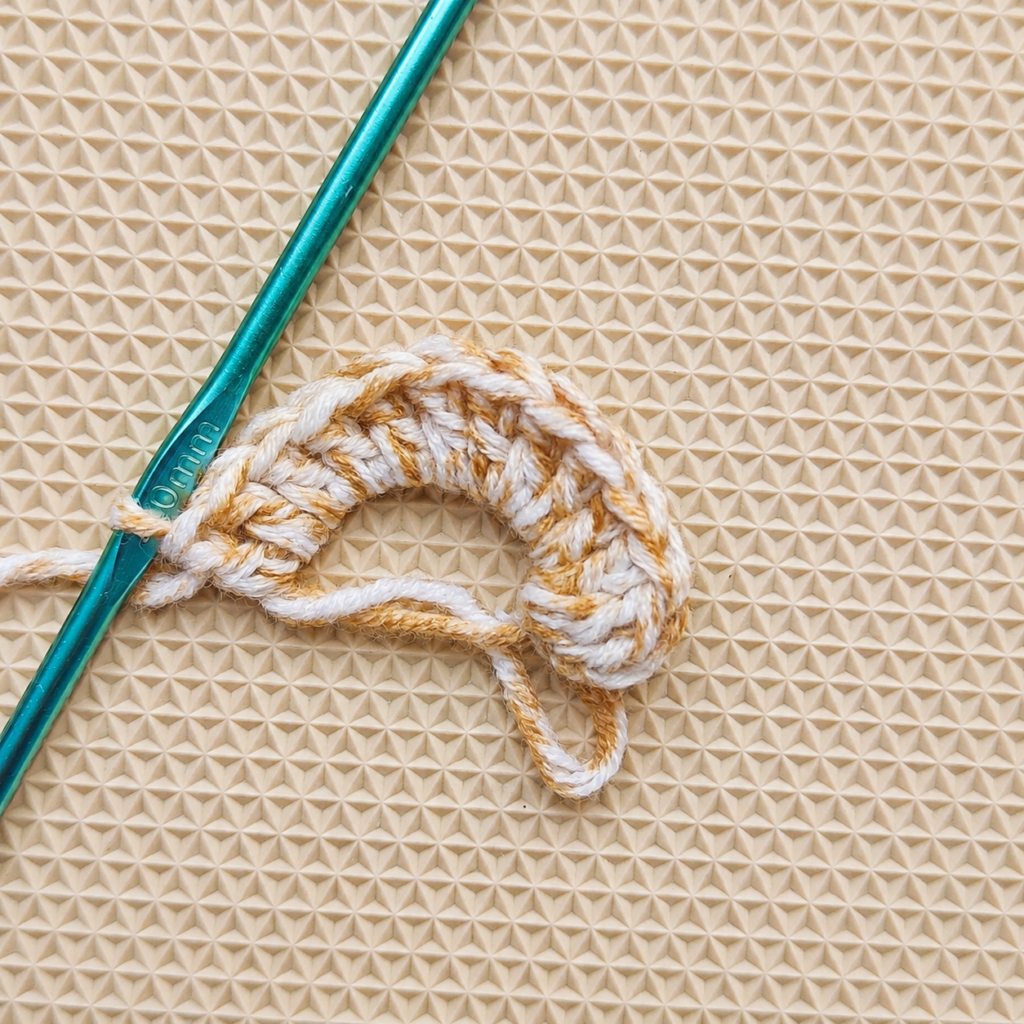
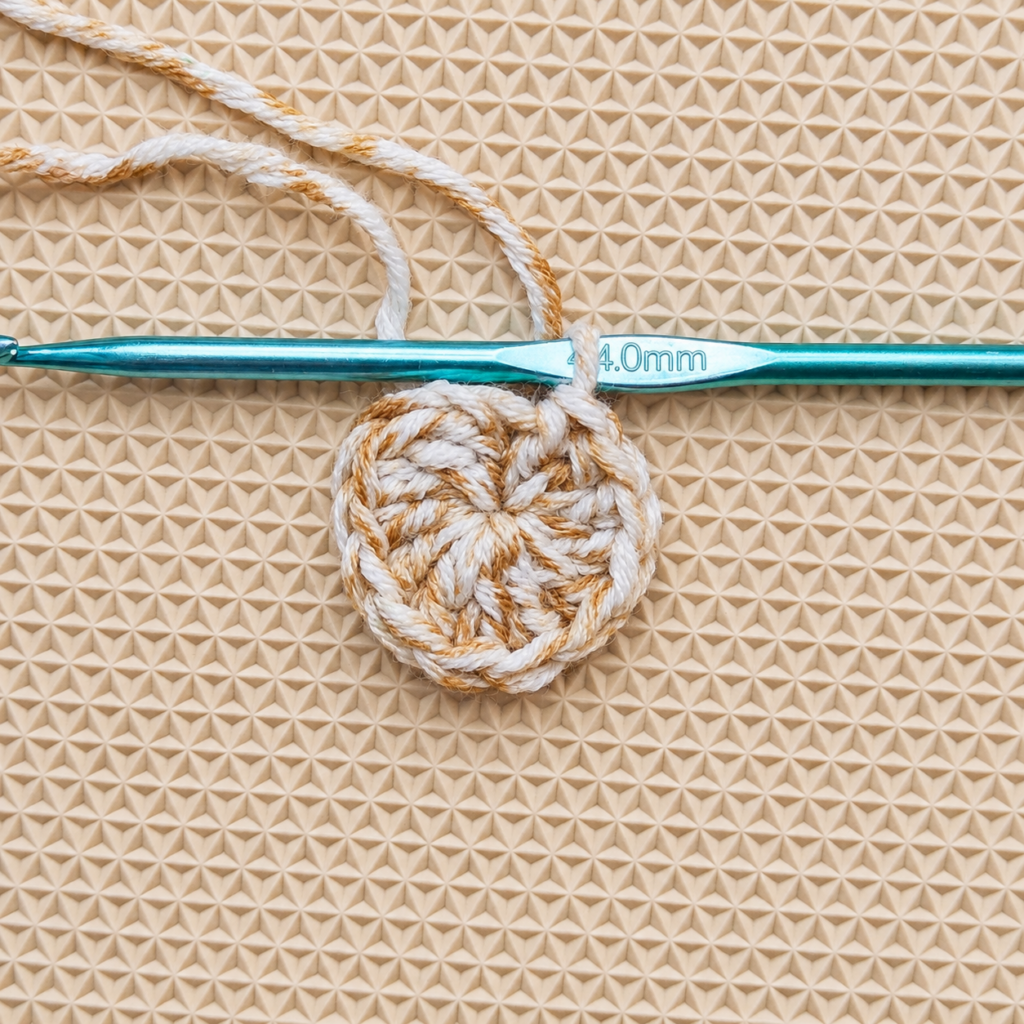
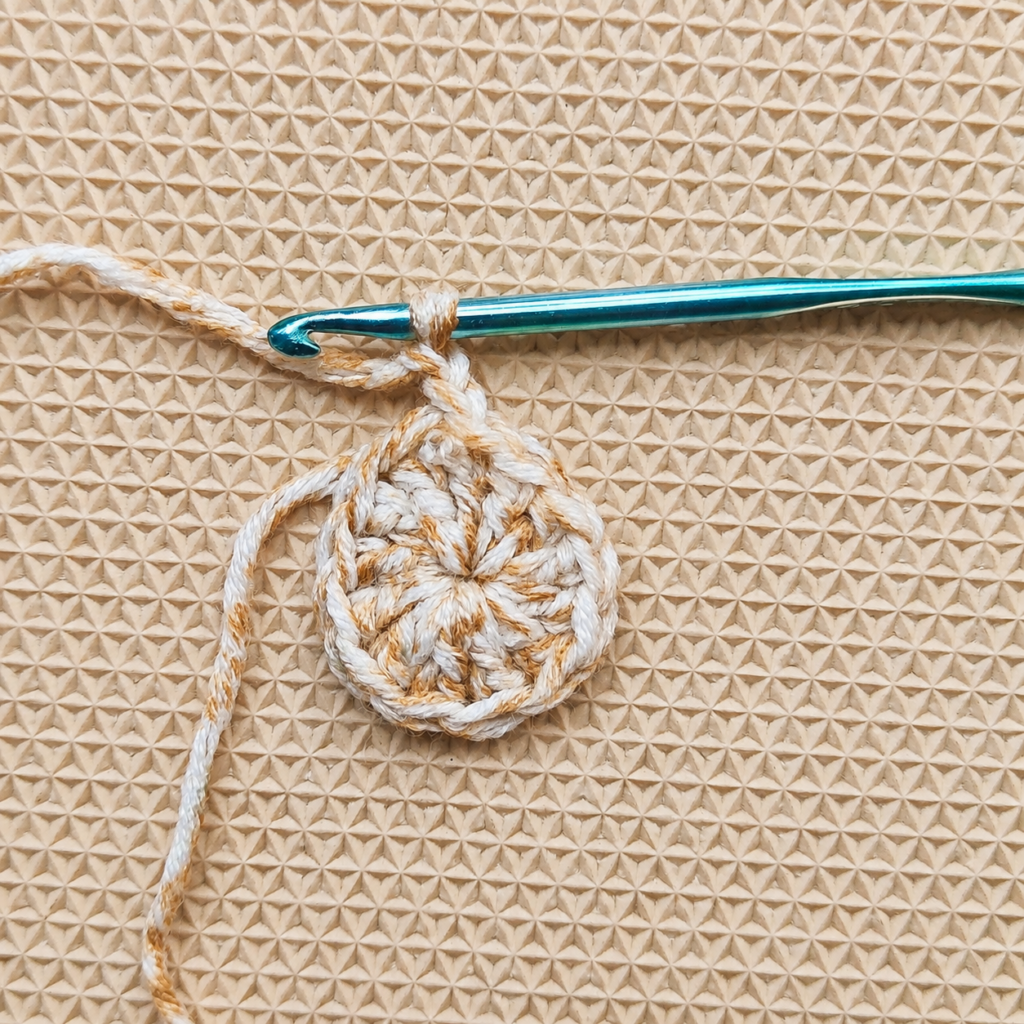
With the ivory-and-tan yarn, make a magic circle. Ch 2, then work 12 dc into the circle. Pull the starting tail until the center closes neatly. Join with a sl st to the first dc. (12 sts)
Round 2: Double Every Space
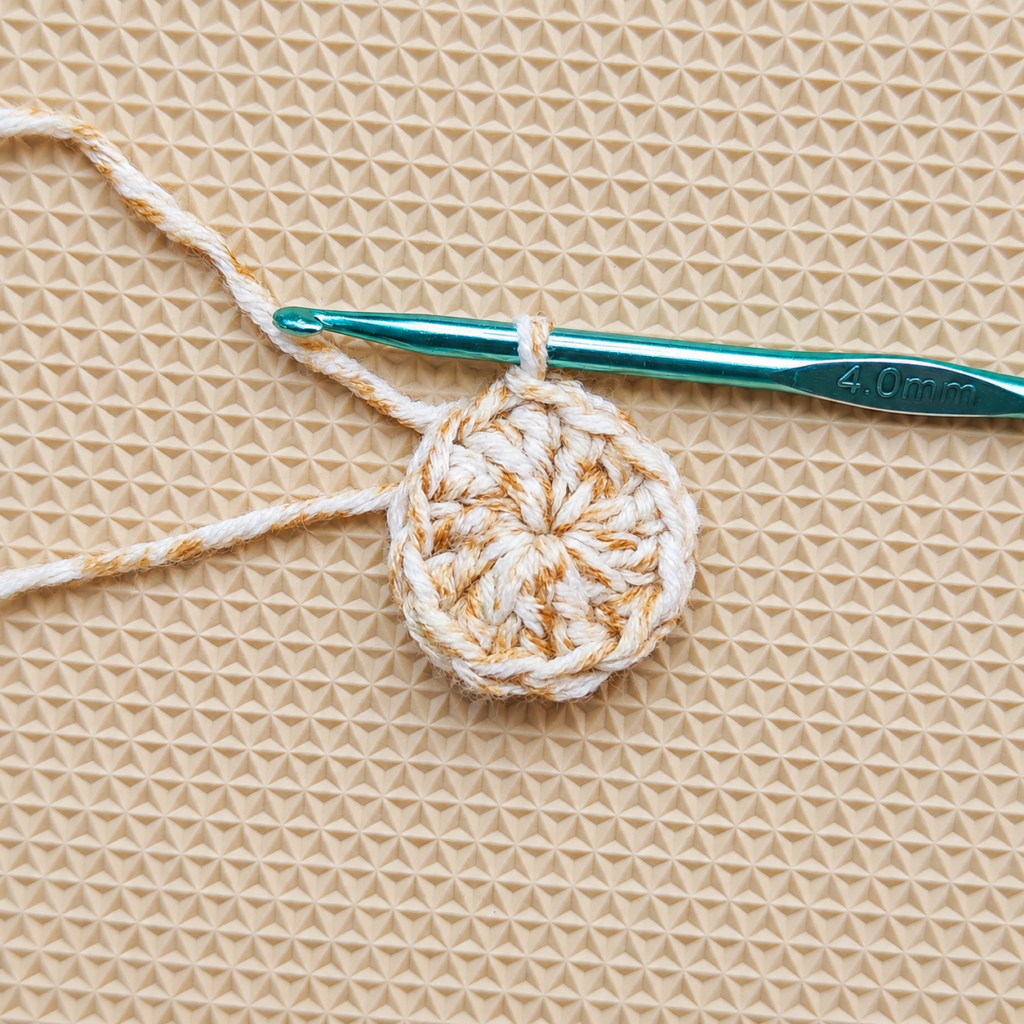
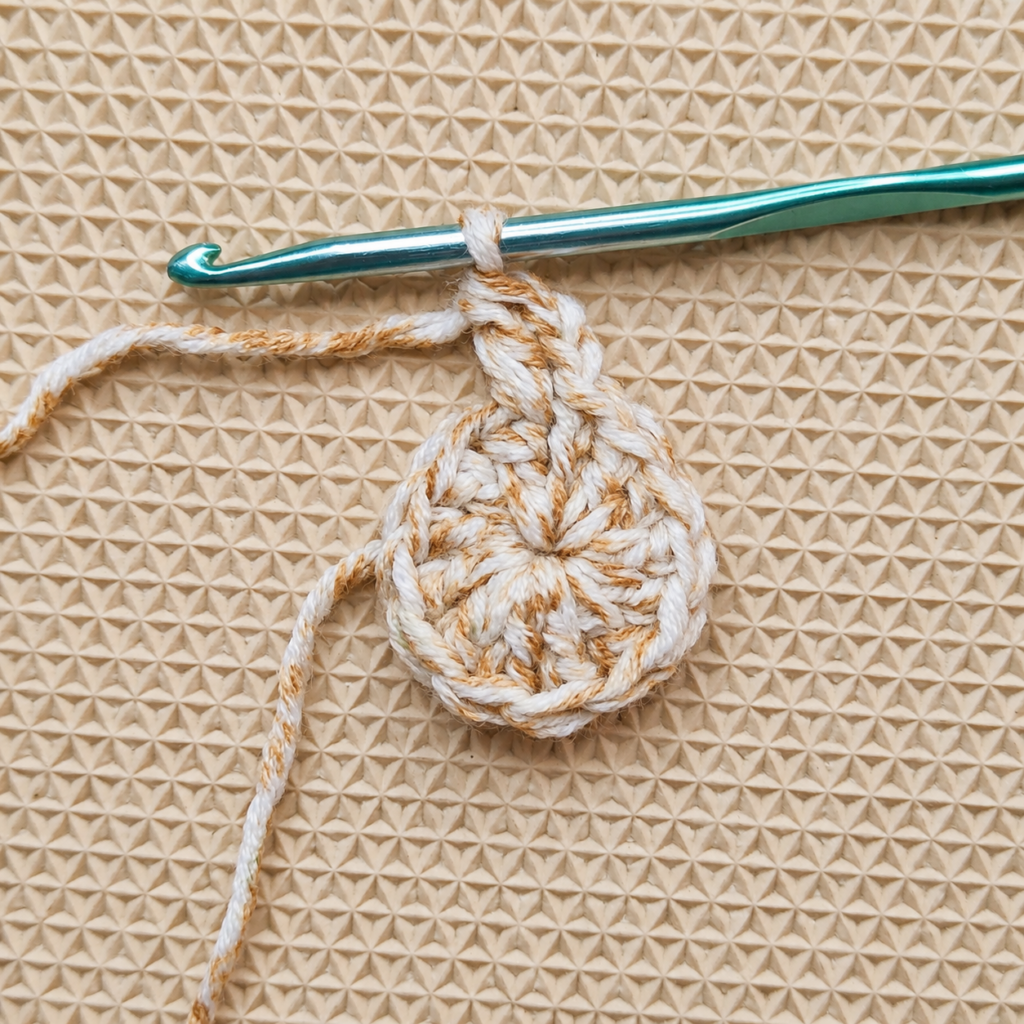
Ch 2. Beginning with this round, work into each space between the dc posts. Place 2 dc in every space around. Join with a sl st to the first dc. The circle should spread evenly without cupping. (24 sts)
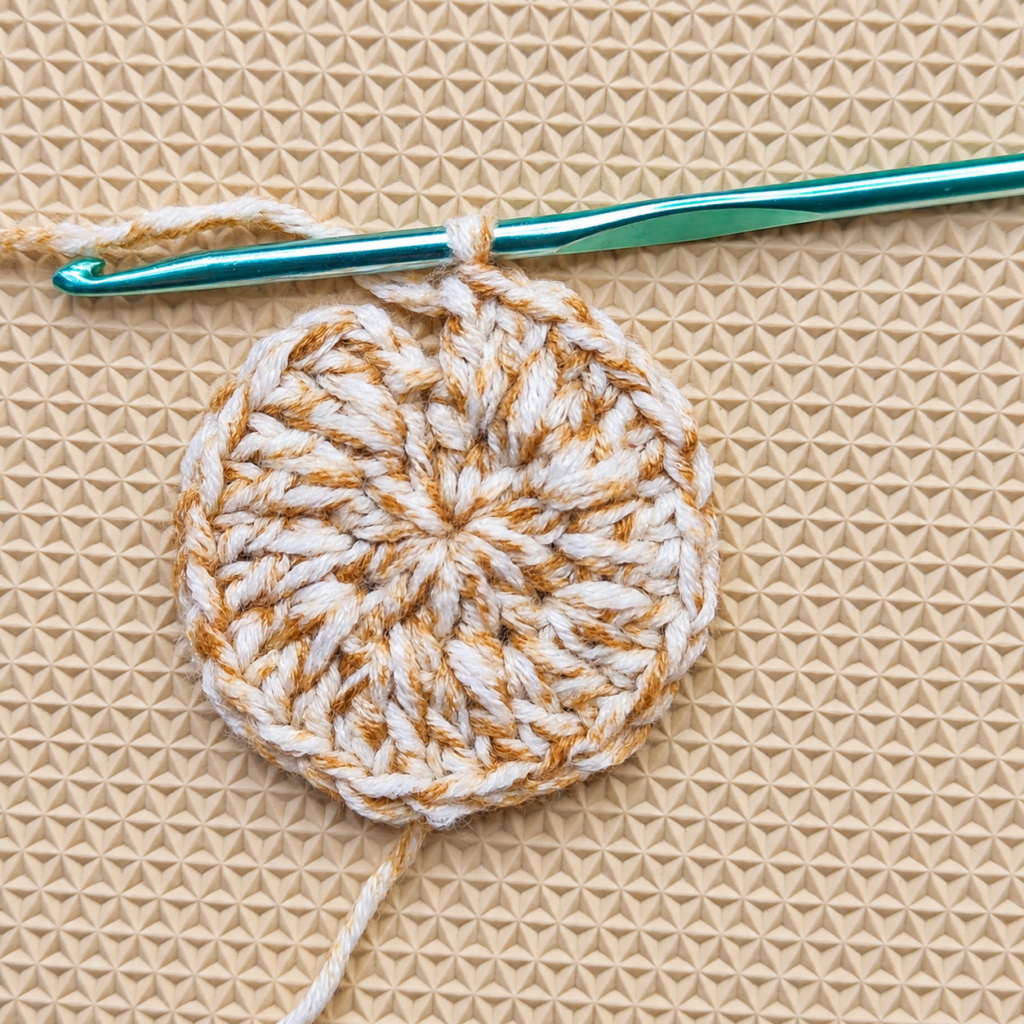
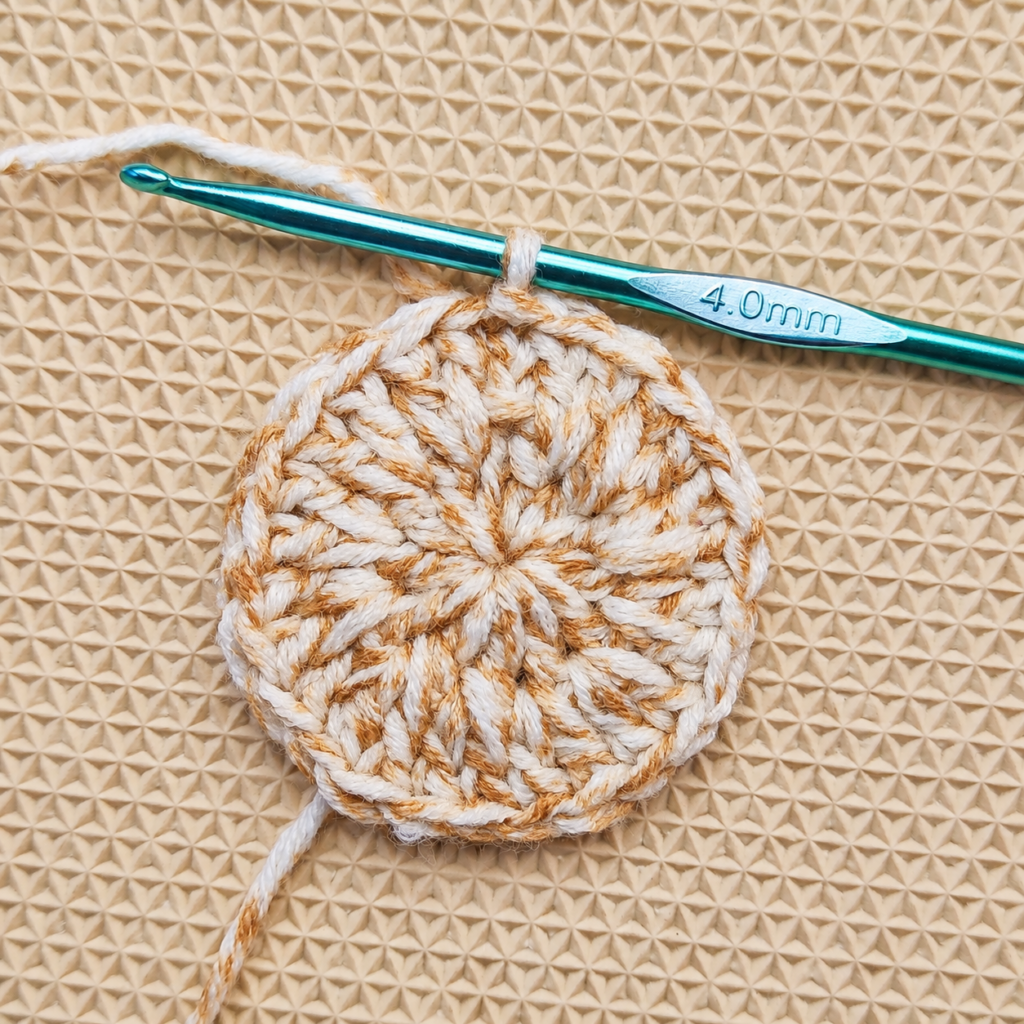
Round 3: Alternate One Stitch and an Increase
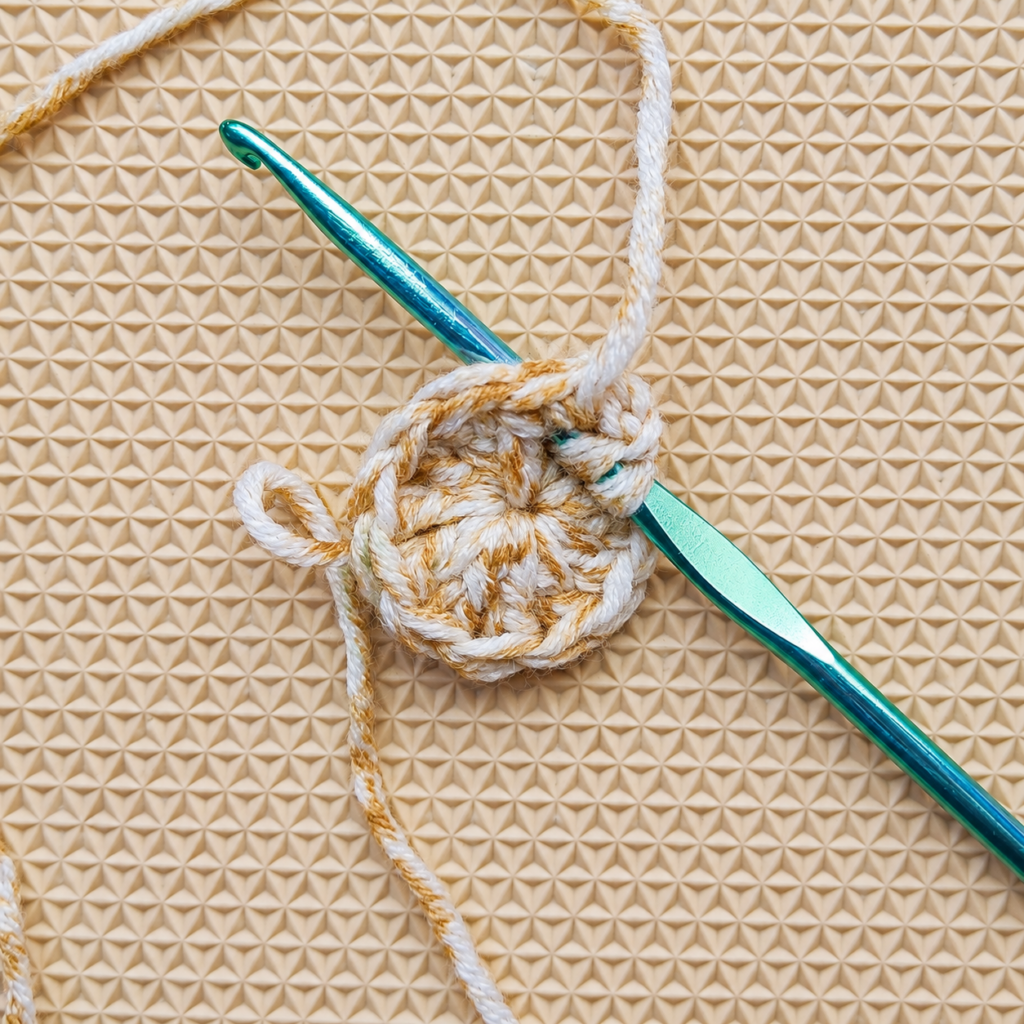
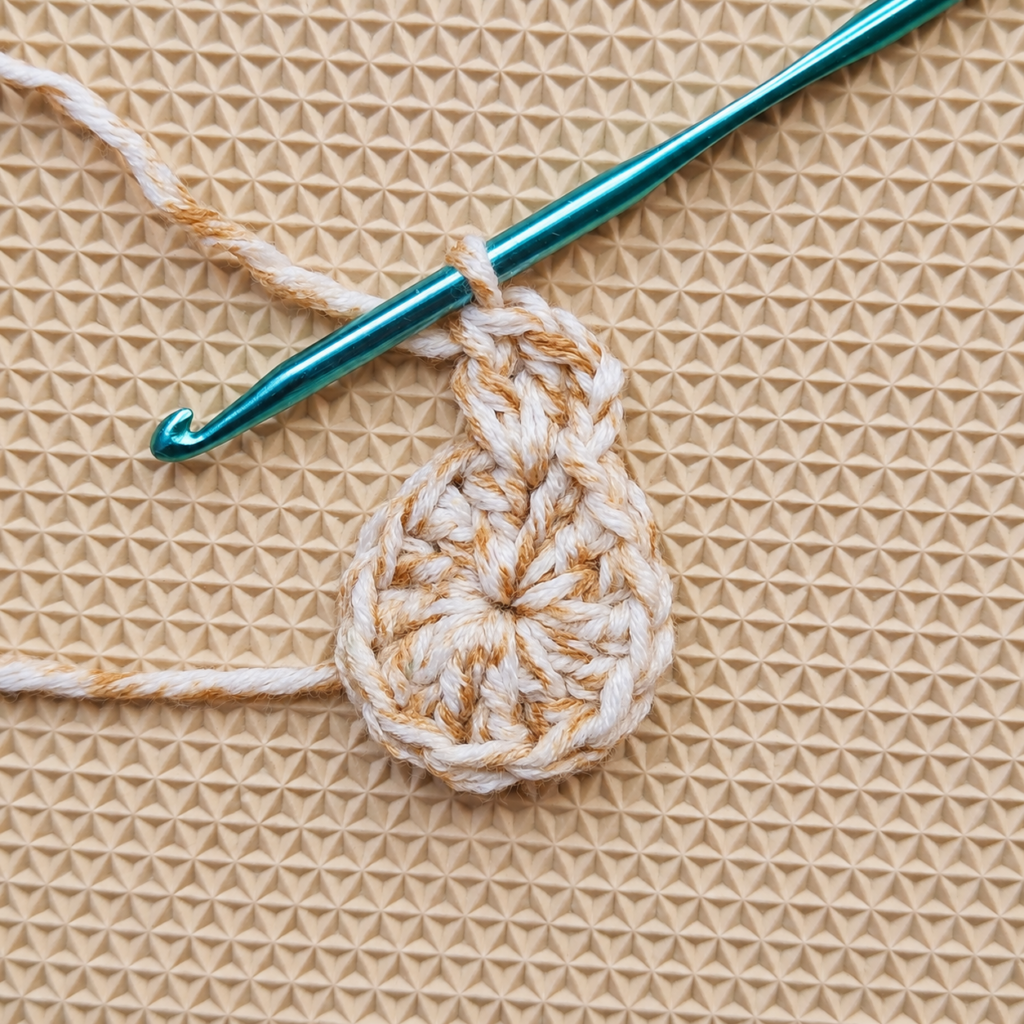
Ch 2. Work 1 dc in the first space and 2 dc in the next space. Repeat [1 dc, inc] around, continuing to work between the posts. Join with a sl st. (36 sts)
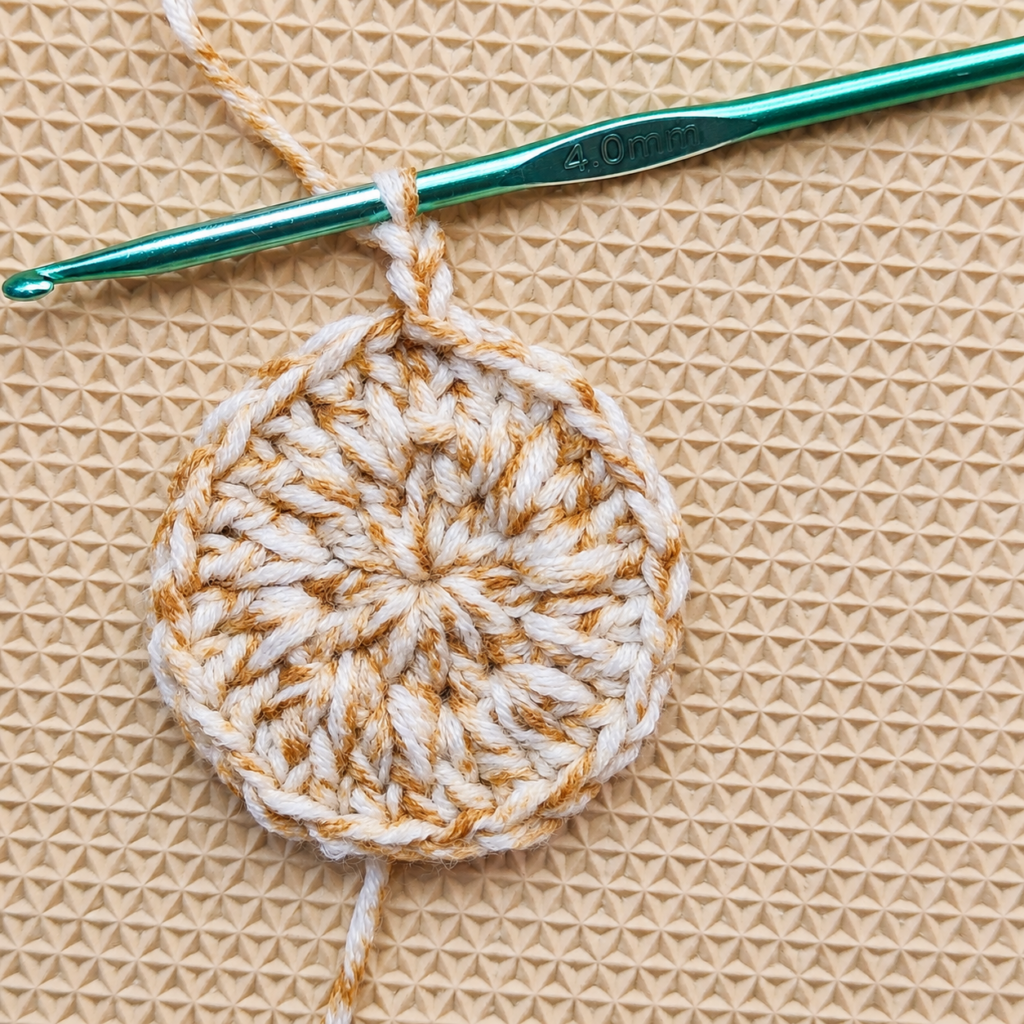
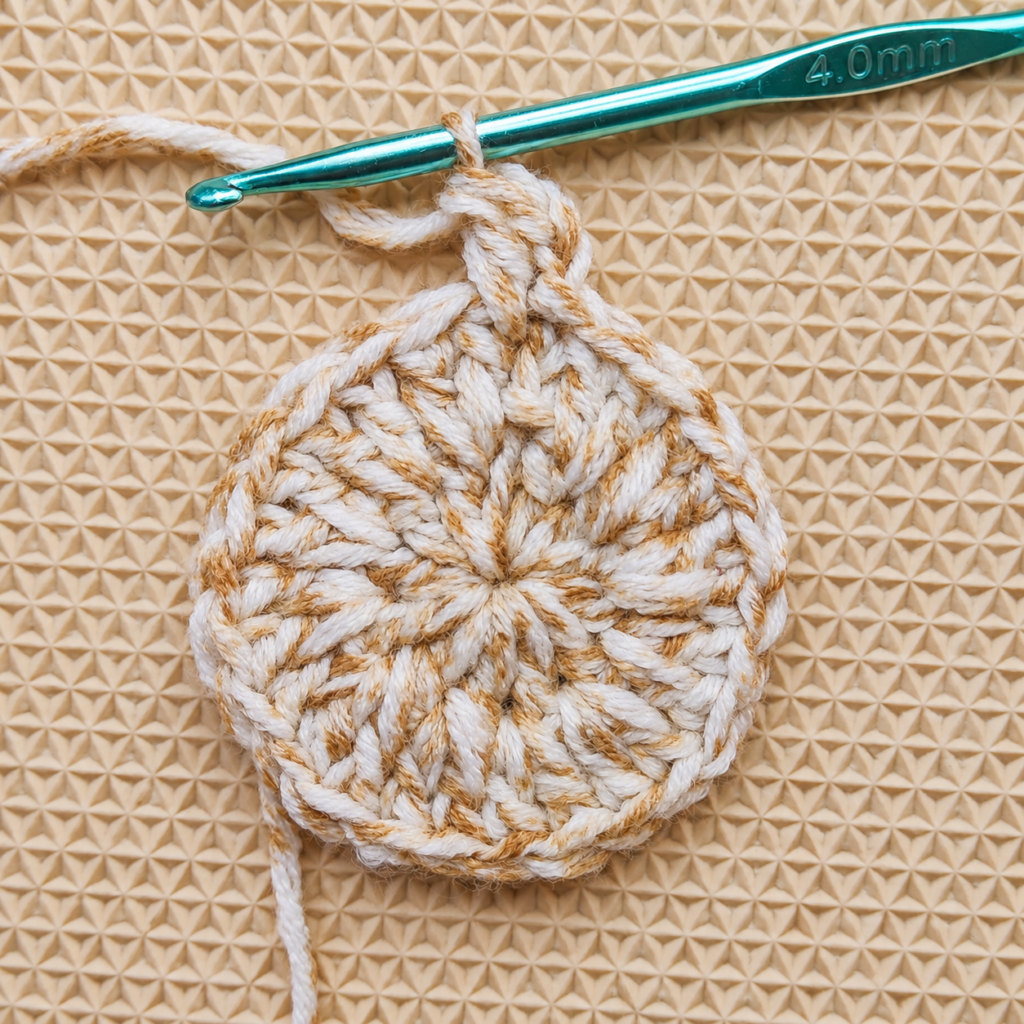
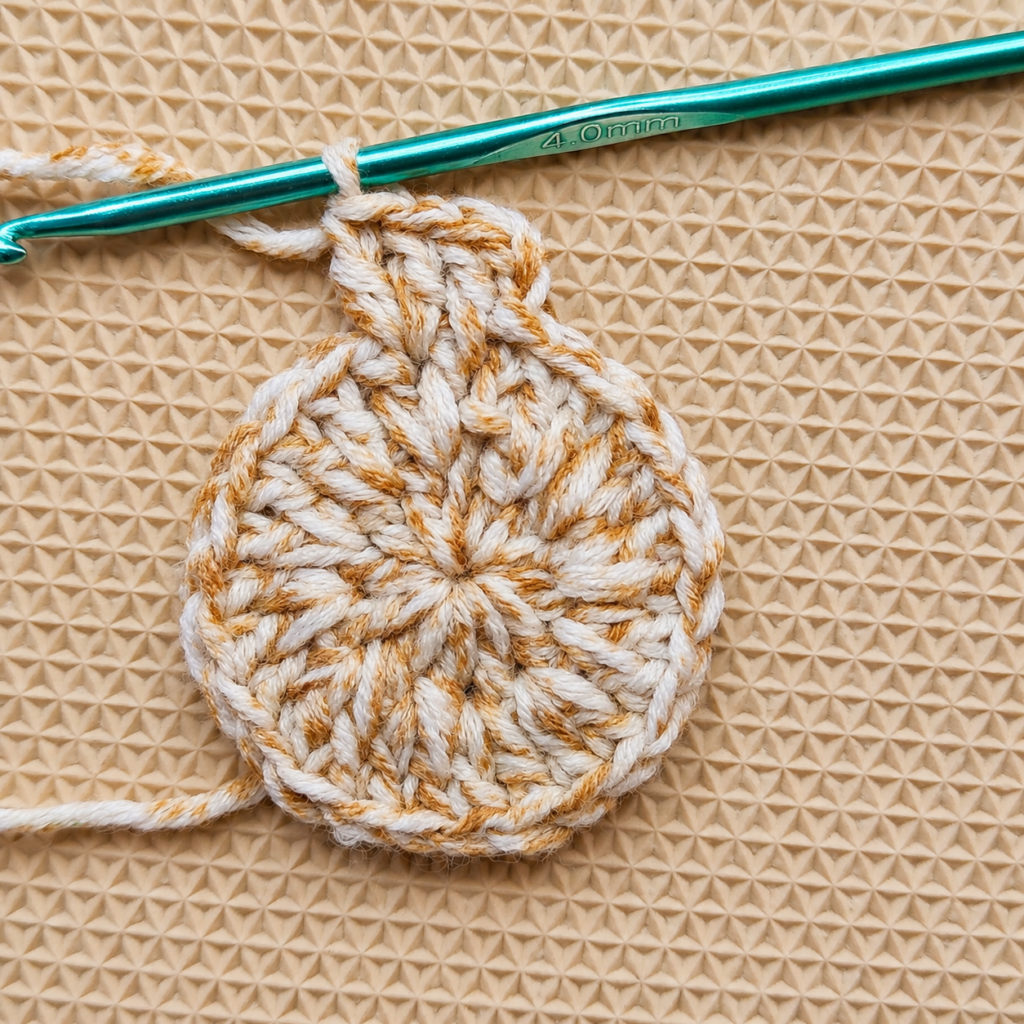
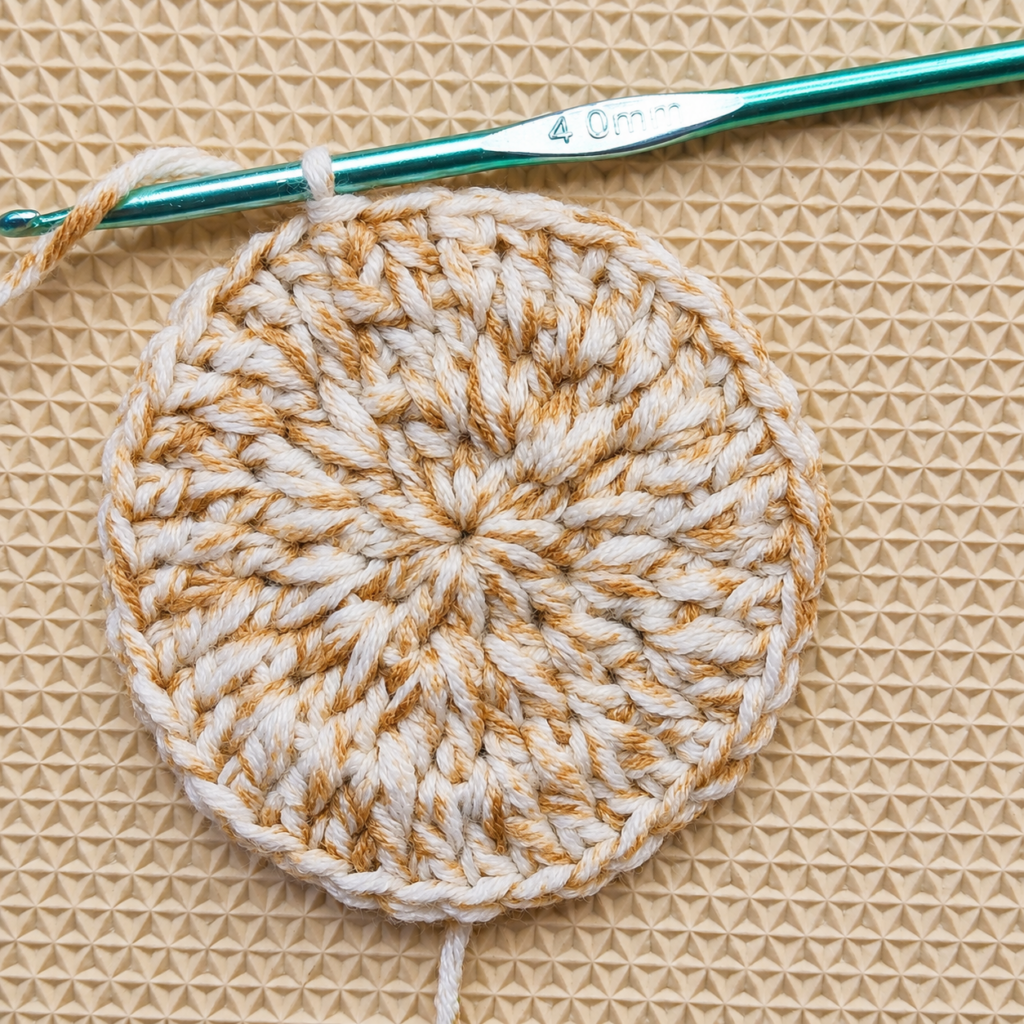
Round 4: Add Two Stitches Between Increases
Ch 2. Work 1 dc in each of the next 2 spaces, then 2 dc in the following space. Repeat [1 dc in 2 spaces, inc] around and join with a sl st. (48 sts)
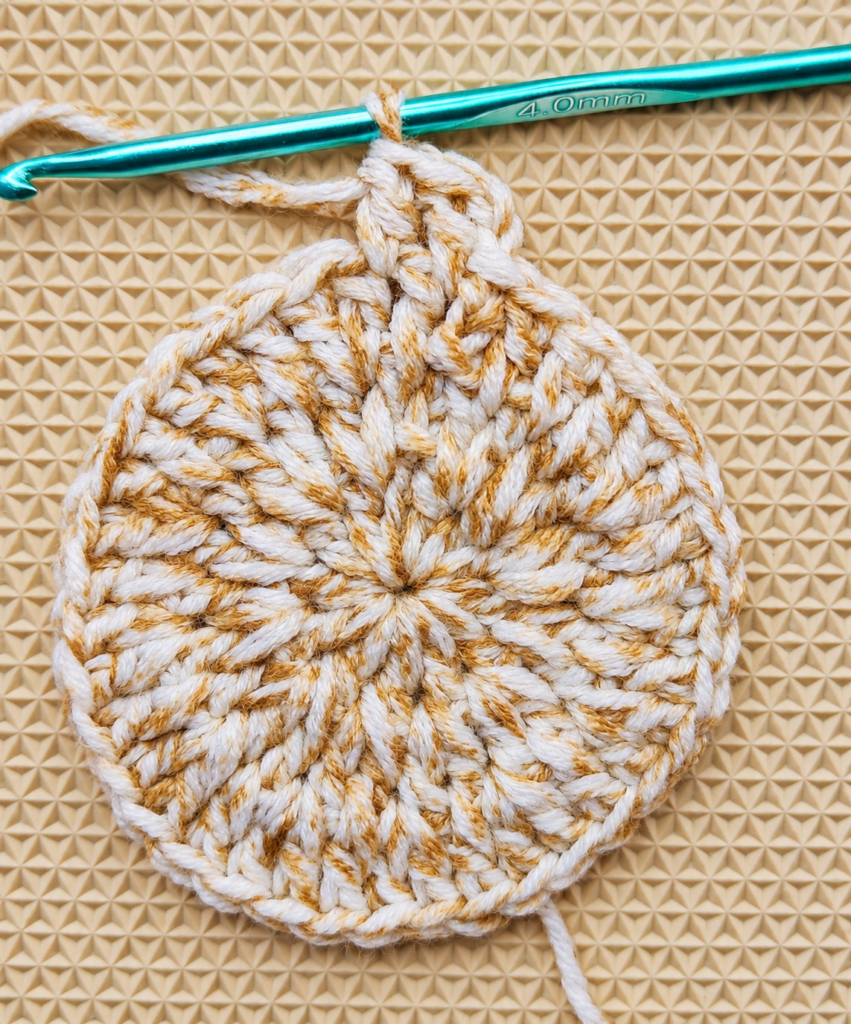
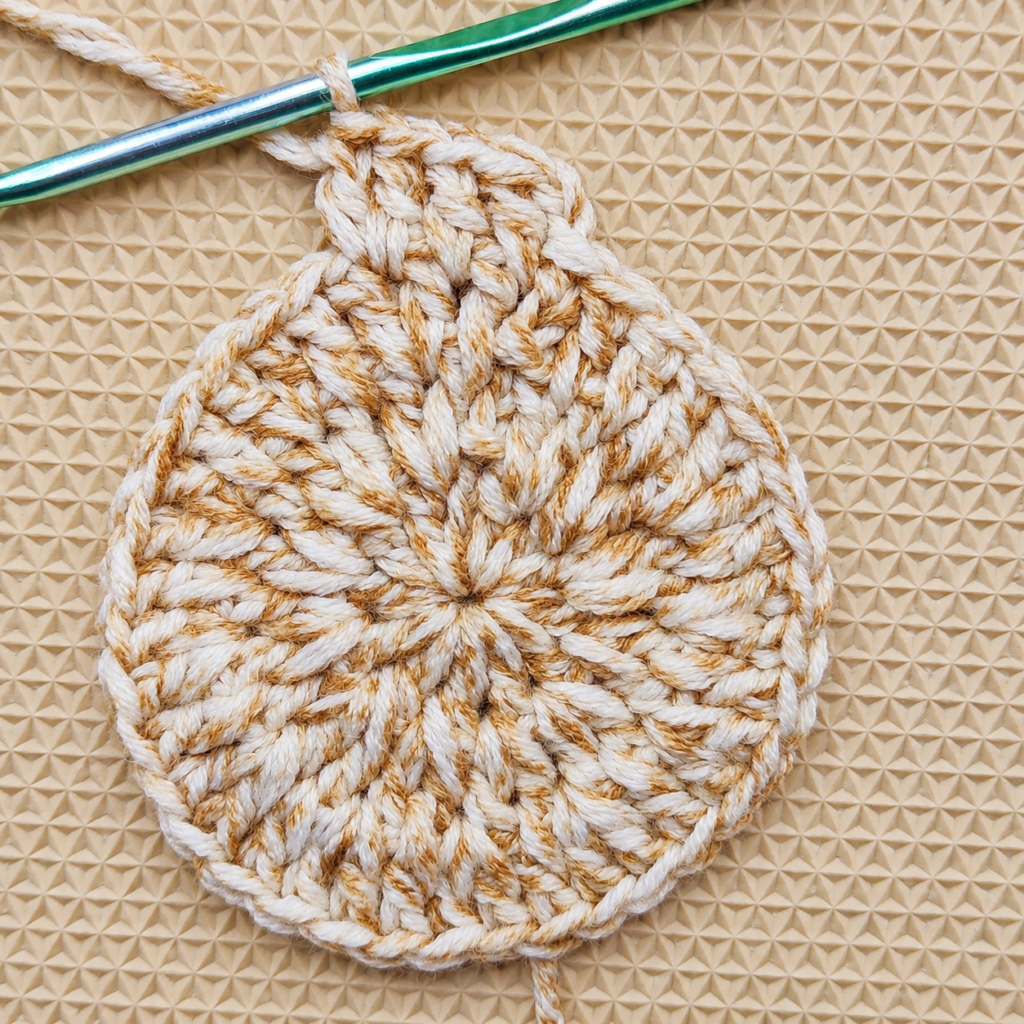
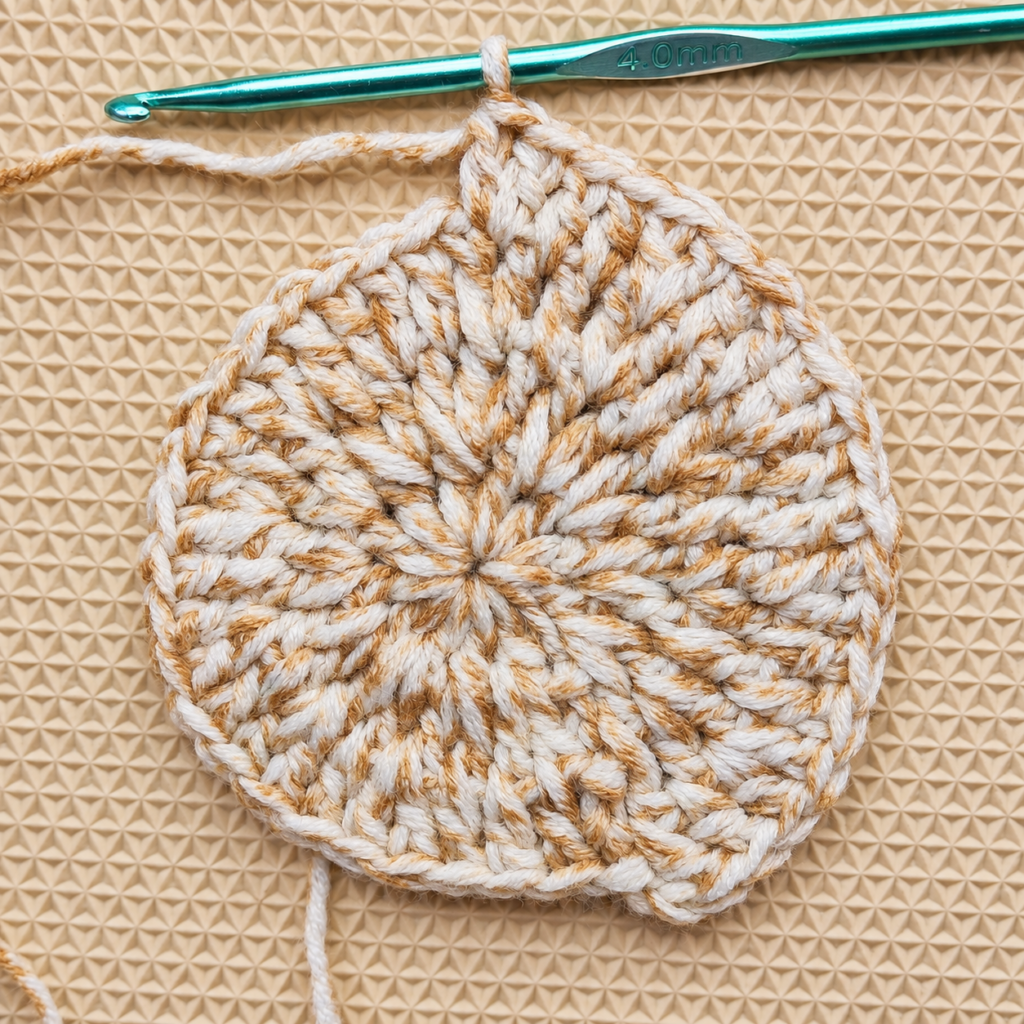
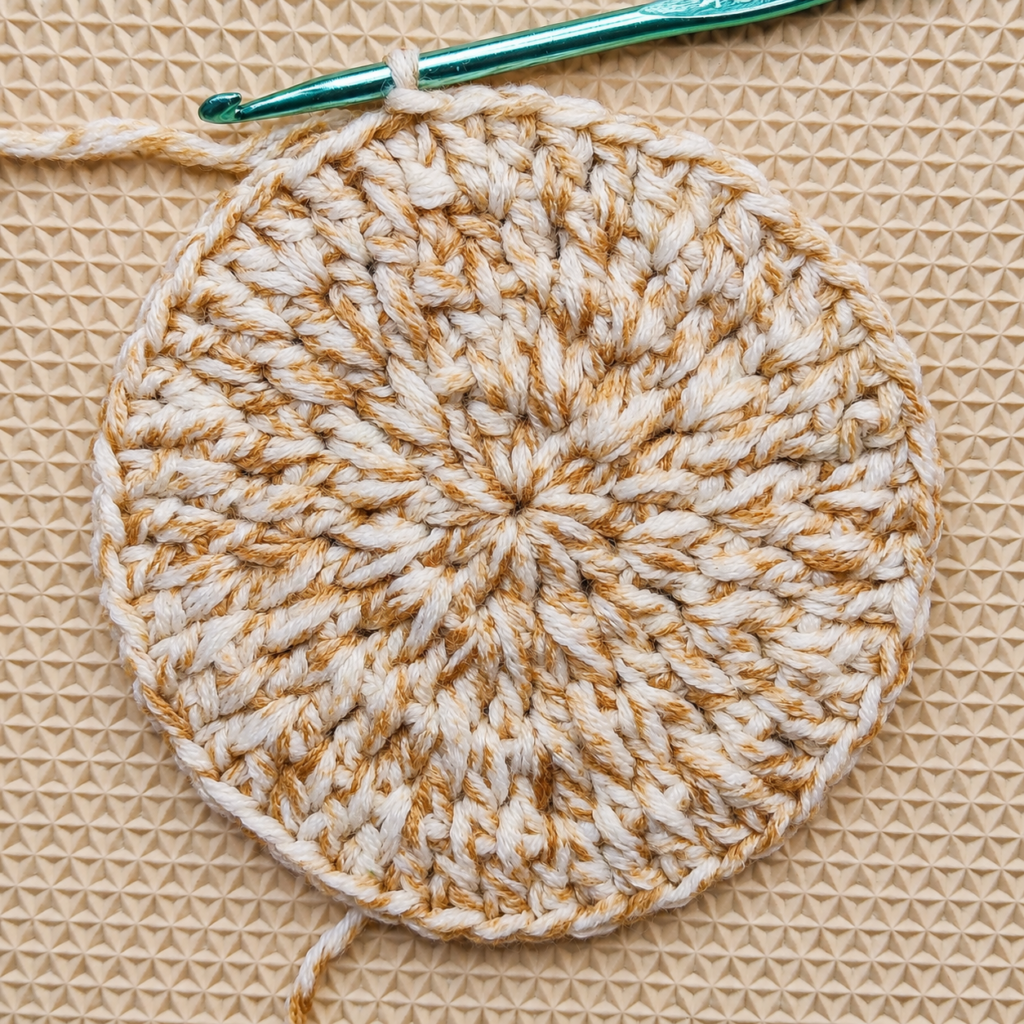
Round 5: Finish the Flat Circle and Change Color
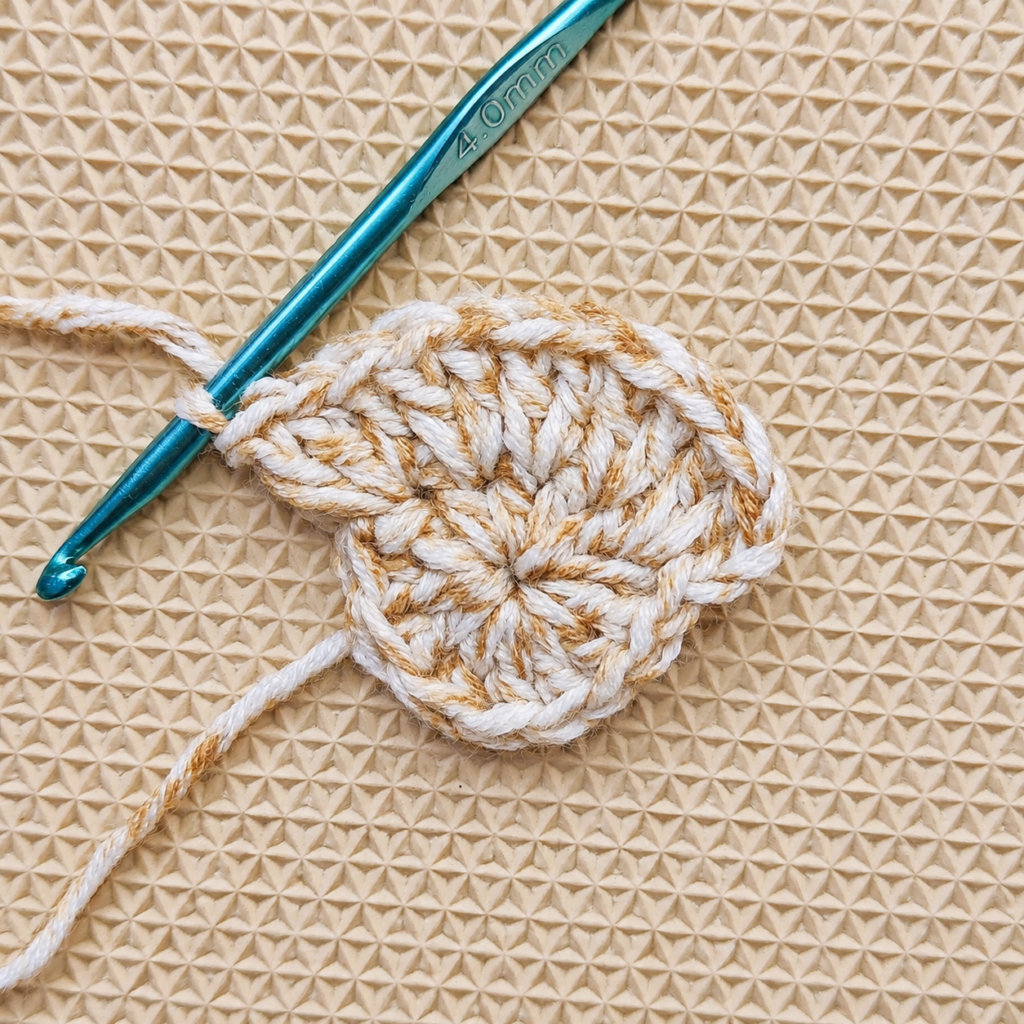
Ch 2. Work 1 dc in each of the next 3 spaces, then 2 dc in the next space. Repeat [1 dc in 3 spaces, inc] around. On the final joining slip stitch, pull the green yarn through to complete the color change. (60 sts)
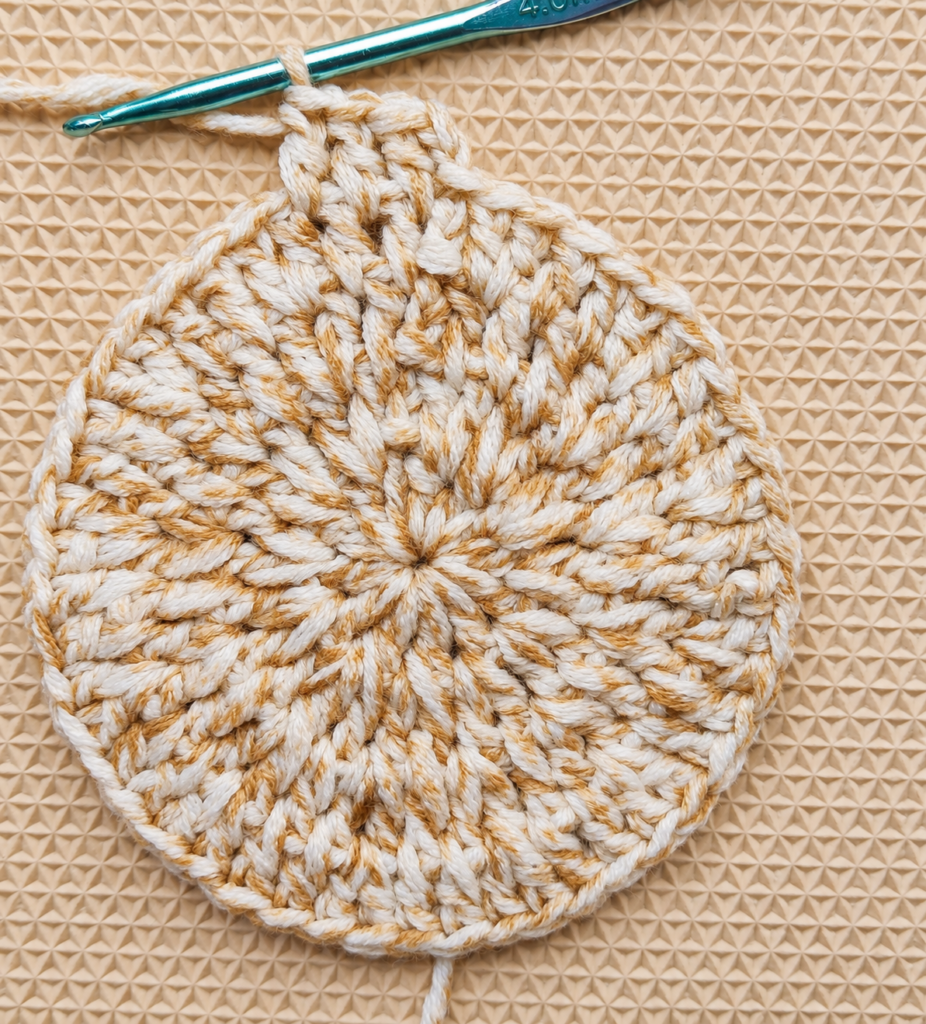
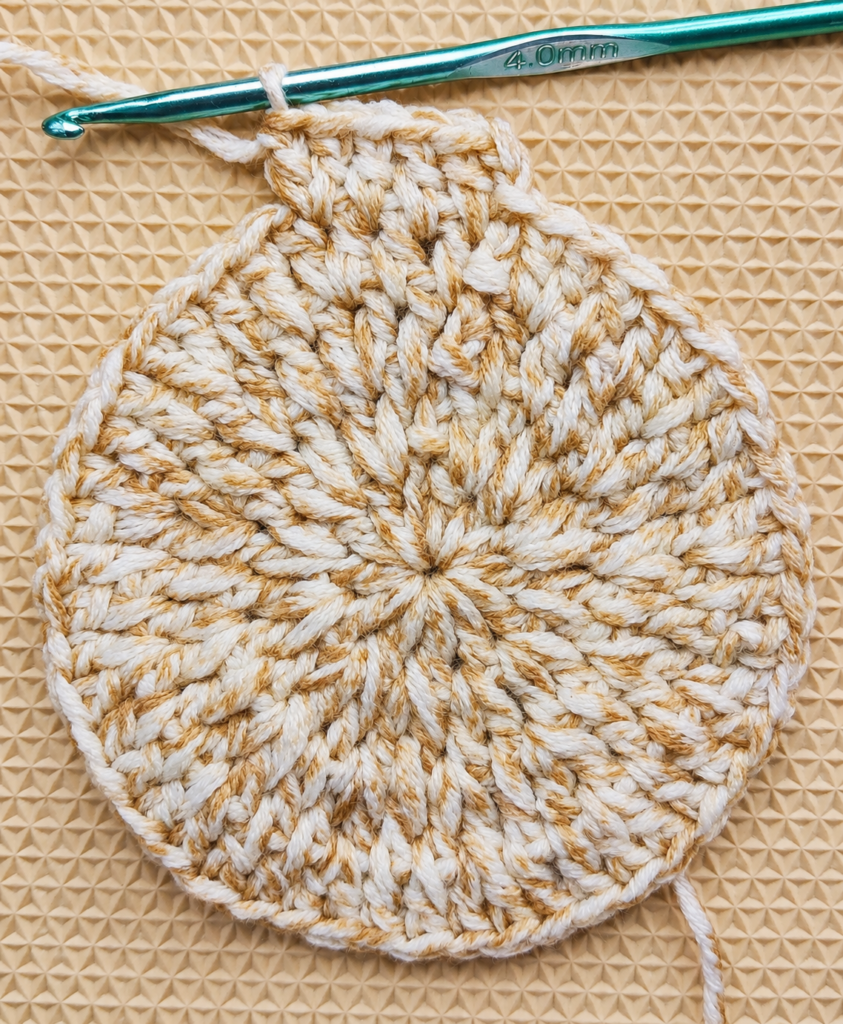
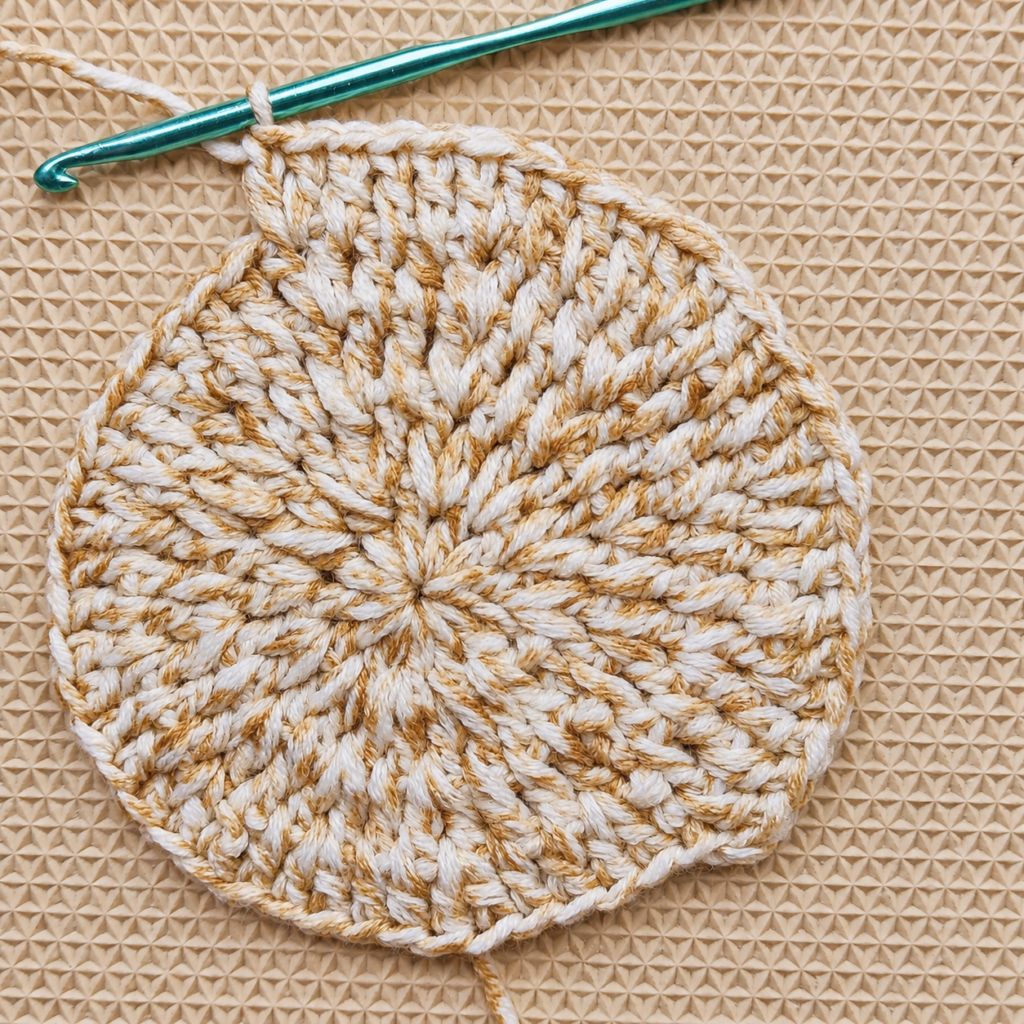
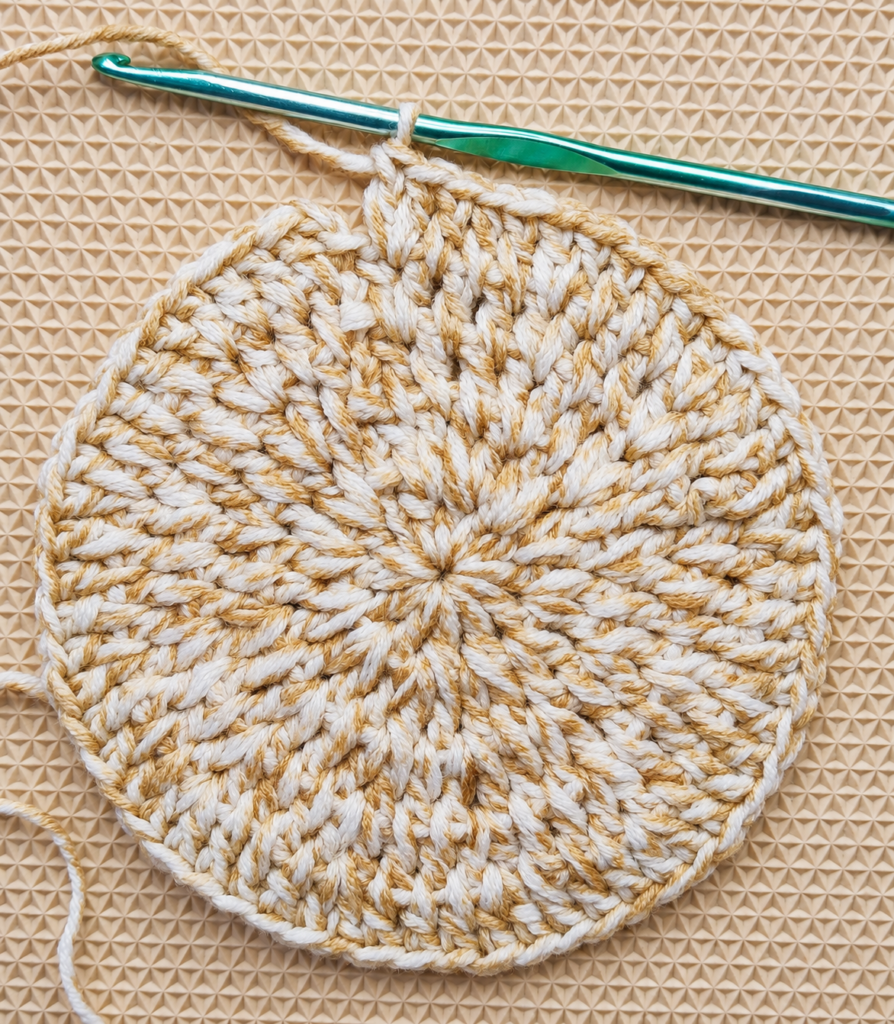
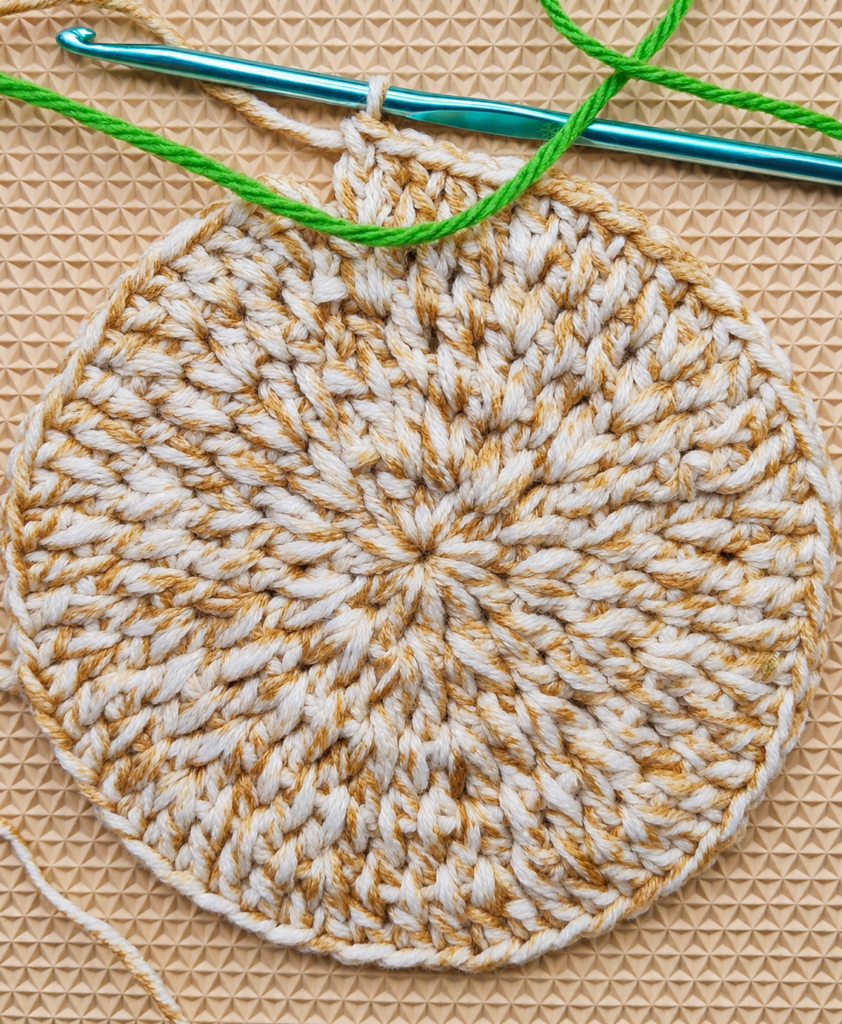
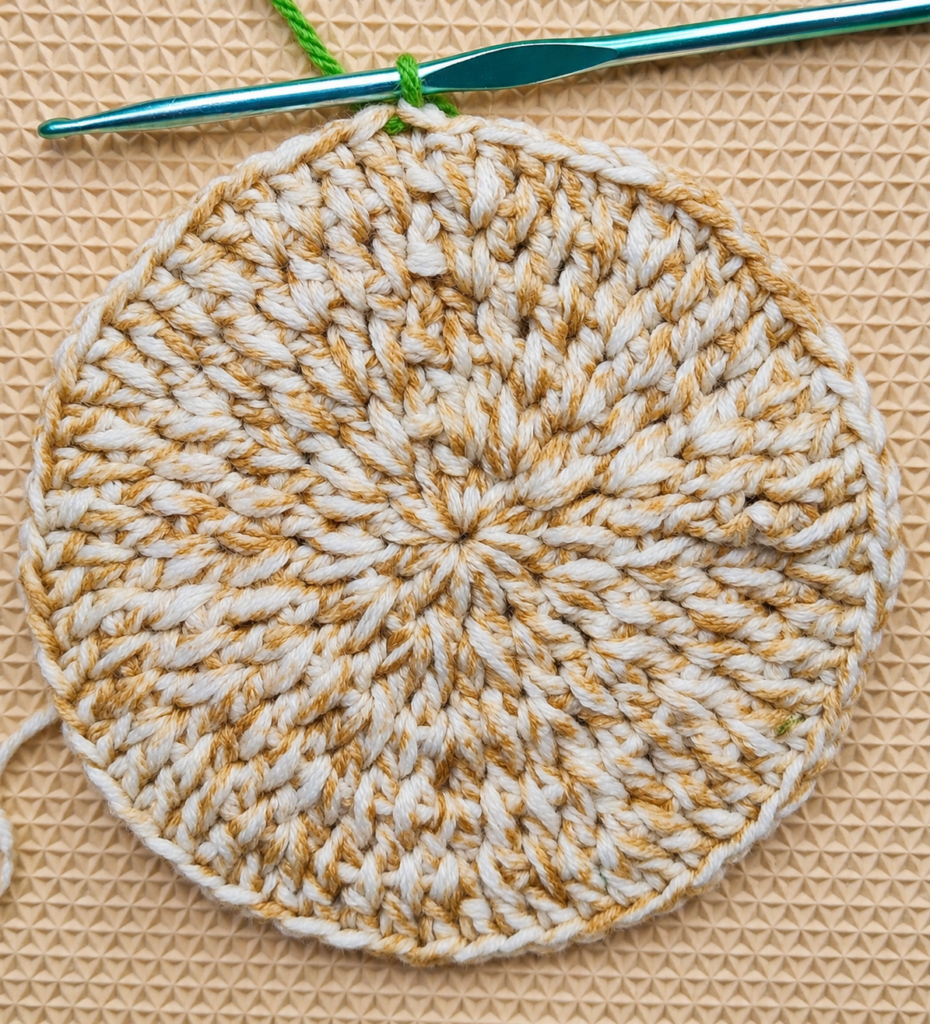
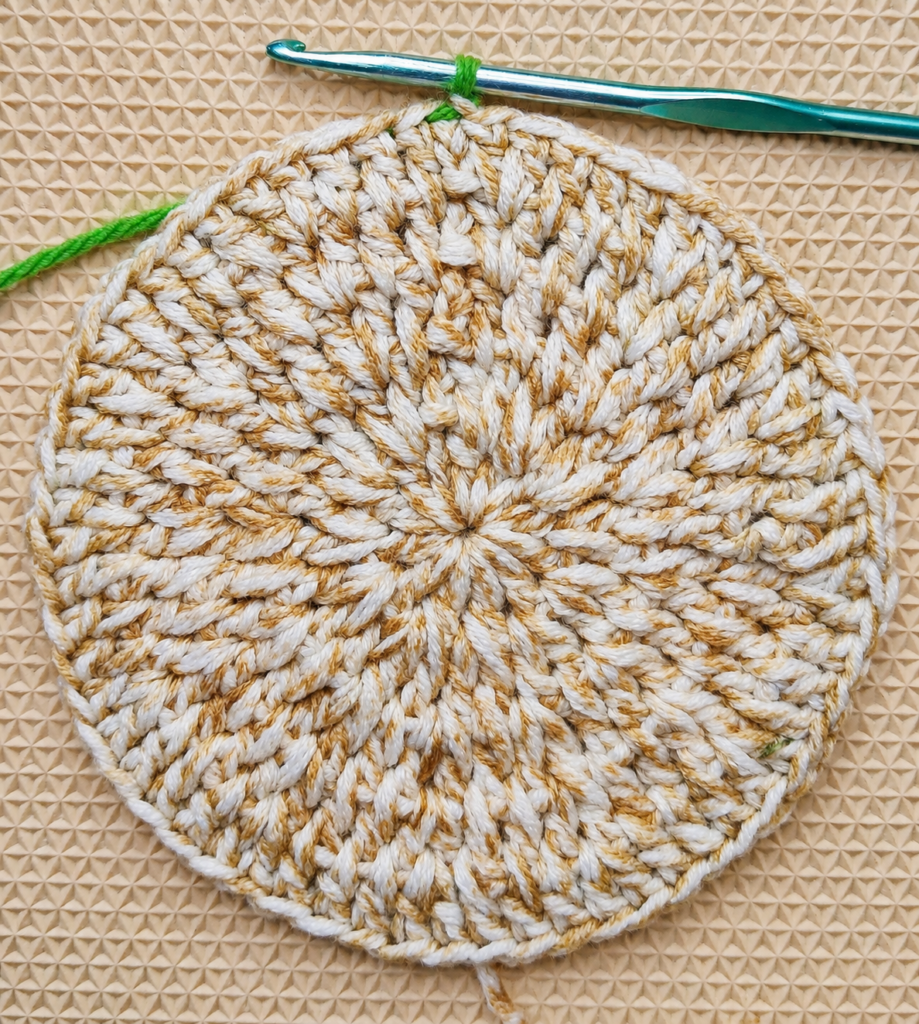
For a larger mat, keep the same increase logic: the next round uses 4 individual dc before each increase for 72 stitches, followed by 5 individual dc before each increase for 84 stitches. Add only as many rounds as needed, and confirm the fabric stays flat before working the border.
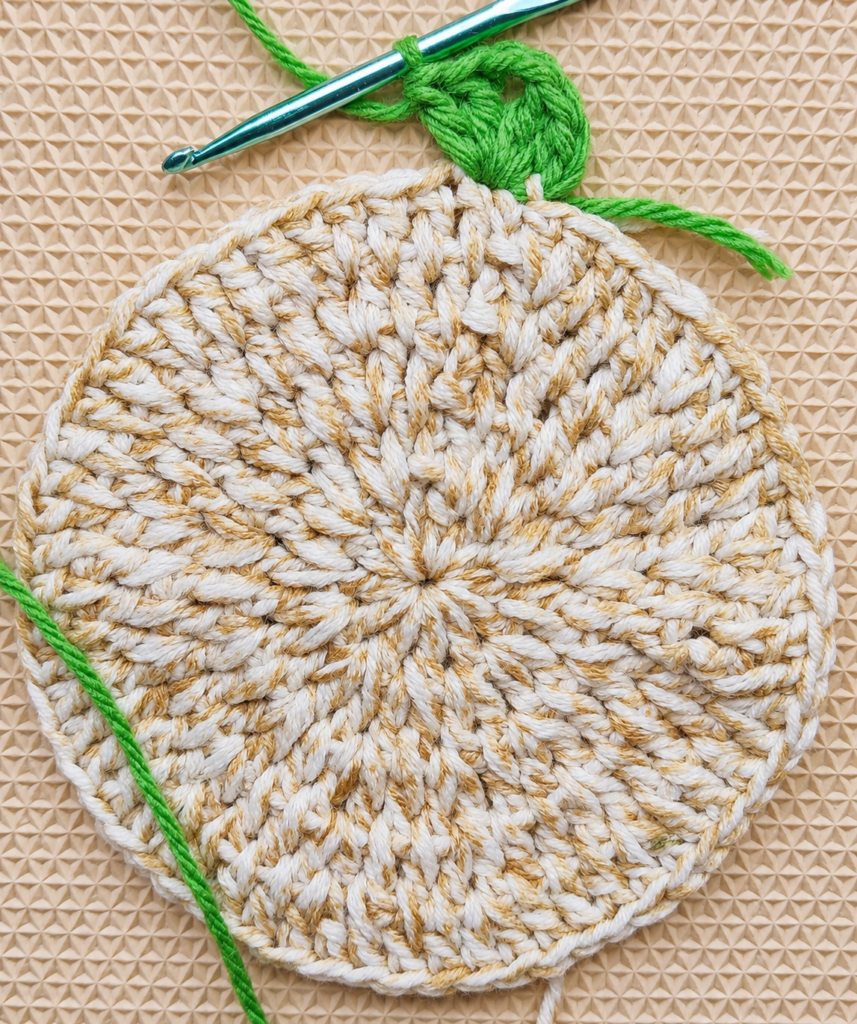
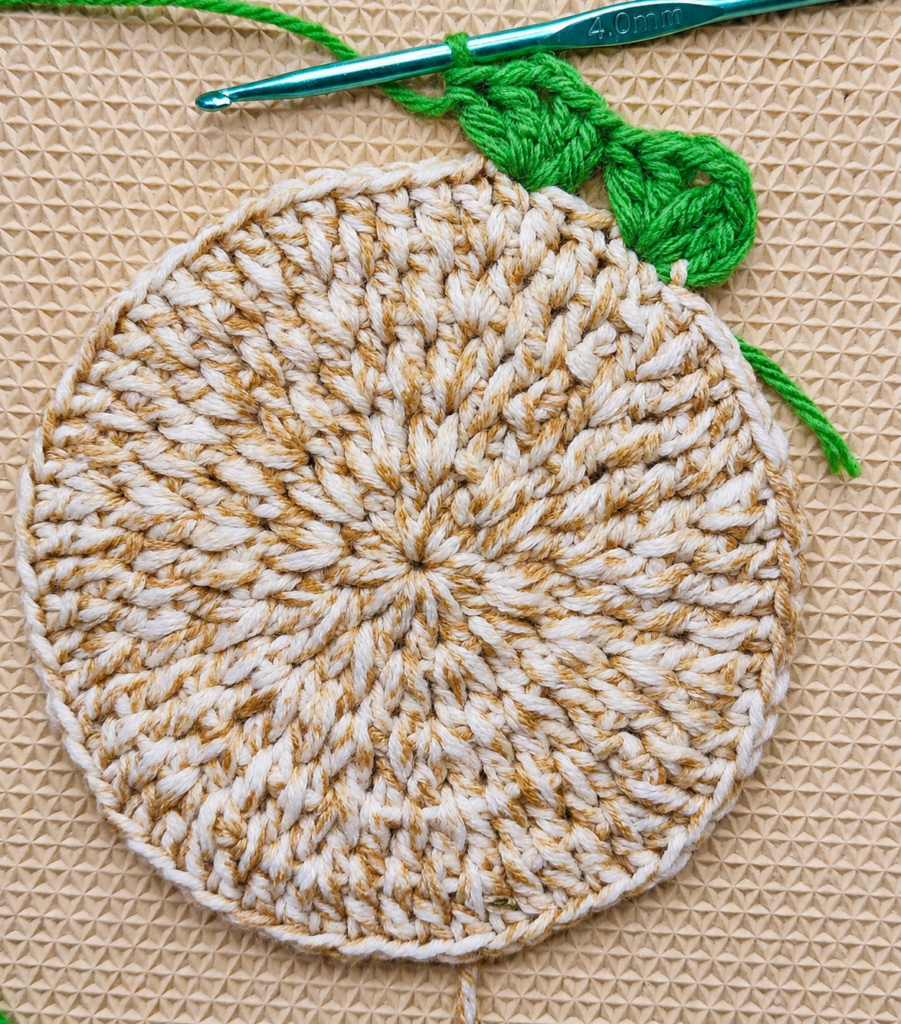
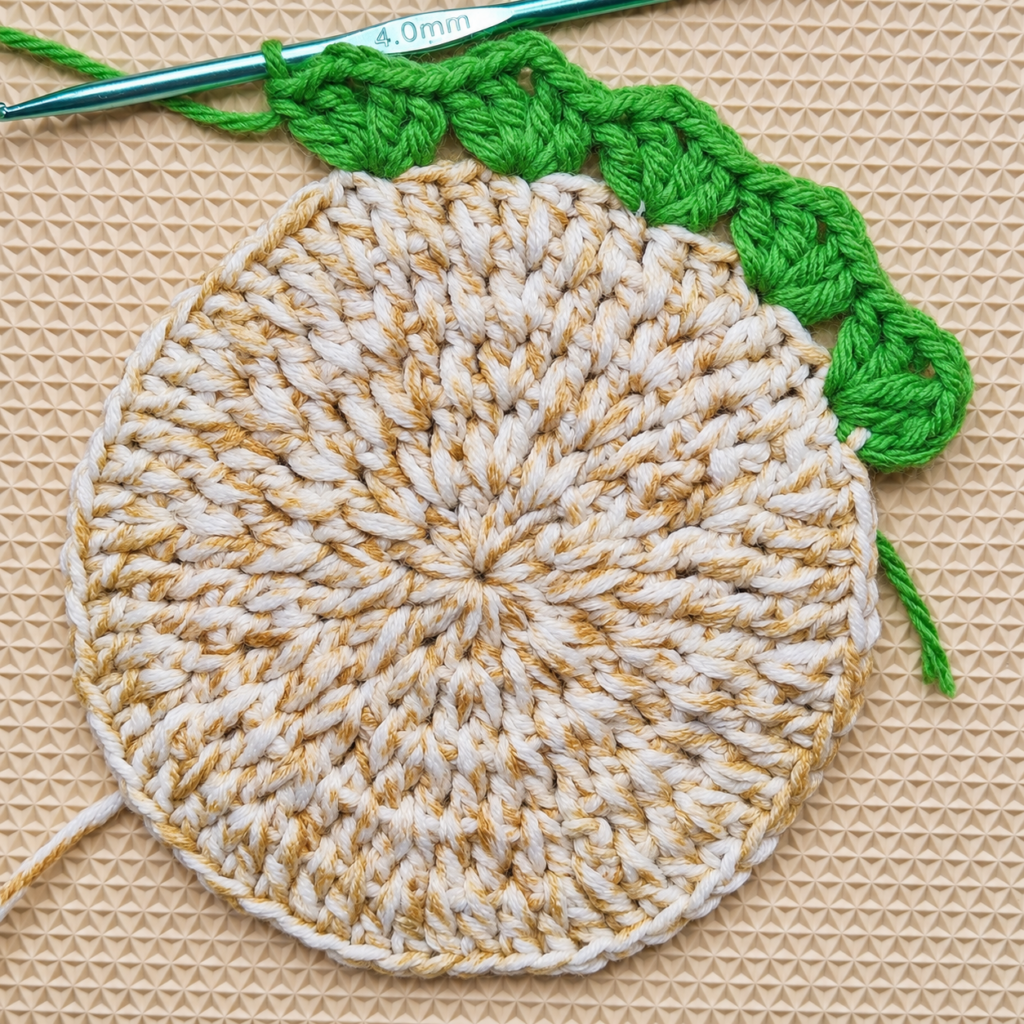
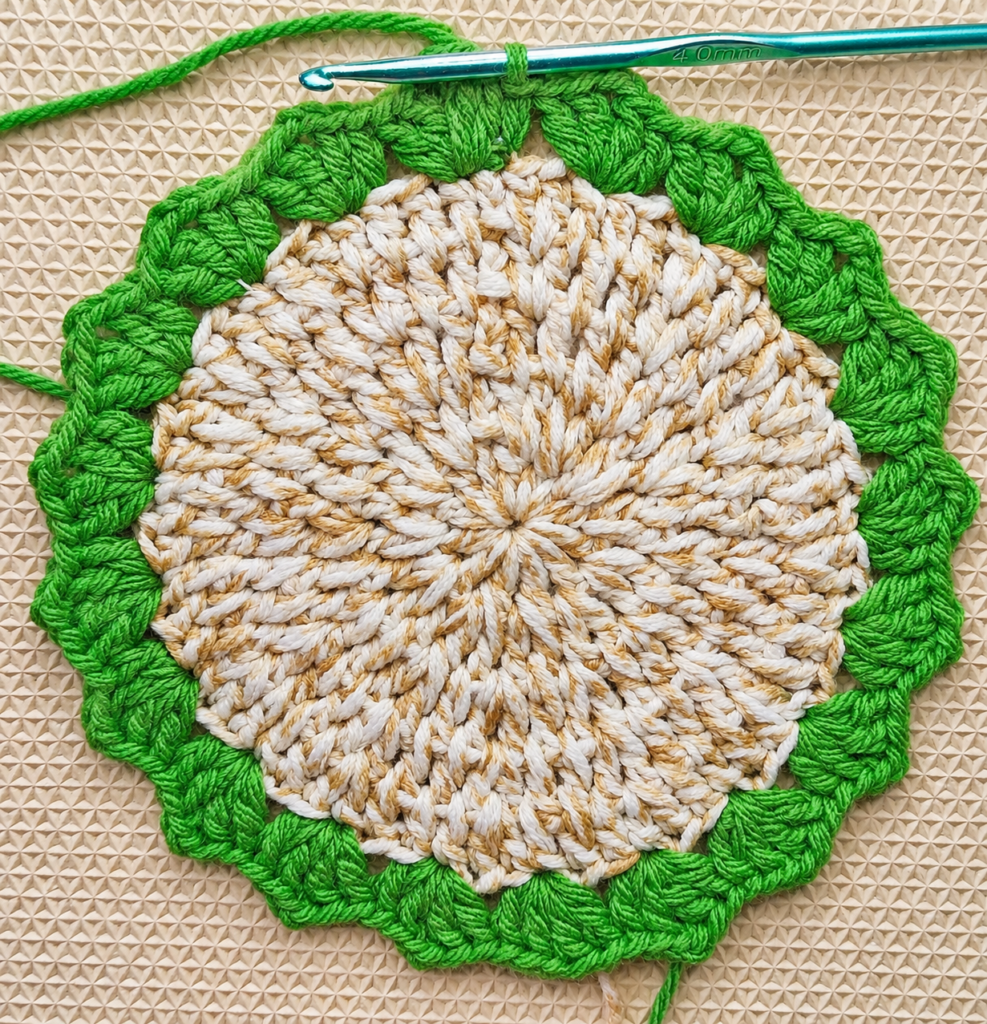
Round 6: Crochet the Green V-Stitch Border
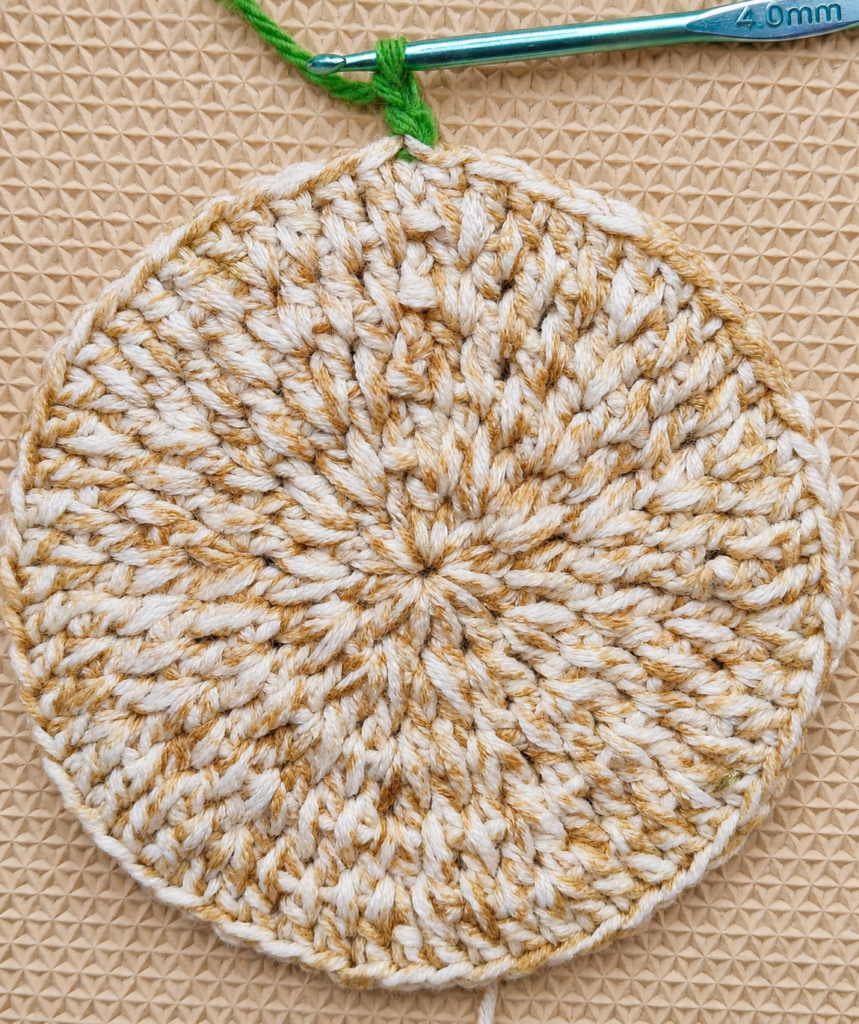
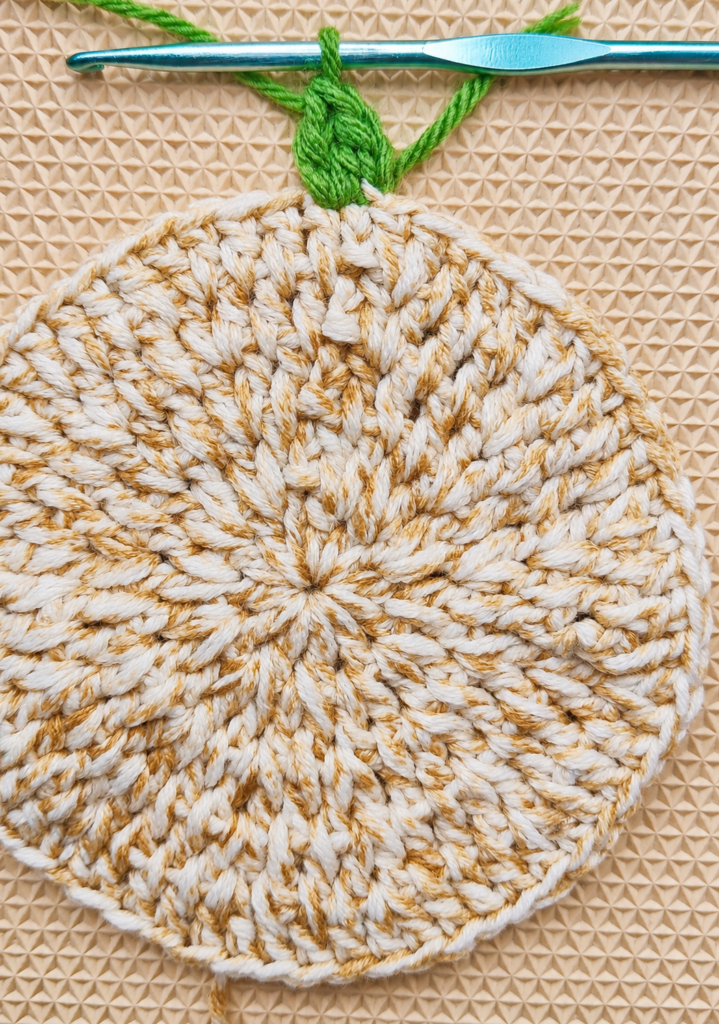
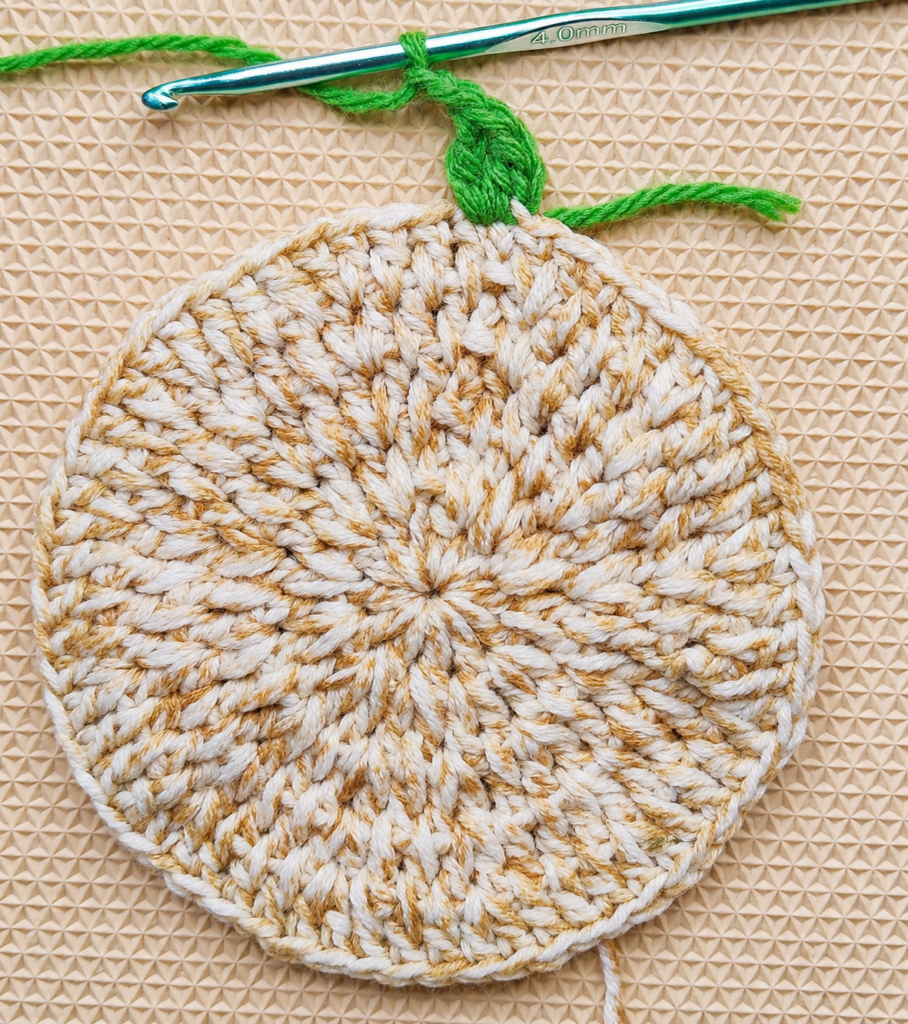
Ch 2. For this round only, work into the top stitches. In the same stitch, make a V-stitch: (2 dc, ch 2, 2 dc). Skip the next 2 stitches. Work a V-stitch in the following stitch. Repeat [V-st, skip 2] around. Join with a sl st, fasten off, and weave in every end. With 60 center stitches, the border contains 20 evenly spaced V-stitches.
Troubleshooting a Round Crochet Coaster
Why is the center cupping?
Cupping usually means an increase was missed, the hook is too small, or the tension is too firm. Check the stitch count first. If the count is correct, relax the working yarn or try a slightly larger hook before remaking more than one round.
Why is the edge rippling?
Rippling usually means there are too many stitches or the tension has loosened significantly. Confirm that the increase is worked only once per repeat. A light ripple may disappear after blocking, but a strongly wavy circle should be corrected before adding the border.
Why do the V-stitches look crowded?
Make sure you skip two full top stitches between clusters. Each V-stitch uses one anchor stitch plus the following two skipped stitches, so a sixty-stitch round produces twenty clusters. Count the anchor points rather than judging by eye near the join.
Blocking, Washing, and Kitchen Use
Soak the finished coaster briefly in cool water, press out moisture in a towel, and pin it into a true circle without stretching the green border. Let it dry completely. Wash according to the yarn label and reshape while damp. This easy crochet coaster pattern may soften after washing but should keep its cotton stitch definition.
This easy crochet coaster pattern is intended for cups, cold glasses, and table decor. It is not an oven mitt or a substitute for a heat-rated trivet. Keep it away from open flames, hot cookware, and heating elements, even when made from cotton.
Color Ideas for a Handmade Set
- Ivory center with sage or olive green for a quiet botanical palette
- Oatmeal center with terracotta for an autumn kitchen
- White center with navy blue for a coastal look
- Cream center with cranberry red for holiday gifting
- Solid cotton centers with leftover-yarn borders for a coordinated scrap set
For more kitchen-friendly makes, visit the Sweet Stitches crochet library, try the crochet pumpkin potholder, or make a set of autumn crochet coasters.
Easy Crochet Coaster Pattern FAQ
Can a beginner make this coaster?
Yes. A confident beginner who can make a magic circle, double crochet, increase, and slip stitch can follow it. The most unusual technique is working between the posts, and the close-up images show exactly where to place the hook.
Can I use acrylic yarn?
You can use acrylic for a decorative sample, but cotton is more absorbent and better suited to drink condensation. Never expose acrylic to high heat because synthetic fibers can soften or melt.
How do I make matching coasters the same size?
Use the same yarn, hook, stitch counts, and blocking diameter for every piece. Weighing the yarn before and after the first easy crochet coaster pattern sample also gives you a practical estimate for the rest of the set.
Can I make a larger placemat?
Yes. Continue increasing the number of ordinary double crochets between increases by one on each new round. The easy crochet coaster pattern becomes a placemat when you stop at the desired size, then work the V-stitch border over a stitch count divisible by three.
Make a Set for Your Table
One coaster is a quick skills project; four or six become a useful handmade gift. After testing the easy crochet coaster pattern, leave a comment with your yarn, hook size, finished diameter, and favorite color pairing so other Sweet Stitches readers can compare results.
More Sweet Stitches
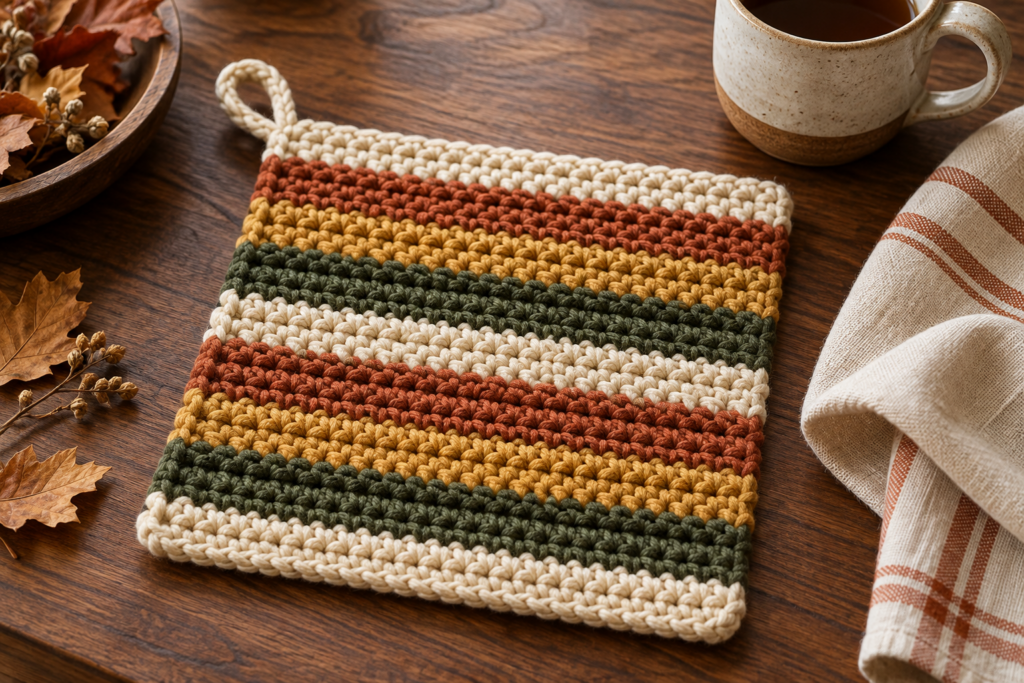
Harvest Stripe Crochet Potholder Pattern
Make a textured crochet potholder pattern with cotton yarn, simple back-loop single crochet, warm harvest stripes, and a practical hanging loop.
Make this pattern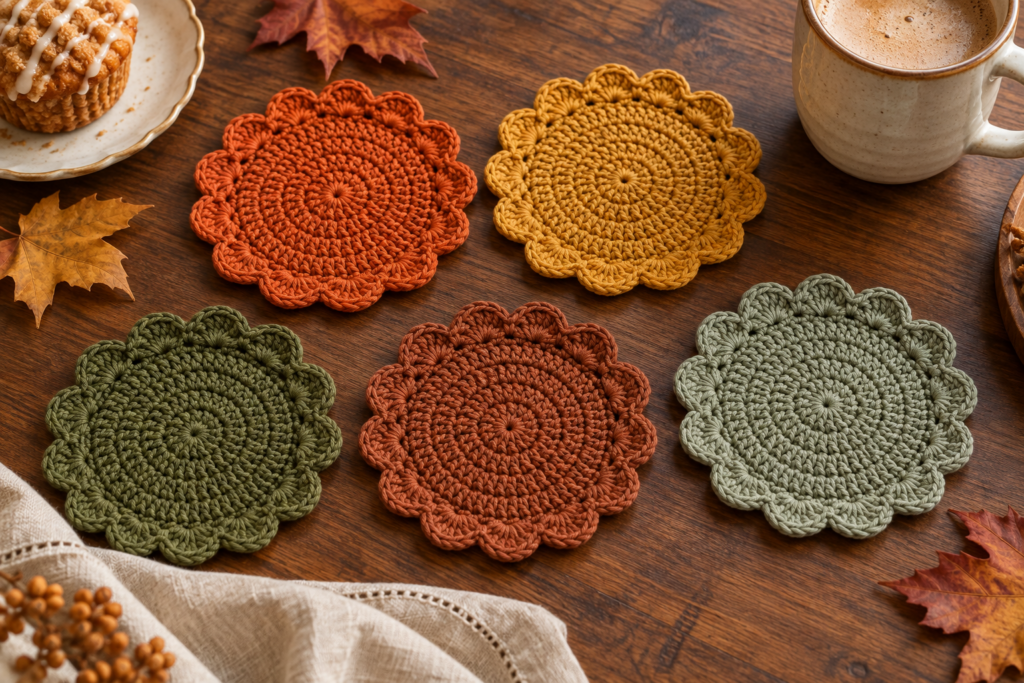
Easy Autumn Crochet Coasters: Free Fall Pattern
Make easy autumn crochet coasters with a flat double-crochet center and a softly scalloped edge. This free fall pattern includes clear US terms and progress photos.
Make this pattern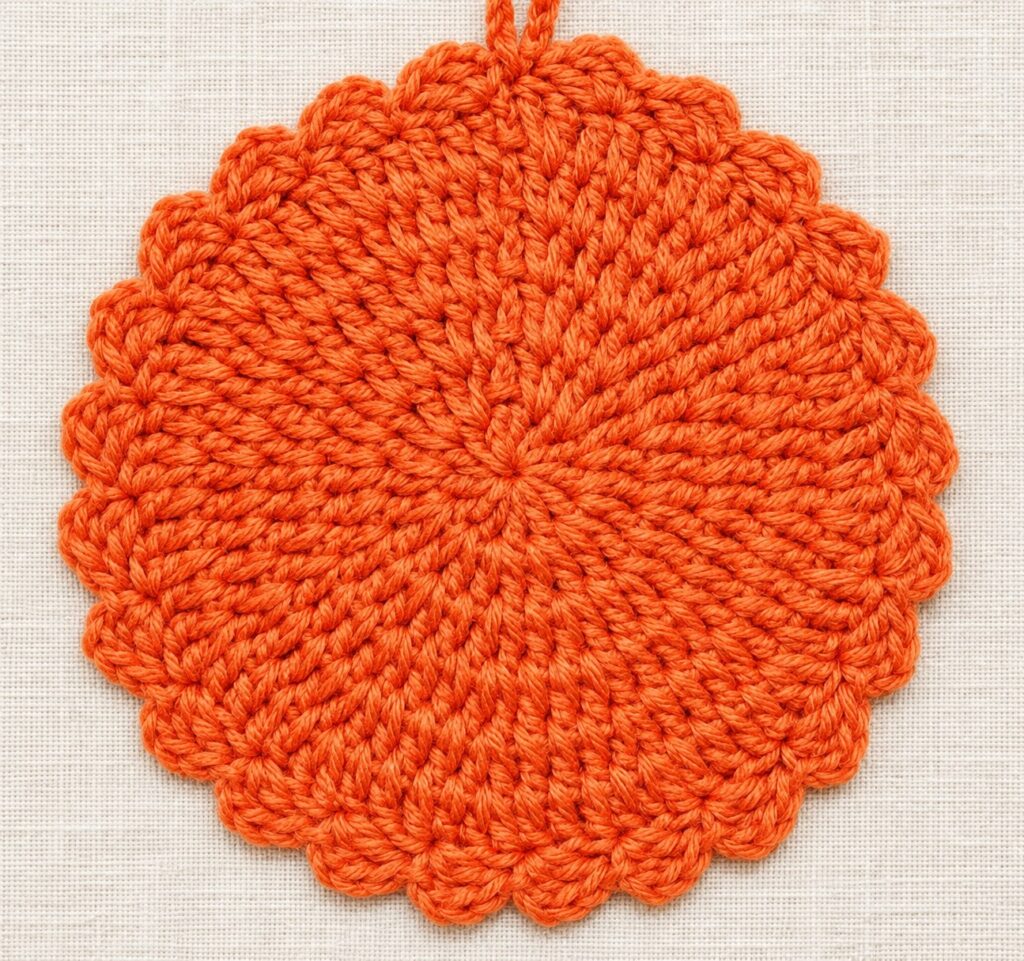
Easy Crochet Pumpkin Potholder: Free Fall Pattern
Crochet an easy 7-inch pumpkin potholder with raised spokes, a scalloped border, and a hanging loop using this free step-by-step fall pattern.
Make this pattern