
Easy Autumn Crochet Coasters: Free Fall Pattern
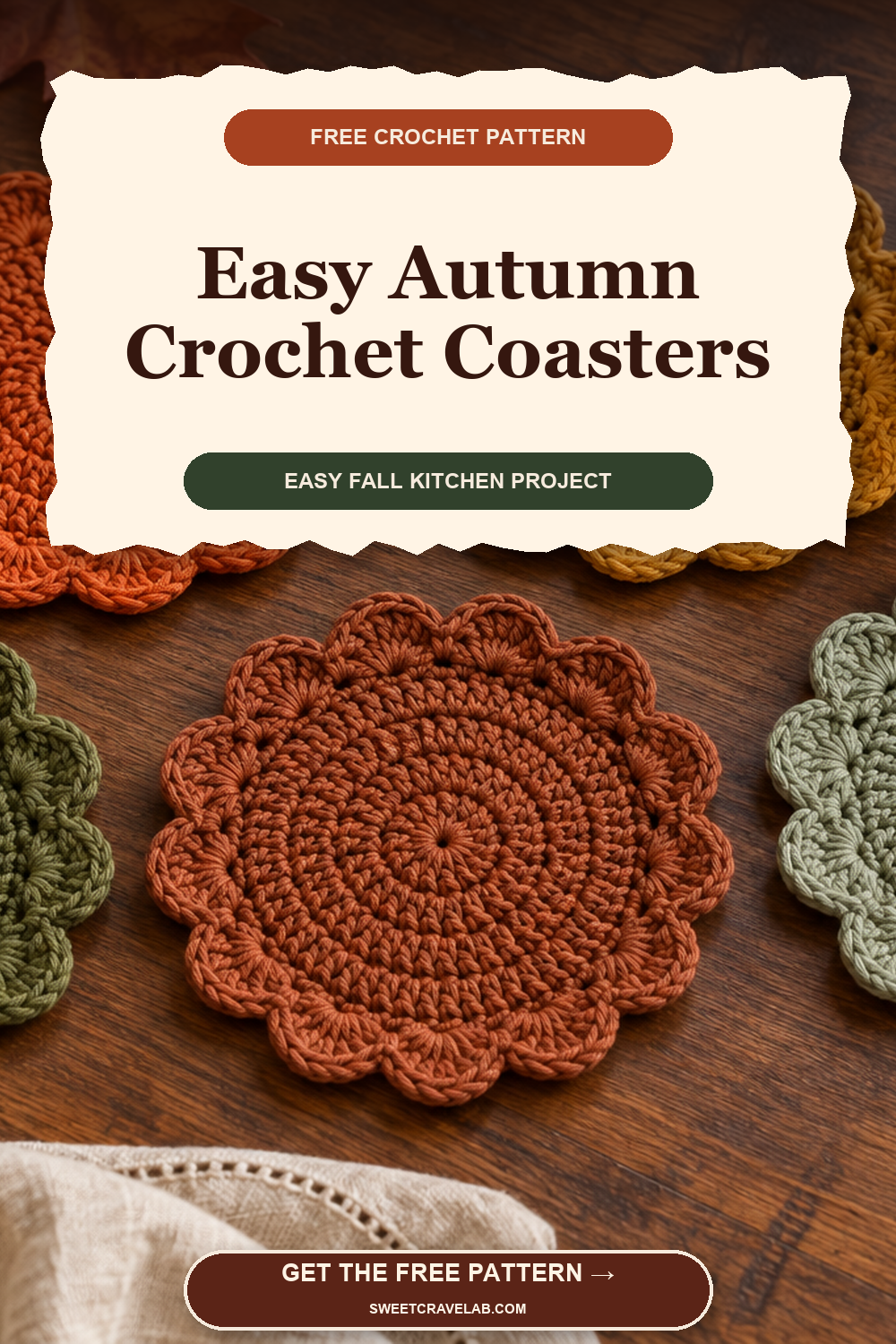
Make easy autumn crochet coasters with a flat double-crochet center and a softly scalloped edge. This free fall pattern includes clear US terms and progress photos.
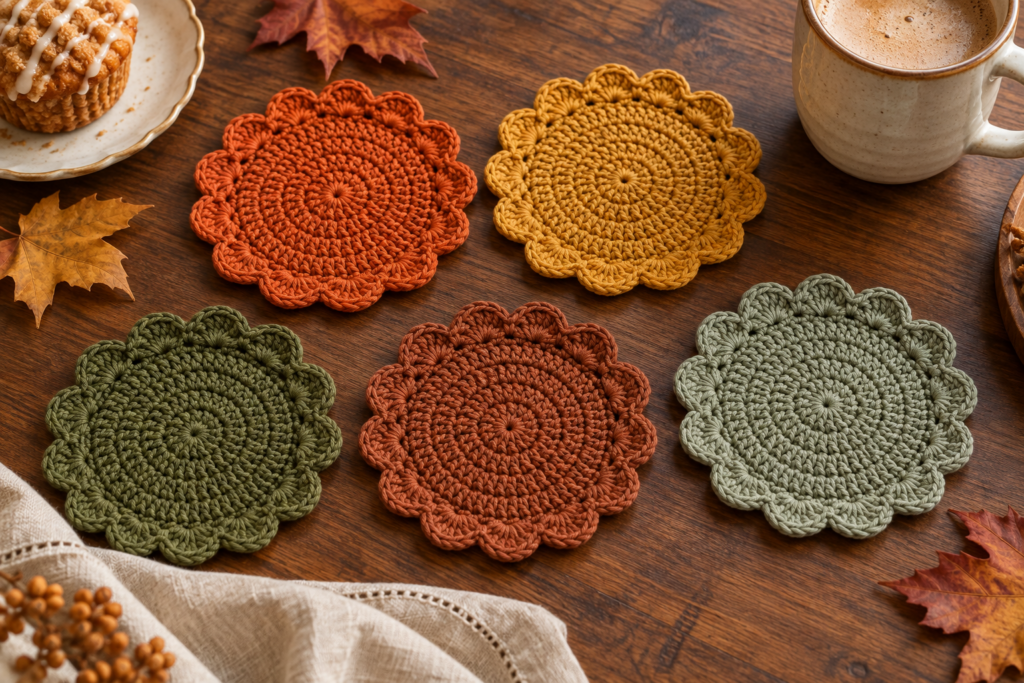
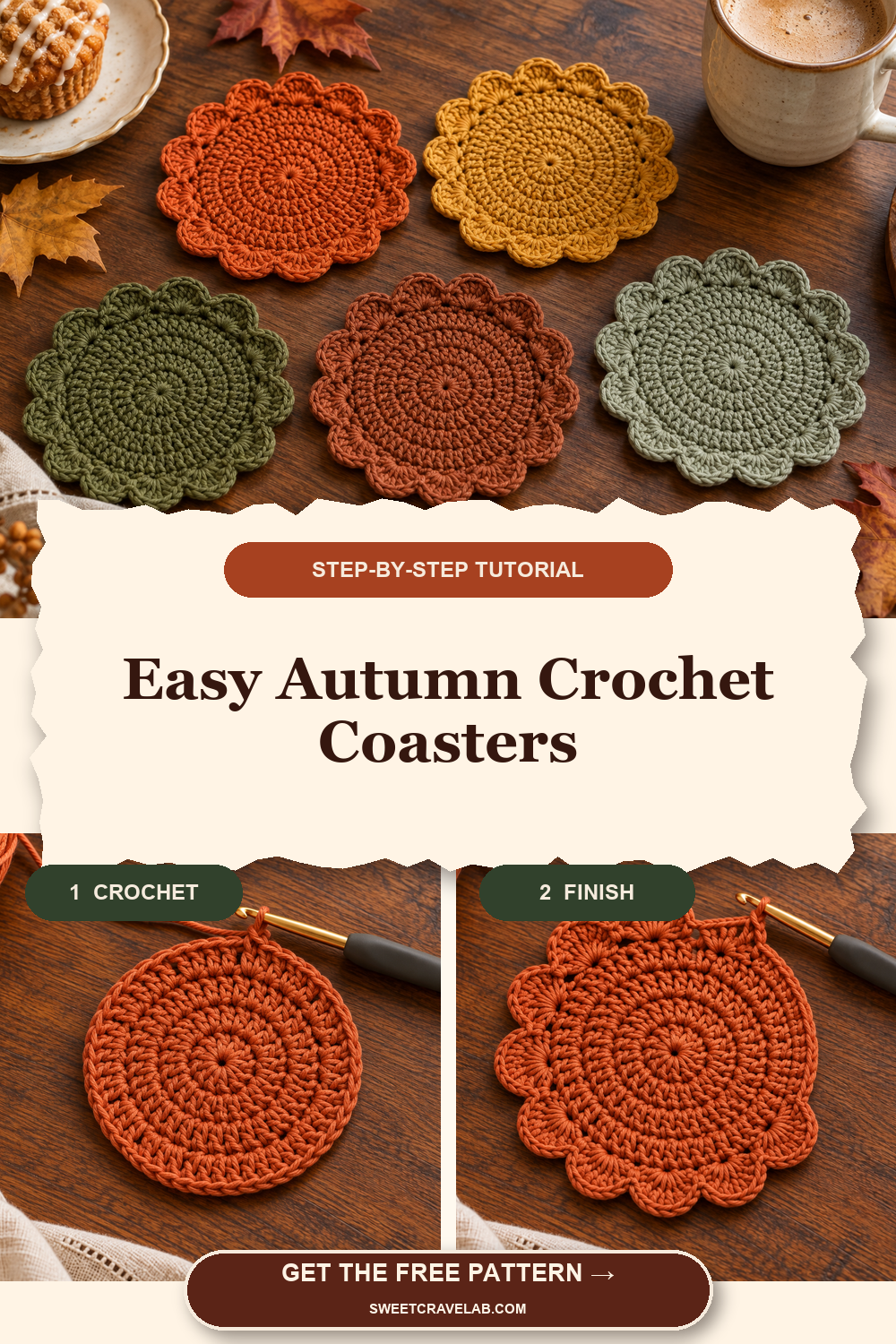
These easy autumn crochet coasters bring warm color and handmade texture to coffee breaks, dessert tables, and Thanksgiving place settings. The original Sweet Stitches pattern uses four simple double-crochet increase rounds, one stabilizing single-crochet round, and a softly scalloped shell border. Make one in an evening or build a coordinated set in your favorite harvest colors.
Autumn Crochet Coasters Pattern Guide
- Materials and supplies
- Seven illustrated crochet steps
- Blocking and finishing
- Frequently asked questions
About These Autumn Crochet Coasters
A small coaster is a satisfying way to practice crocheting a flat circle without committing to a large project. The center grows through a predictable increase formula: every new double-crochet round adds one ordinary stitch between increases. That rhythm makes the pattern easy to remember, while the final shell edging turns the plain circle into a finished table accessory.
The target finished size is approximately 5 inches (12.5 cm) across with medium-weight cotton yarn and a 5 mm hook. That is roomy enough for a coffee mug, iced drink, or small dessert bowl. Exact dimensions will vary with yarn construction and tension, so use the diameter as a target rather than forcing your work to match it.
Why Cotton Yarn Works Best
One hundred percent cotton absorbs condensation, provides clear stitch definition, and lies flatter than many springy synthetic fibers. It also gives the scallops enough body to hold their shape after blocking. A smooth plied cotton is especially helpful for beginners because the hook is less likely to split the strand.
These pieces are designed as drink coasters and decorative table accents, not as potholders or heat-protection equipment. Do not place hot cookware directly on them. If you use them beneath a warm mug, keep the fabric dry and follow the care directions on the yarn label.
Materials and Supplies
- Medium (4) 100% cotton yarn, approximately 25-30 yd (23-27 m) per coaster
- 5 mm (H/8) crochet hook
- Scissors
- Yarn needle for weaving in ends
- Optional locking stitch marker
- Rust-resistant pins and a blocking mat or folded towel
For an autumn set, combine burnt orange, mustard, olive, cinnamon, and muted sage. A single-color set looks more minimal, while alternating two colors between the center and border creates a bolder outline. If you mix yarns, keep the fiber, weight, and general construction consistent so every coaster finishes at a similar size. Check the Craft Yarn Council yarn-weight guide if the weight number is missing from a label.
US Crochet Abbreviations
| Abbreviation | Meaning |
|---|---|
| ch | chain |
| sc | single crochet |
| dc | double crochet |
| sl st | slip stitch |
| st / sts | stitch / stitches |
| rep | repeat |
Pattern Notes and Gauge Check
- The pattern uses US crochet terminology and is worked in joined rounds.
- The beginning ch 2 raises the yarn to working height and does not count as a stitch.
- Start the first dc of each round in the same stitch as the join.
- Join dc rounds with a sl st to the first dc, not to the beginning chain.
- Place a marker in the first true stitch if the join is difficult to identify.
- After Round 4, the target diameter is about 4 inches (10 cm).
- Numbers in parentheses show the stitch count at the end of the round.
Free Autumn Crochet Coasters Pattern
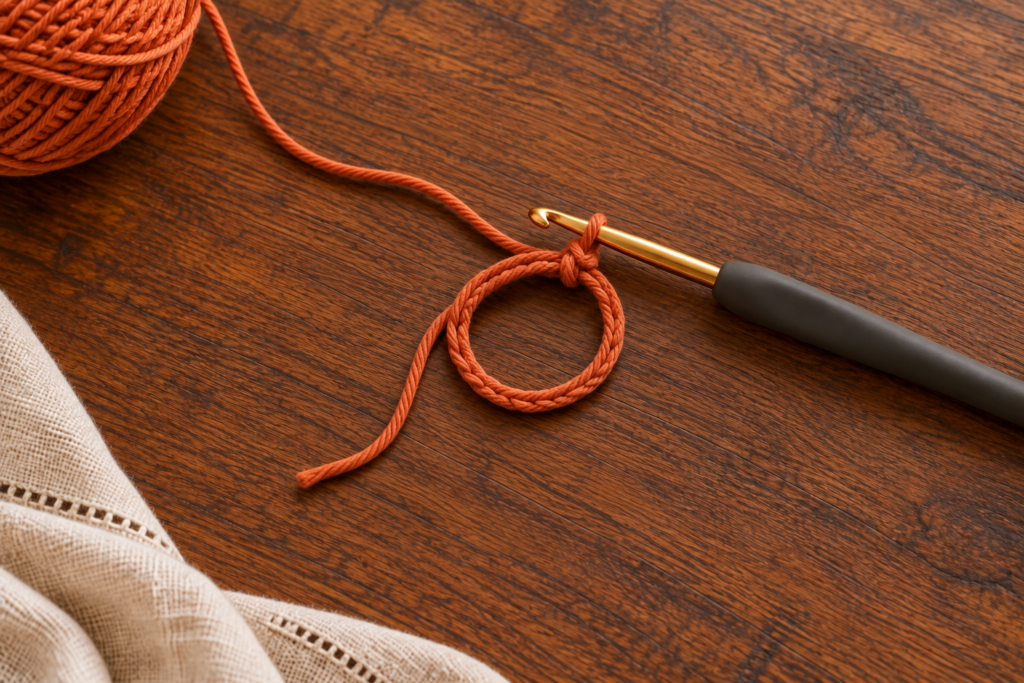
Step 1: Make the Magic Ring
Form a magic ring with your first color and place the working loop on the hook. Leave a tail long enough to weave securely through the center after the first round. If you prefer not to use a magic ring, ch 4 and join with a sl st to form a small ring.
Step 2: Round 1
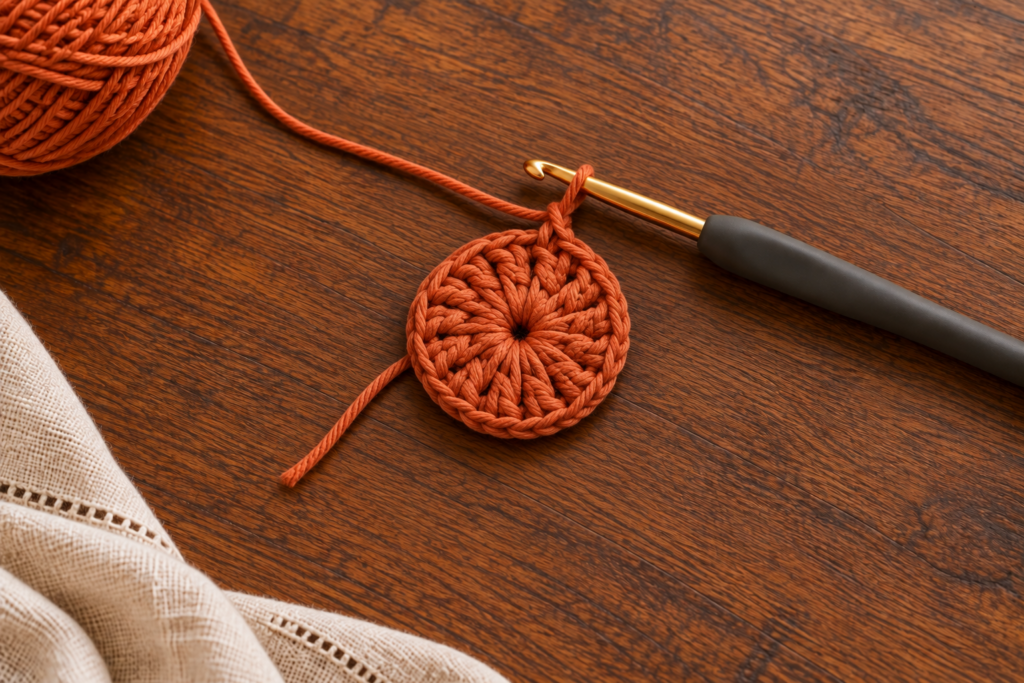
Ch 2, then work 12 dc into the ring. Pull the starting tail gently to close the center. Join with a sl st to the first dc. (12 sts)
Step 3: Round 2
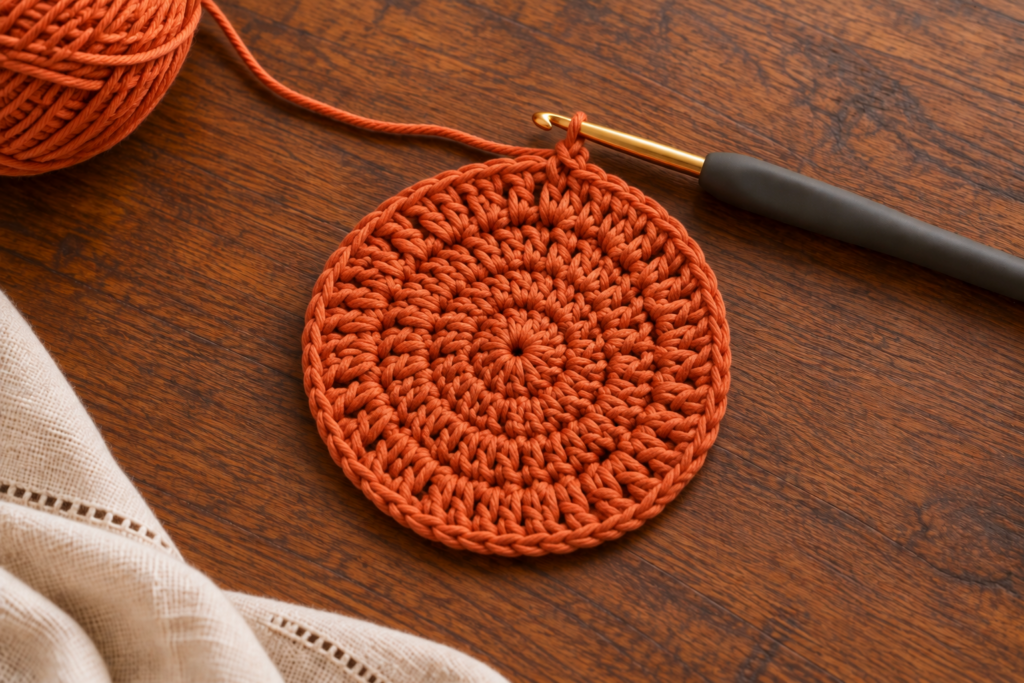
Ch 2. Work 2 dc in every stitch around. Join with a sl st to the first dc. The circle should begin to lie open and flat. (24 sts)
Step 4: Round 3
Ch 2. Work 1 dc in the first stitch, then 2 dc in the next stitch. Repeat [1 dc in the next stitch, 2 dc in the next stitch] around. Join with a sl st to the first dc. (36 sts)
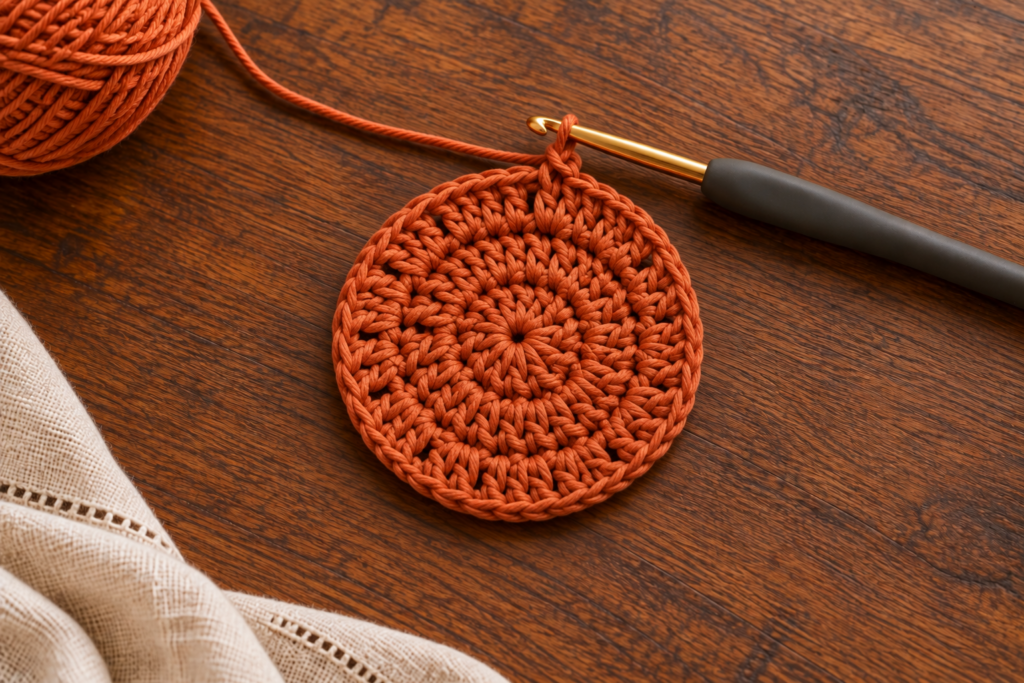
Step 5: Round 4
Ch 2. Work 1 dc in each of the next 2 stitches, then 2 dc in the next stitch. Repeat [1 dc in each of the next 2 stitches, 2 dc in the next stitch] around. Join with a sl st to the first dc. (48 sts)
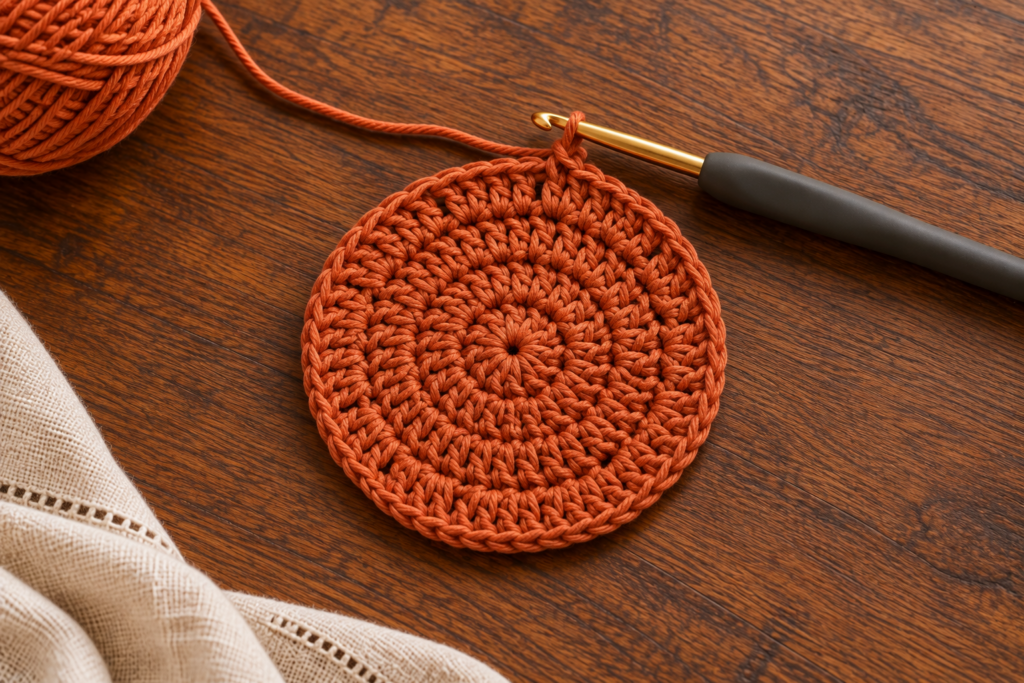
Step 6: Stabilizing Round
Ch 1. Work 1 sc in every stitch around without adding increases. Join with a sl st to the first sc. This compact round firms the outer edge and creates a clean base for the shells. (48 sts)
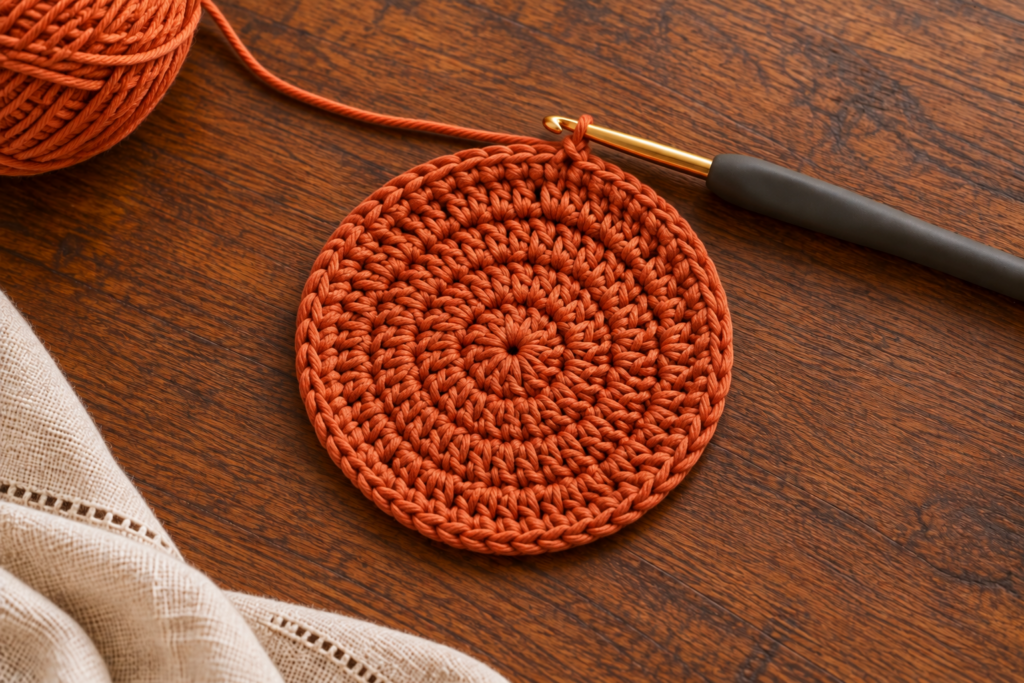
Step 7: Scalloped Shell Border
Keep the same color or join a contrasting fall shade. Repeat [skip the next stitch, work 5 dc in the following stitch, skip the next stitch, sl st in the following stitch] all the way around. You will make 12 scallops. Join the final repeat neatly at the base of the first shell. Fasten off, leaving a tail long enough to weave in securely.
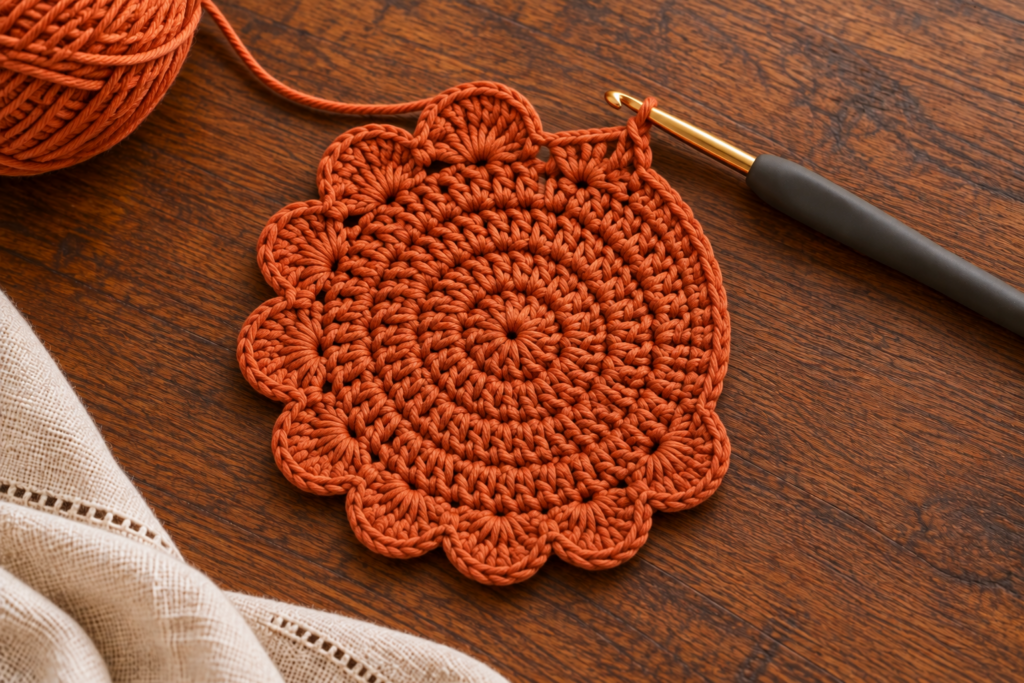
How to Keep the Circle Flat
Stop after each round and place the work on a flat surface. A gentle wave that relaxes when smoothed is usually corrected by the next round or by blocking. Deep ripples often mean an extra increase was added. Cupping usually points to a missed increase, a stitch-count error, or tension that became tighter as the circle grew.
If your count is correct but the circle still refuses to lie flat, change hook size before changing the written sequence. Move down one hook size for loose, ruffled fabric or up one size for a stiff circle that cups. Crochet one replacement round and reassess before continuing.
Blocking and Finishing
Thread each yarn tail onto a needle and weave it back and forth through several stitches on the wrong side. Avoid pulling so tightly that the center puckers. Trim the excess only after the tail feels secure.
To shape the border, lightly dampen the coaster according to the yarn manufacturer’s care instructions. Arrange it on a blocking mat, open every scallop with your fingers, and pin the outer points at an even distance from the center. Allow the cotton to dry completely before removing the pins. Do not stretch one section farther than the others.
Autumn Color and Table-Styling Ideas
Build a harvest palette by choosing colors already present in your kitchen: pumpkin orange for warmth, mustard for brightness, olive for contrast, cinnamon for depth, and sage to soften the set. A cream border around every color can make mismatched yarns feel intentional, while a dark brown edge creates a graphic vintage look.
Place the coasters beside a coffee station, add one beneath each glass at a Thanksgiving dessert table, or tie a set of four with cotton ribbon for a hostess gift. For a coordinated handmade setting, repeat one coaster color in napkins, a candle, or the glaze on a serving plate rather than filling the table with many competing fall motifs.
Explore more handmade table accents in the Sweet Stitches crochet-pattern library, or pair this set with our crochet pumpkin potholder for a coordinated fall kitchen.
Care Instructions
Follow the washing directions printed on the cotton yarn label. When in doubt, hand wash in cool water with a small amount of mild detergent, press out moisture in a towel without wringing, reshape the scallops, and dry flat. Store only when completely dry. Re-blocking after washing helps the shells regain their rounded outline.
Helpful Tips for a Matching Set
- Use the same yarn brand, fiber, hook, and tension for every coaster.
- Count every round rather than relying only on the visual shape.
- Record the final diameter and yarn used for the first coaster before starting the next.
- Work all centers first and all borders second to keep your hand tension consistent.
- Block the complete set at the same time against one measured paper circle.
- Keep the shell count at 12 so the edging looks balanced from coaster to coaster.
Frequently Asked Questions About Autumn Crochet Coasters
Are these autumn crochet coasters beginner-friendly?
Yes. A confident beginner who knows chains, single crochet, double crochet, slip stitches, and simple increases can follow the pattern. The magic ring can be replaced with a joined chain ring if needed.
Can I make the coasters smaller?
You can stop the increase sequence after Round 3, work one single-crochet round, and then test a border that fits the resulting 36 stitches. Because that changes the circumference and shell spacing, treat it as a variation and review the finished shape before making a full set.
Why does my last shell not fit?
The most likely cause is a stitch-count error in the stabilizing round. Confirm that it contains exactly 48 single crochets. Each border repeat uses four stitches, so 48 stitches divide evenly into 12 shells.
Can I use acrylic yarn?
Cotton is preferable because it absorbs condensation and holds the blocked shape well. Acrylic may be used for purely decorative pieces, but it is less absorbent and must be kept away from high heat.
Share Your Autumn Color Palette
Which five colors would you choose for your fall table? After reviewing the pattern, leave a comment with your yarn, hook size, finished diameter, and any tension adjustments. Those practical notes can help another maker create a flatter, more consistent set.
More Sweet Stitches
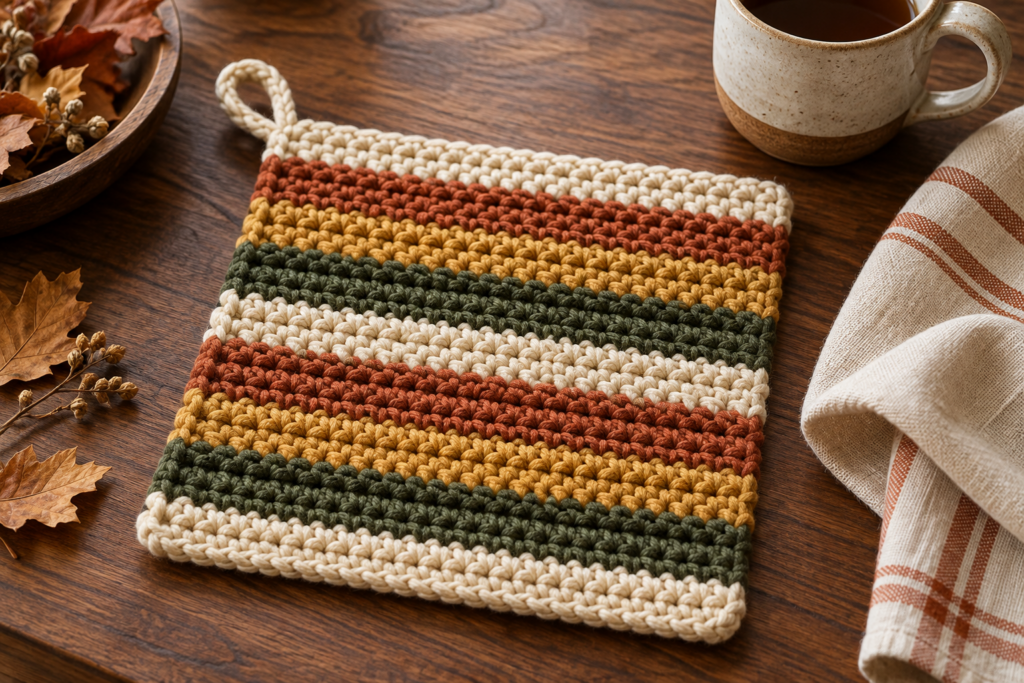
Harvest Stripe Crochet Potholder Pattern
Make a textured crochet potholder pattern with cotton yarn, simple back-loop single crochet, warm harvest stripes, and a practical hanging loop.
Make this pattern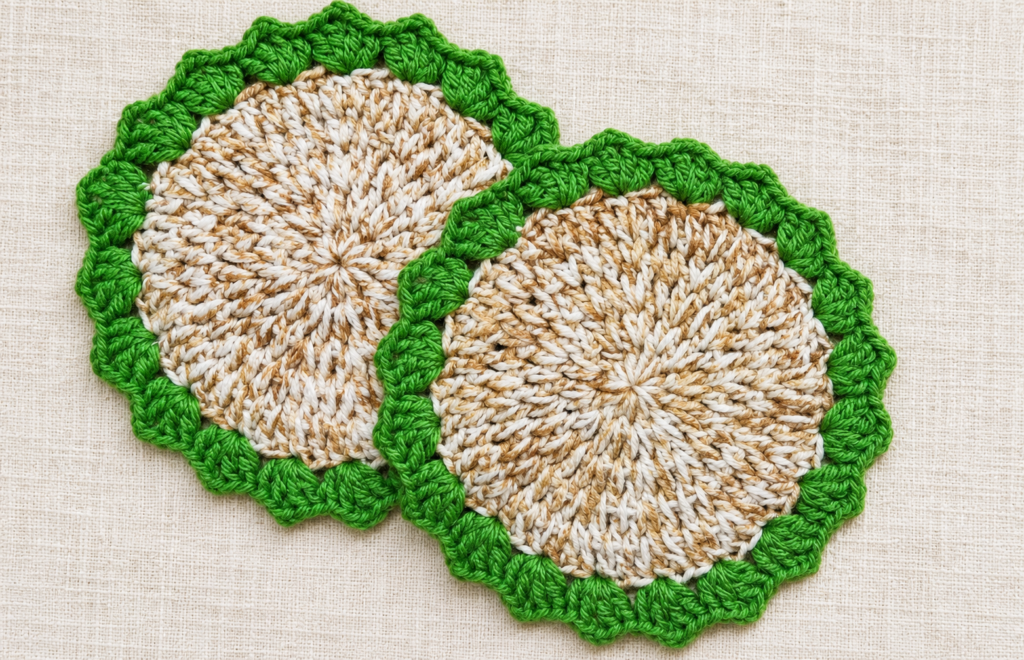
Easy Crochet Coaster Pattern: Sea Grass Style
Make an easy round crochet coaster with cotton yarn, five double-crochet rounds, and a fresh green V-stitch border.
Make this pattern
Crochet Mini Santa Hat Ornament: Easy Free Pattern
Make a crochet mini Santa hat ornament with simple single crochet rounds, a snowy white brim, a fluffy pom-pom, and a hanging loop.
Make this pattern